Georg Baselitz & Lucio Fontana L'aurora viene Georg Baselitz & Lucio Fontana L'aurora viene

Georg Baselitz & Lucio Fontana L'aurora viene

Until 9 December 2025
Milan Palazzo Belgioioso

Scroll down to learn more
/
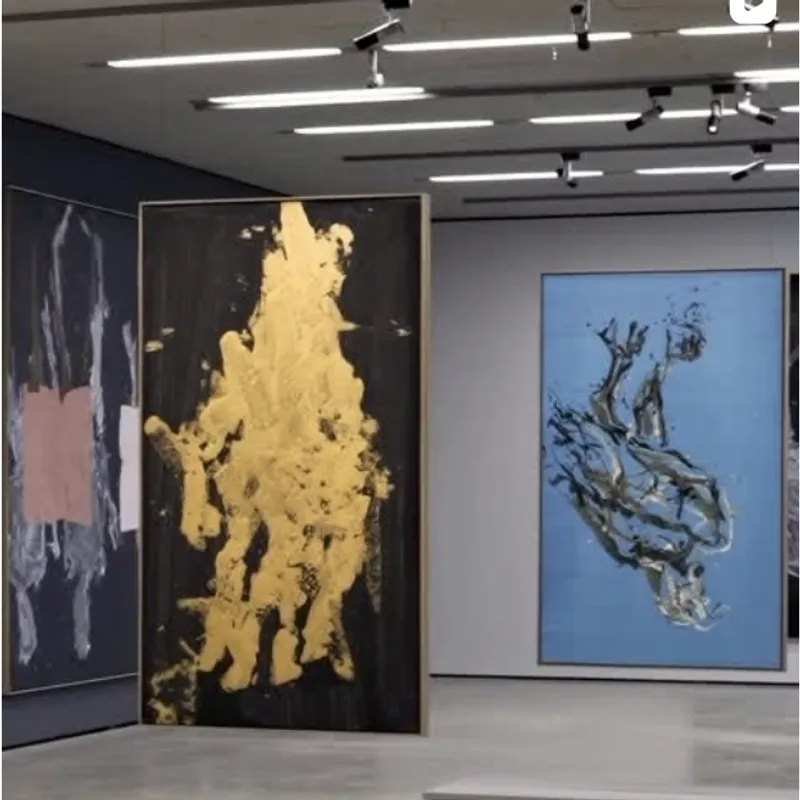
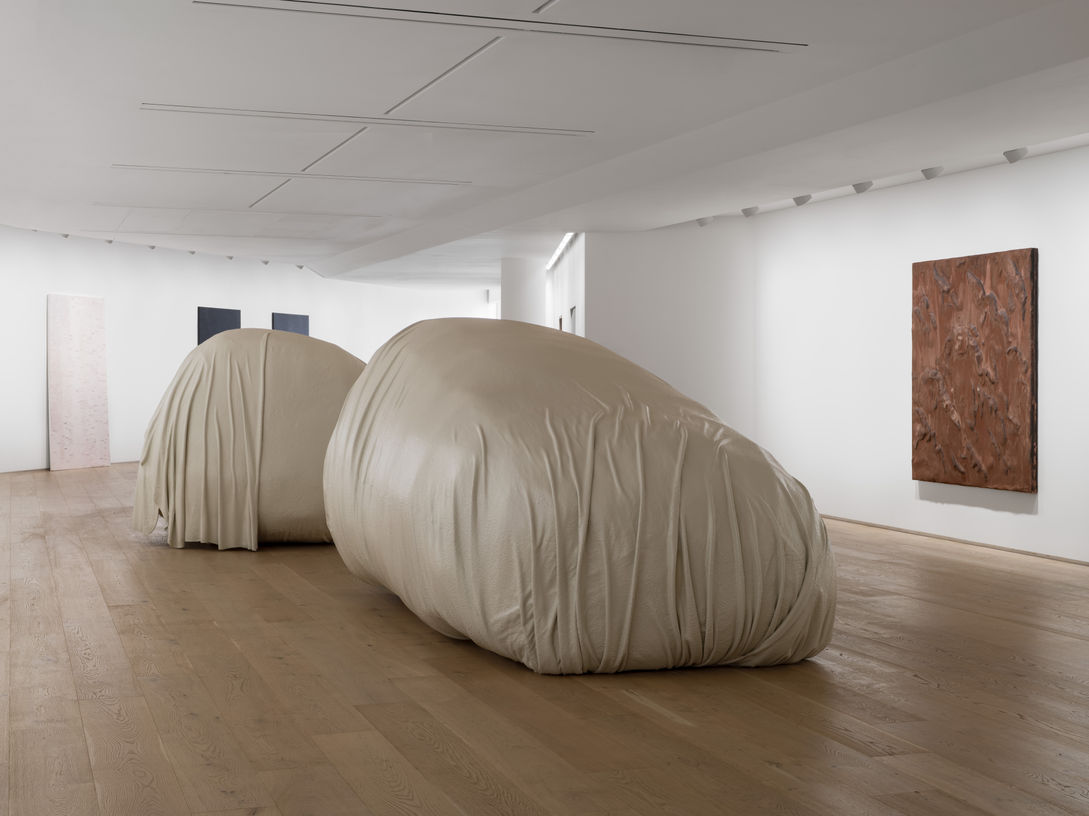
L’aurora viene marks the inaugural exhibition at Thaddaeus Ropac’s Milan gallery, presenting works by Georg Baselitz and Lucio Fontana. The show retraces Baselitz’s longstanding and ongoing dialogue with the Argentine-Italian master, bringing the two artists together in a two-person presentation for the first time. Encompassing paintings and sculptures by Baselitz from the past decade alongside works by Fontana dating from the 1930s to the 1960s, the exhibition also features a group of significant loans from the Fondazione Lucio Fontana.
The presentation of works by Lucio Fontana alongside paintings by Georg Baselitz sets up a dialogue that is both coherent and surprising.
Allowing for an in-depth exploration of the ideas artmaking is founded on, it showcases a shared imagination and sensibility, expressed through different means. The project demonstrates how alive and relevant Fontana’s work remains today. The works by Baselitz exhibited in Milan – some of which even reference Fontana in their titles – have been extraordinary allies in this regard. 
Our loan of a core group of works, carefully selected from our collection and including pieces from lesser-known and yet intensely meaningful cycles, is a valuable opportunity that resonates with the commitments behind, and builds on, our multifaceted programme. 
 

— Silvia Ardemagni,
President of the Fondazione Lucio Fontana

Watch a video of Georg Baselitz discussing the exhibition.

Play
Pause
Watch a video of Georg Baselitz discussing the exhibition.
Baselitz directly references Fontana in the painting Senza arrivo, Lucio è passato (Without arrival, Lucio has passed by) (2019). Similarly...
Baselitz directly references Fontana in the painting Senza arrivo, Lucio è passato (Without arrival, Lucio has passed by) (2019). Similarly to Fontana, Baselitz revolutionised the medium of painting in a single, radical gesture. In 1969, he created his first ‘upside-down’ composition – an inversion that he believed emptied form of its content and fused abstraction with figuration. It became his defining pictorial innovation.

Georg Baselitz

Senza arrivo, Lucio è passato, 2019
Oil on canvas
300 × 210 cm (118.11 × 82.68 in)

Arriva: La scuola di Lucio (Comes: Lucio’s school) (2019) is another direct homage to Lucio Fontana. Baselitz often approaches his...
Arriva: La scuola di Lucio (Comes: Lucio’s school) (2019) is another direct homage to Lucio Fontana. Baselitz often approaches his works’ titles as an opportunity for wordplay, sometimes denoting a reference or idea, and sometimes representing a snippet of everyday conversation. Fontana is named, by pun or play on words, in several of the titles of works on view in the exhibition. Fontana himself often inscribed enigmatic phrases on the versos of his works, like a diary of thoughts ranging from the philosophical to the mundane: ‘a domestic and poetic counterpoint to the gesture that silently cuts the canvas’, as Luca Massimo Barbero wrote in his essay in the exhibition catalogue, which Baselitz transforms ‘into titles, into a further sound’. Baselitz is an autodidact in Fontana’s language, entering into an encrypted linguistic play.

Georg Baselitz

Arriva: La scuola di Lucio, 2019
Oil on canvas
350 × 212 cm (137.8 × 83.46 in)

Watch Artistic Advisor of the Fondazione Lucio Fontana and leading Fontana scholar, Luca Massimo Barbero, speaking about the exhibition.

Play
Pause
Watch Artistic Advisor of the Fondazione Lucio Fontana and leading Fontana scholar, Luca Massimo Barbero, speaking about the exhibition.
Since all artists at that time were talking about the end of painting, I found Fontana’s works to be a step in that direction,
the black in the cut left open a glimmer of hope.
 
— Georg Baselitz
An eminent example of the Attese works of 1958–68, Concetto spaziale, Attesa (1964) bears Fontana’s definitive Spatialist gesture. The golden...
An eminent example of the Attese works of 1958–68, Concetto spaziale, Attesa (1964) bears Fontana’s definitive Spatialist gesture. The golden ground is lacerated by one of the artist’s tagli (cuts). The tapered slash imbues the work with a palpable sense of vitality. The violence inherent to the artist’s rupture – which symbolically eviscerates the sacrosanct flat picture plane to transcend ‘the absoluteness of the surface,’ as Enrico Crispolti writes – contrasts with the tagli’s revelation of a dark, seemingly boundless space beneath.

Lucio Fontana

Concetto spaziale, Attesa, 1964
Oil on canvas
73 × 60.3 cm (28.74 × 23.74 in)

Lucio Fontana Concetto spaziale, 1952 Glazed ceramic Height: 51 cm (20.8 in)


Lucio Fontana

Concetto spaziale, 1952
Glazed ceramic
Height: 51 cm (20.8 in)

Feet are my earth wire. For me the earth connection is more important than the transmission.
For me the reception via an earth wire is much better than through an antenna – perhaps I’ve got more in common with the trolls than the angels, who knows? 
 
— Georg Baselitz
Depicting two pairs of legs in heeled shoes, Aurora viene (2015) captures Baselitz’s prevailing interest in feet as the point...
Depicting two pairs of legs in heeled shoes, Aurora viene (2015) captures Baselitz’s prevailing interest in feet as the point of connection between the body and the earth. 

Writing about this ‘wild but spasmodic dance,’ the art historian Carla Schulz-Hoffman explains: this windmill commotion, alternating between cheerful exuberance and expressionless staccato, is abruptly stopped, since the edges of the pictures prevent uninterrupted rotation. Here Baselitz pushes the abstraction of the figurative to a new level. If previously, despite alterations, the unity of the figure was to a certain extent retained, here it has become obsolete. It can no longer be made to fit a definable form with some relation to reality; the individual parts become ciphers for a purely notional idea.’

Georg Baselitz

Aurora viene, 2015
Oil on canvas
98 × 88 cm (38.58 × 34.65 in)

Baselitz’s Lucios Halbinsel (Lucio’s Peninsula) (2020) belongs to a series of fire-gilded bronze legs and feet, which pay homage to...
Baselitz’s Lucios Halbinsel (Lucio’s Peninsula) (2020) belongs to a series of fire-gilded bronze legs and feet, which pay homage to artists he admires, including Alexander Calder, Willem de Kooning, Diego Giacometti and, as its title suggests, Lucio Fontana. Feet have been a mainstay in the canon of Baselitz’s motifs since his earliest group of works, P.D. Füße (1960–63), explored various iterations of the subject. These depictions of damaged, amputated feet directly contradicted accepted notions of beauty, as well as reflecting his personal experiences of post-war Germany. 

Georg Baselitz

Lucios Halbinsel, 2020
Bronze fire-gilded
160.5 × 59.5 × 2.8 cm (63.19 × 23.43 × 1.1 in) 
Ed. 3 of 9

L'aurora viene is accompanied by a catalogue featuring essays by Flavia Frigeri, Curatorial and Collections Director of the National Portrait...

L'aurora viene is accompanied by a catalogue featuring essays by Flavia Frigeri, Curatorial and Collections Director of the National Portrait Gallery, London, and Luca Massimo Barbero, Artistic Advisor of the Fondazione Lucio Fontana and leading Fontana scholar.

    Atmospheric image Atmospheric image
    Atmospheric image Atmospheric image
    Atmospheric image Atmospheric image