Overview

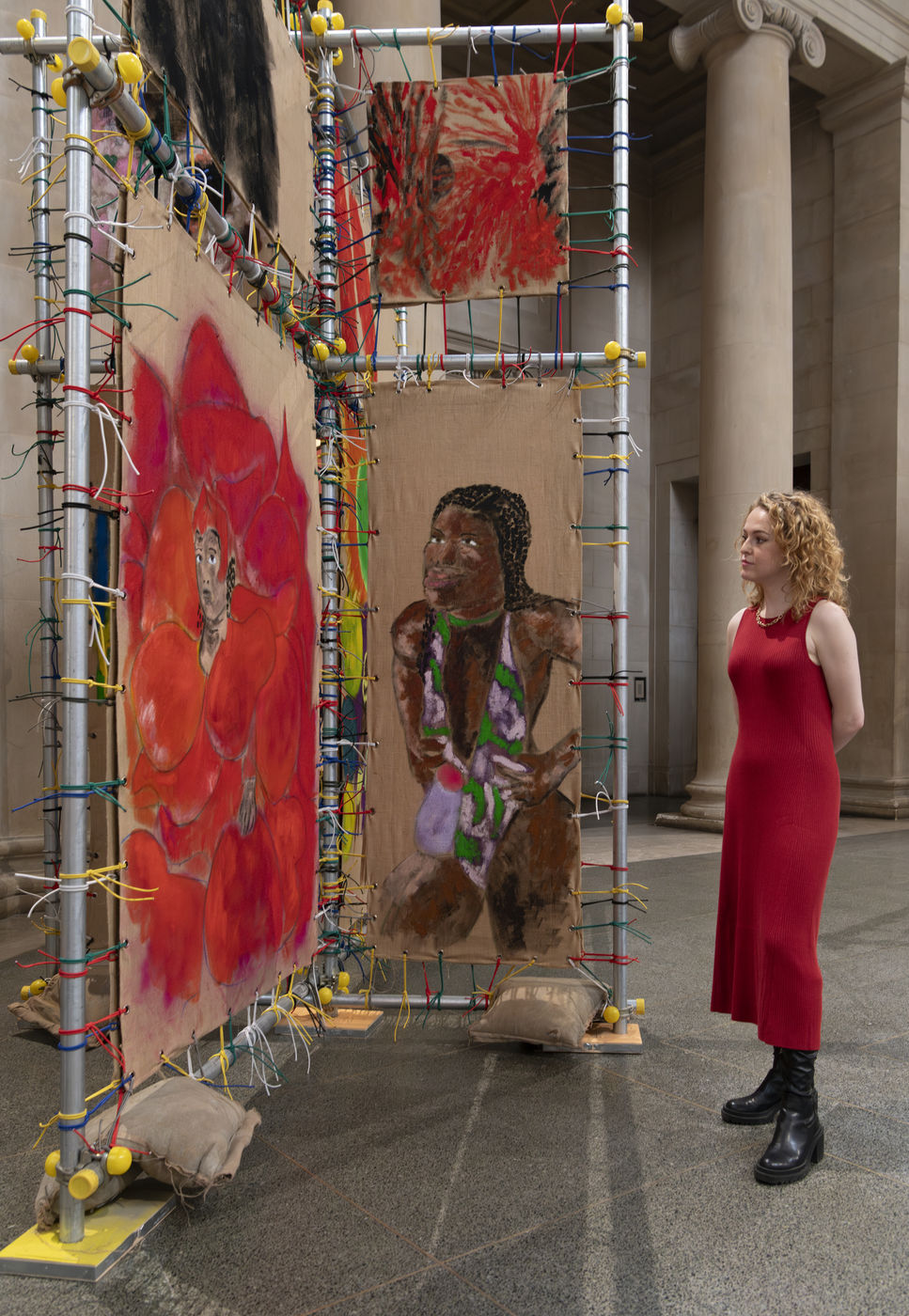
Thaddaeus Ropac Salzburg presents Alvaro Barrington’s most recent series of works in the artist’s second solo exhibition in Austria. The exhibition’s title, On the Road (TMS), evokes a wide range of references that run through the exhibition, including motifs from Barrington’s personal and cultural history. The title also refers literally to the works themselves: first exhibited in Barrington’s 2024 solo exhibition Grace at Tate Britain, they were subsequently expanded for the Notting Hill Carnival in 2025, installed on the Mangrove Sound Truck. Now, for its third iteration in Salzburg, this body of work is reimagined as collaged and intricately stitched wall hangings. Depending on the audience, the phrase ‘On the Road’ may invoke Jack Kerouac’s 1957 eponymous post-war classic. The largely autobiographical novel, which tells the story of a group of friends travelling across the United States in search of freedom and identity, came to define the Beat Generation and a countercultural milieu shaped by jazz, poetry, and drug-inflected experimentation....

Thaddaeus Ropac Salzburg presents Alvaro Barrington’s most recent series of works in the artist’s second solo exhibition in Austria. The exhibition’s title, On the Road (TMS), evokes a wide range of references that run through the exhibition, including motifs from Barrington’s personal and cultural history. The title also refers literally to the works themselves: first exhibited in Barrington’s 2024 solo exhibition Grace at Tate Britain, they were subsequently expanded for the Notting Hill Carnival in 2025, installed on the Mangrove Sound Truck. Now, for its third iteration in Salzburg, this body of work is reimagined as collaged and intricately stitched wall hangings.

Depending on the audience, the phrase ‘On the Road’ may invoke Jack Kerouac’s 1957 eponymous post-war classic. The largely autobiographical novel, which tells the story of a group of friends travelling across the United States in search of freedom and identity, came to define the Beat Generation and a countercultural milieu shaped by jazz, poetry, and drug-inflected experimentation. ‘I remember Kerouac’s book from when I was in college, in a time where a lot of my friends, including myself, were at an age that we thought, oh, we need to find ourselves, and maybe, we need to travel. For me, I travelled through South America.’ says the artist. 

For Barrington, who has family roots in Grenada and Haiti, ‘On the Road’ echoes a familiar phrase about meeting someone on the streets during Carnival. Caribbean Carnival traditions are vibrant celebrations of cultural fusion and were expanded geographically by diasporic communities. Today, all over the world, Carnivals are hubs for various forms of cultural production. ‘The energy is high, the streets full of people. The sound is soca and reggae played on sound systems, the smell is of truck engine, grass and marijuana,’ the artist describes. 

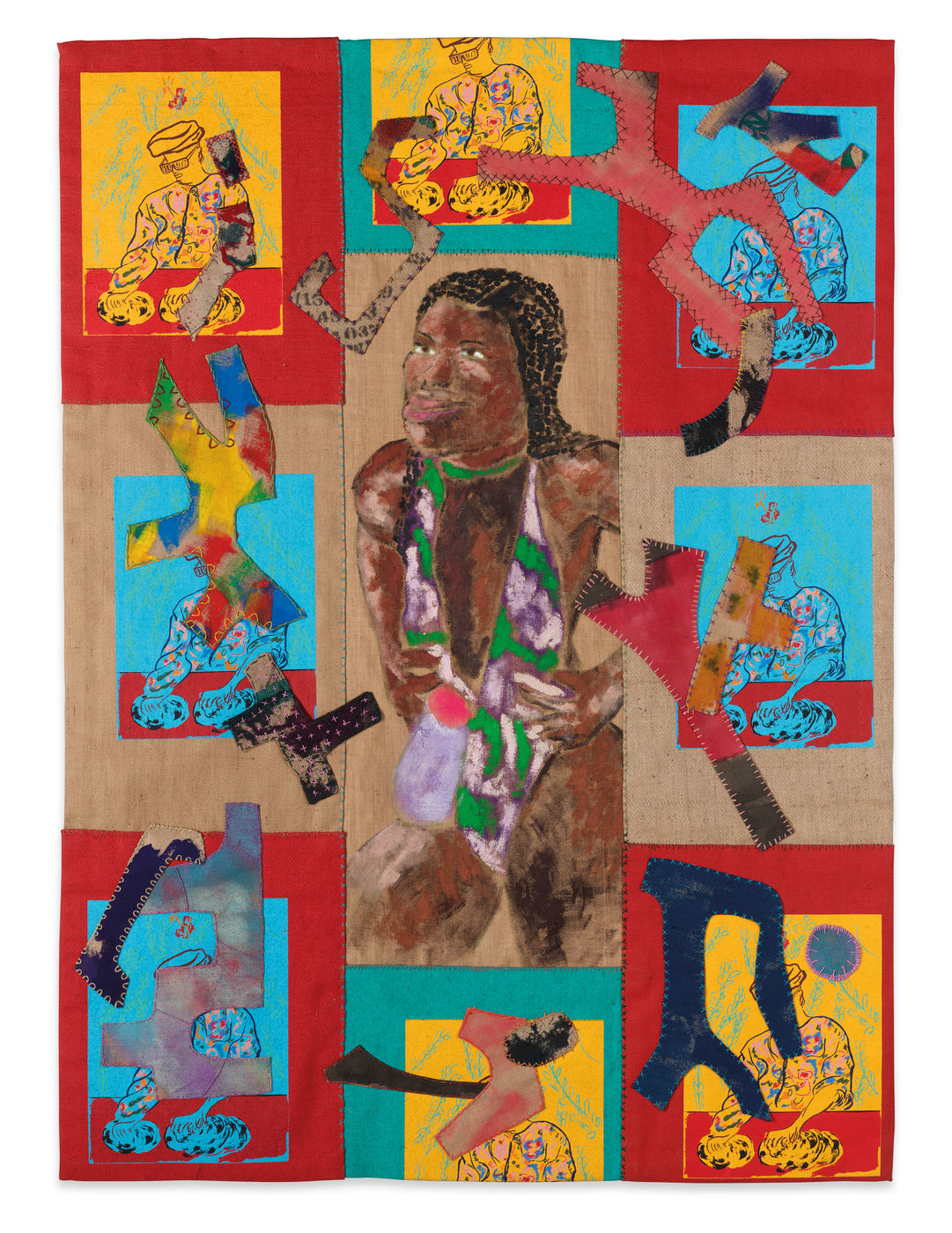
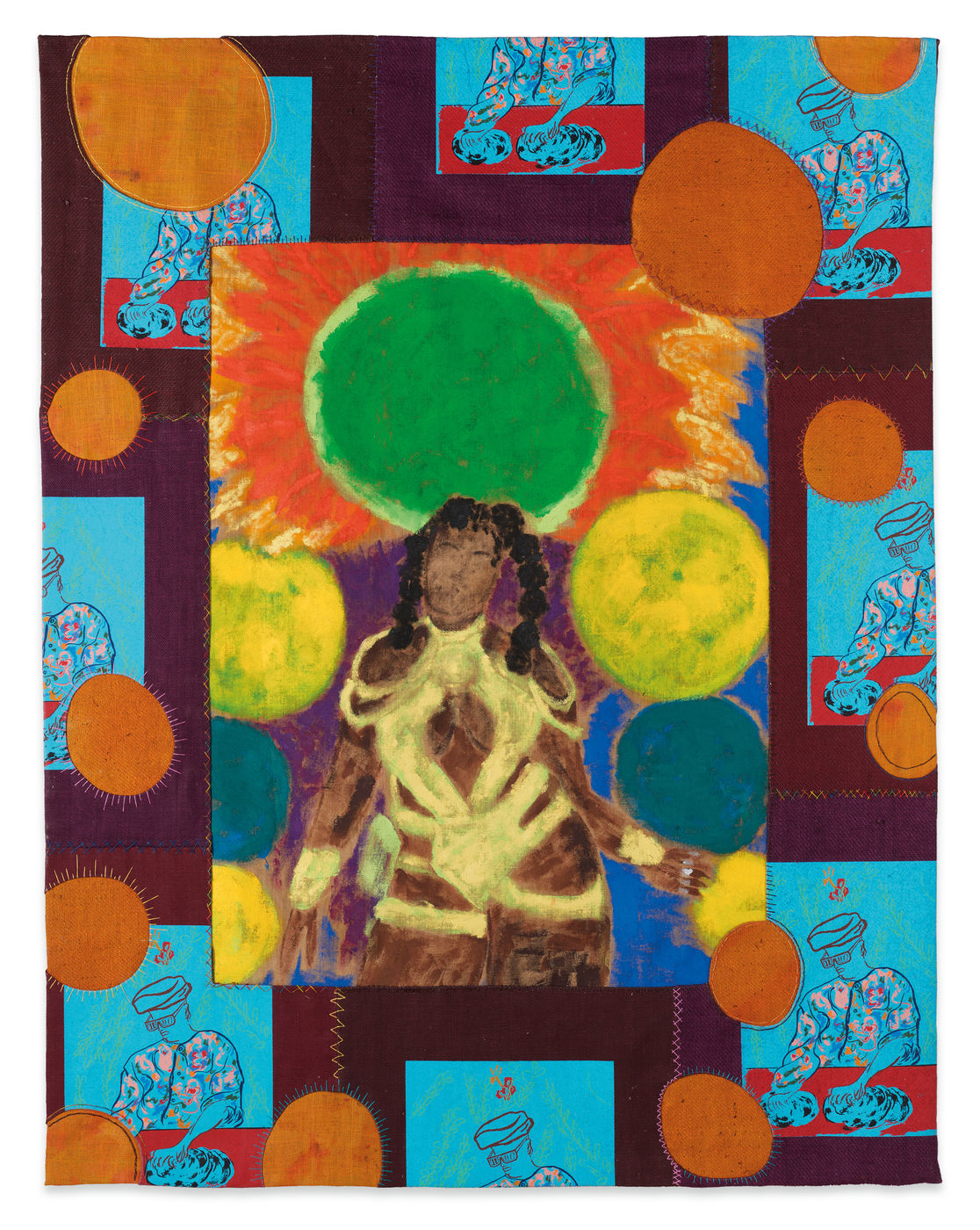
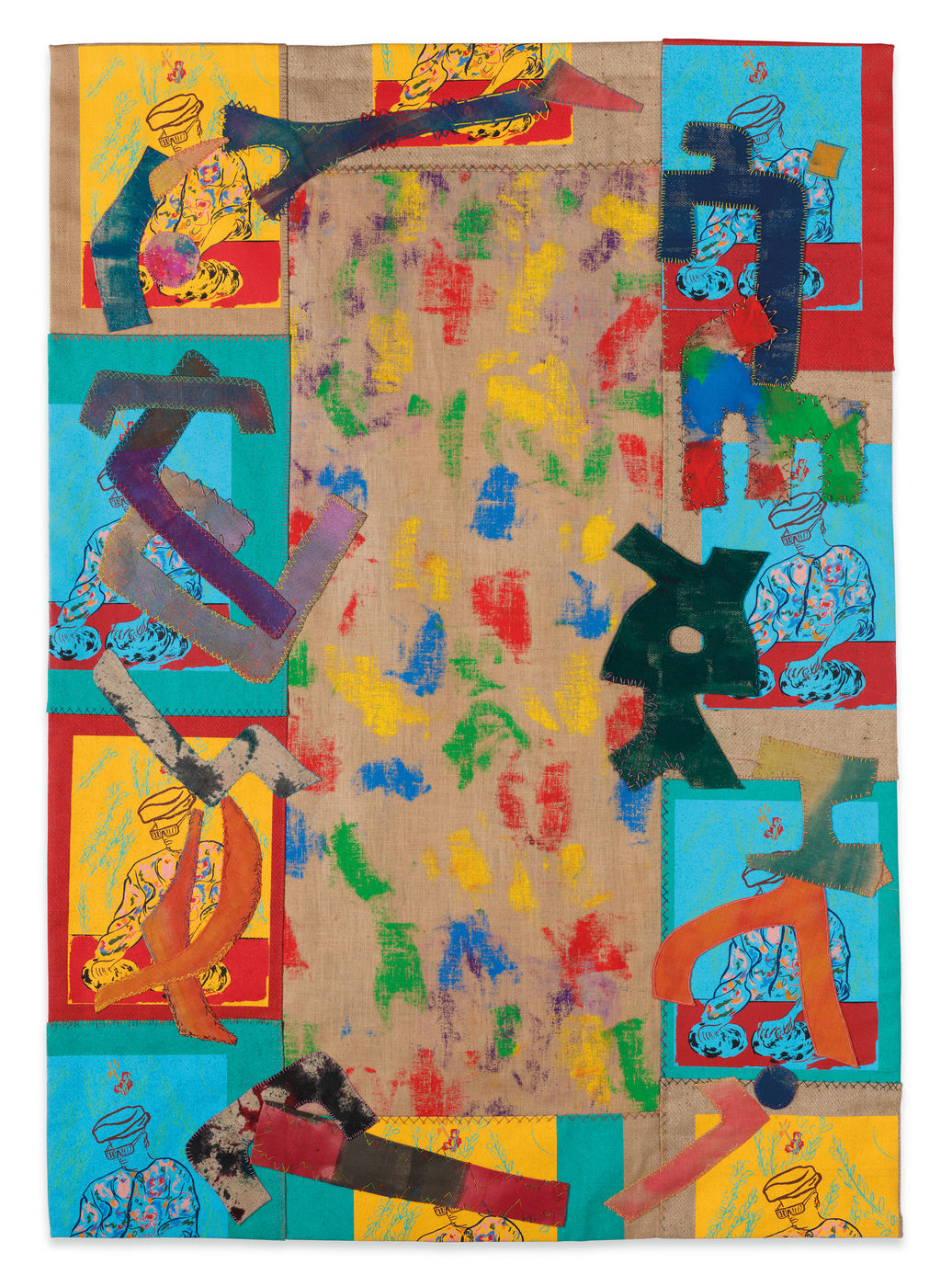
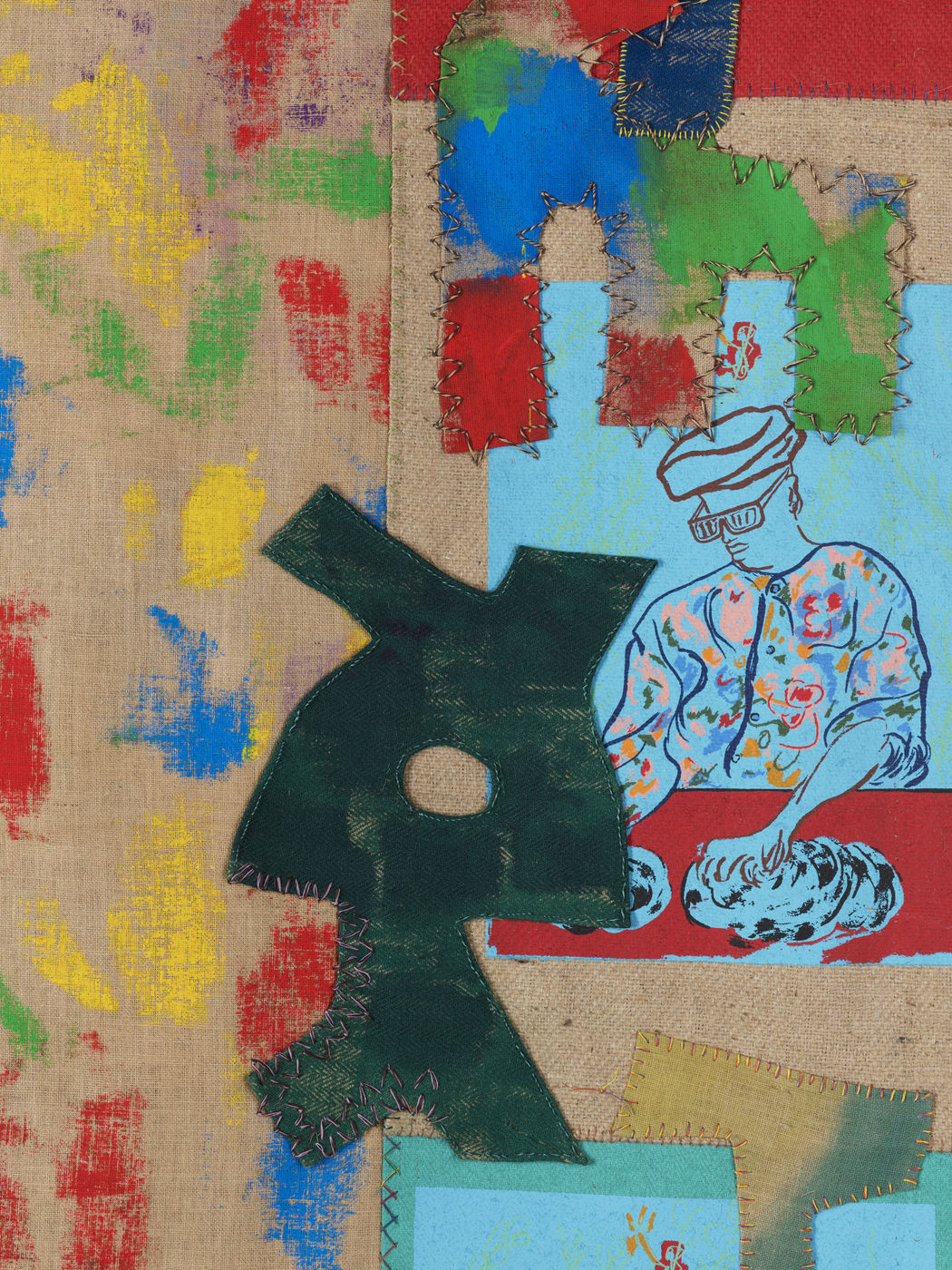
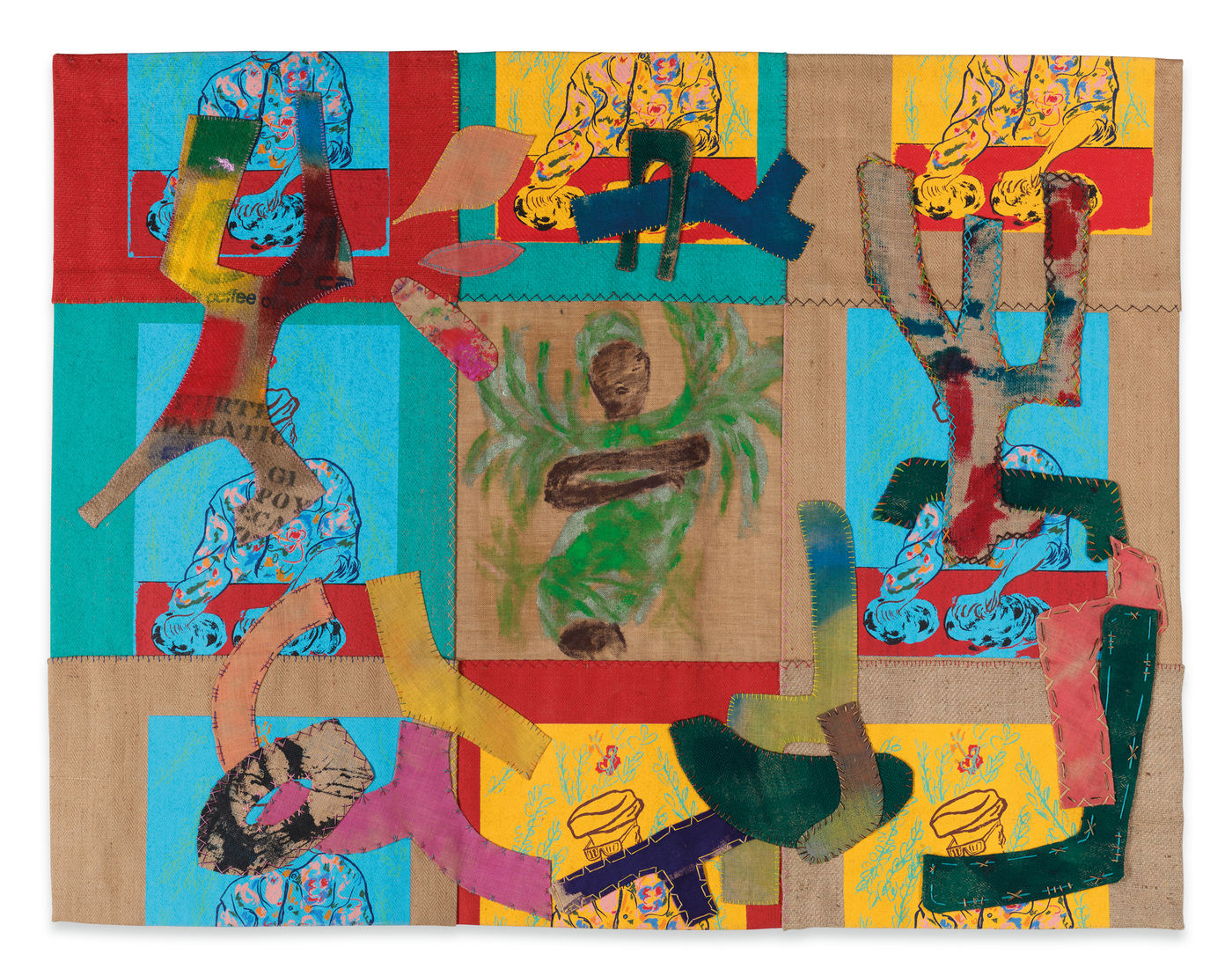
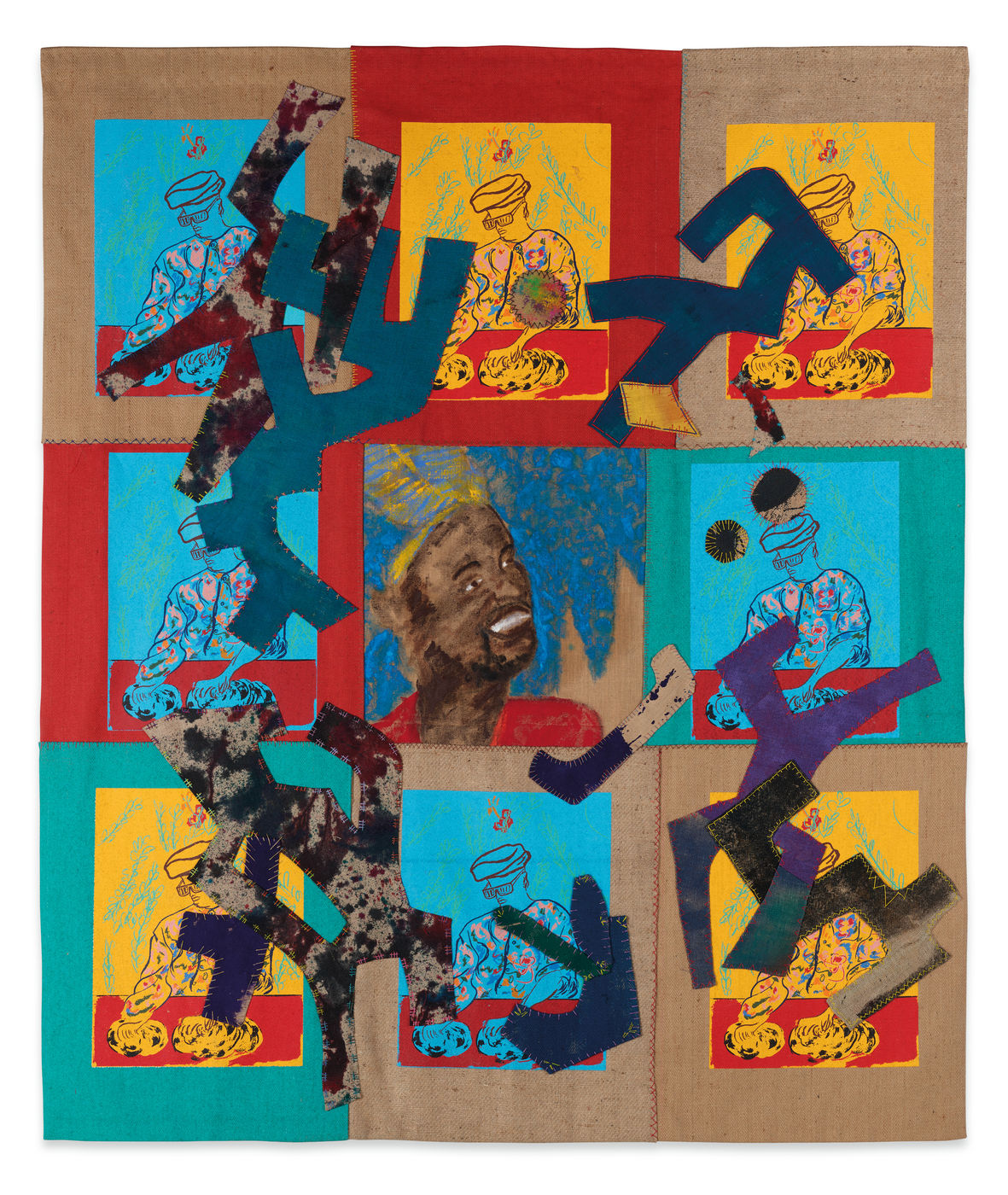
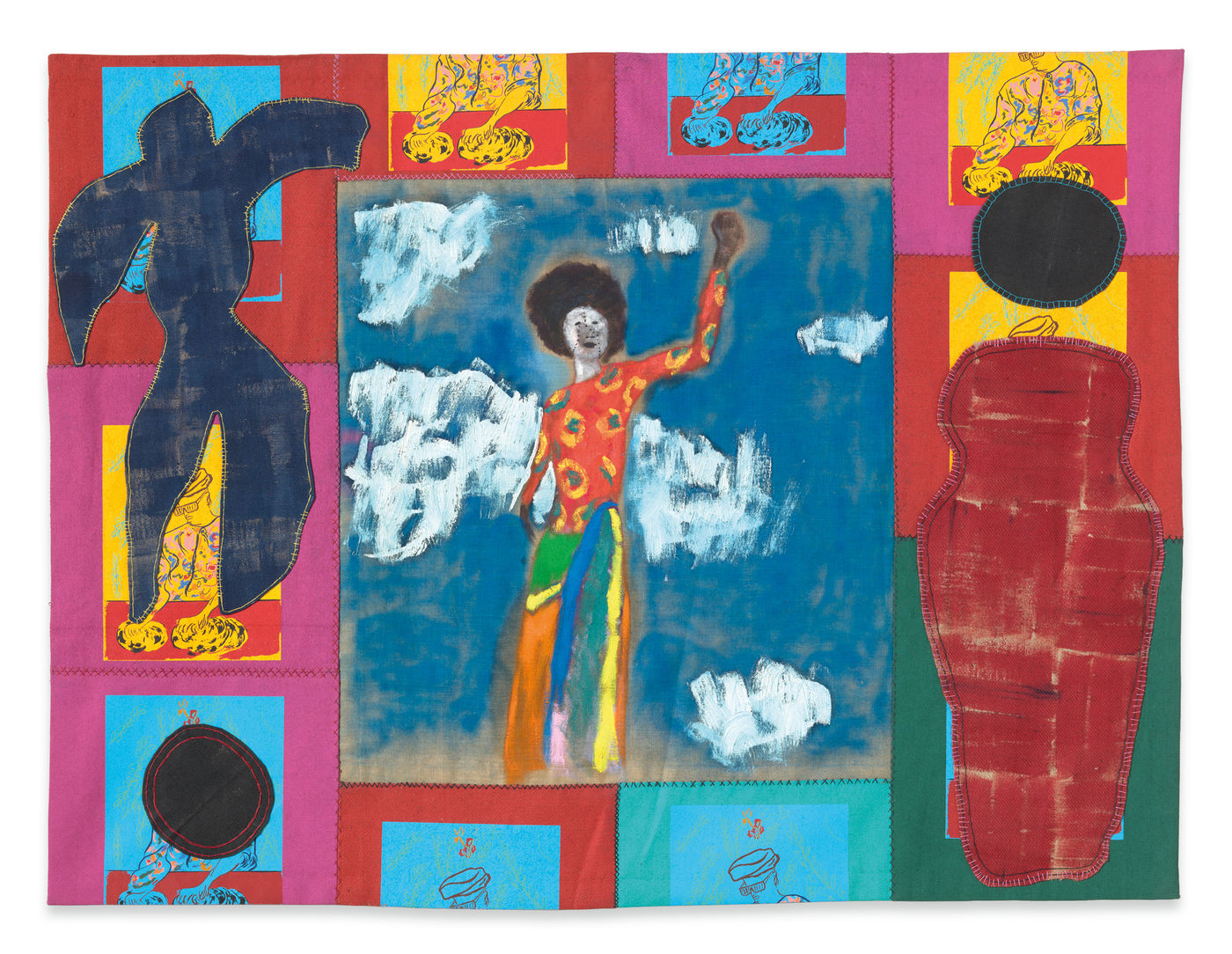
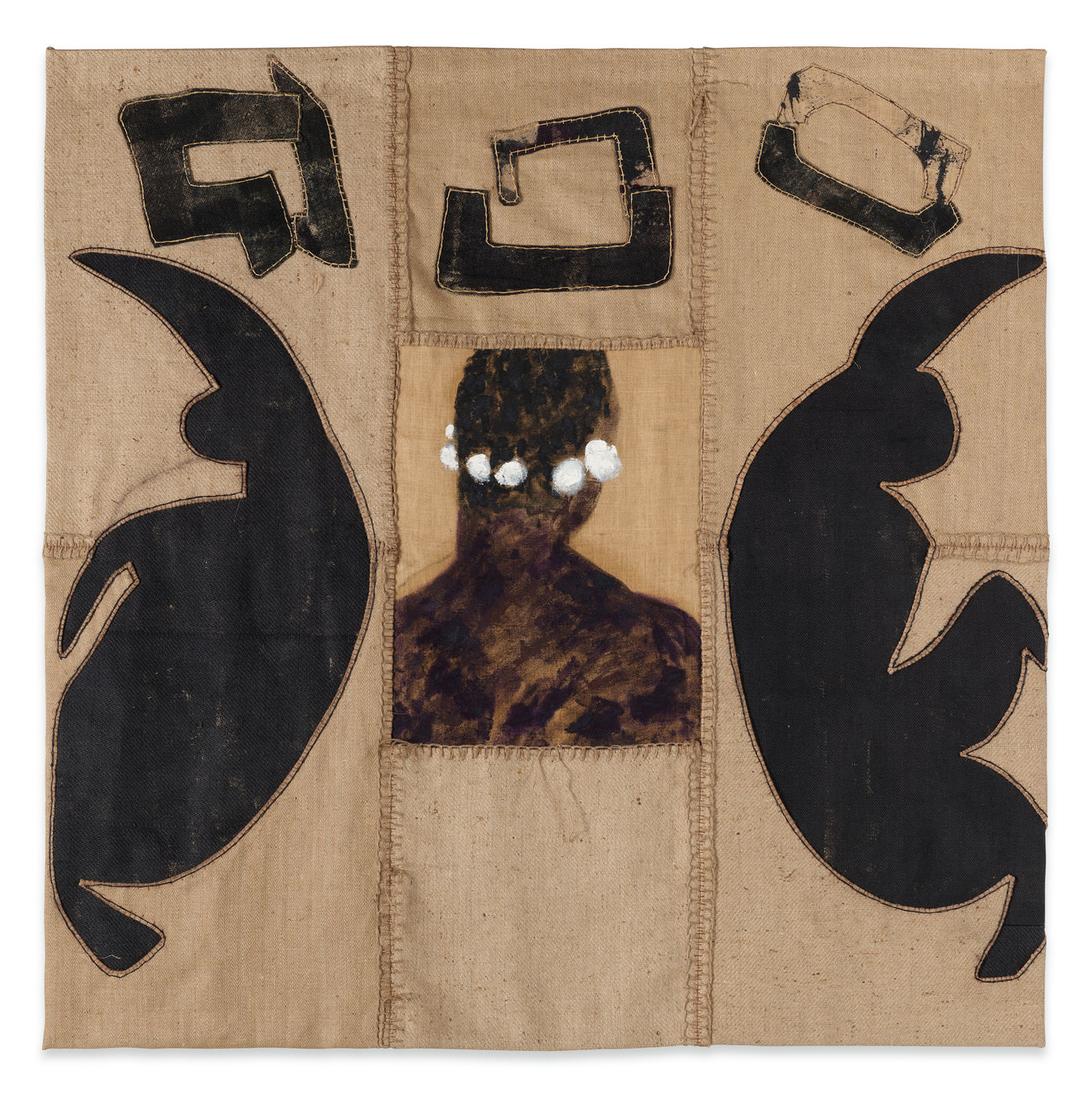
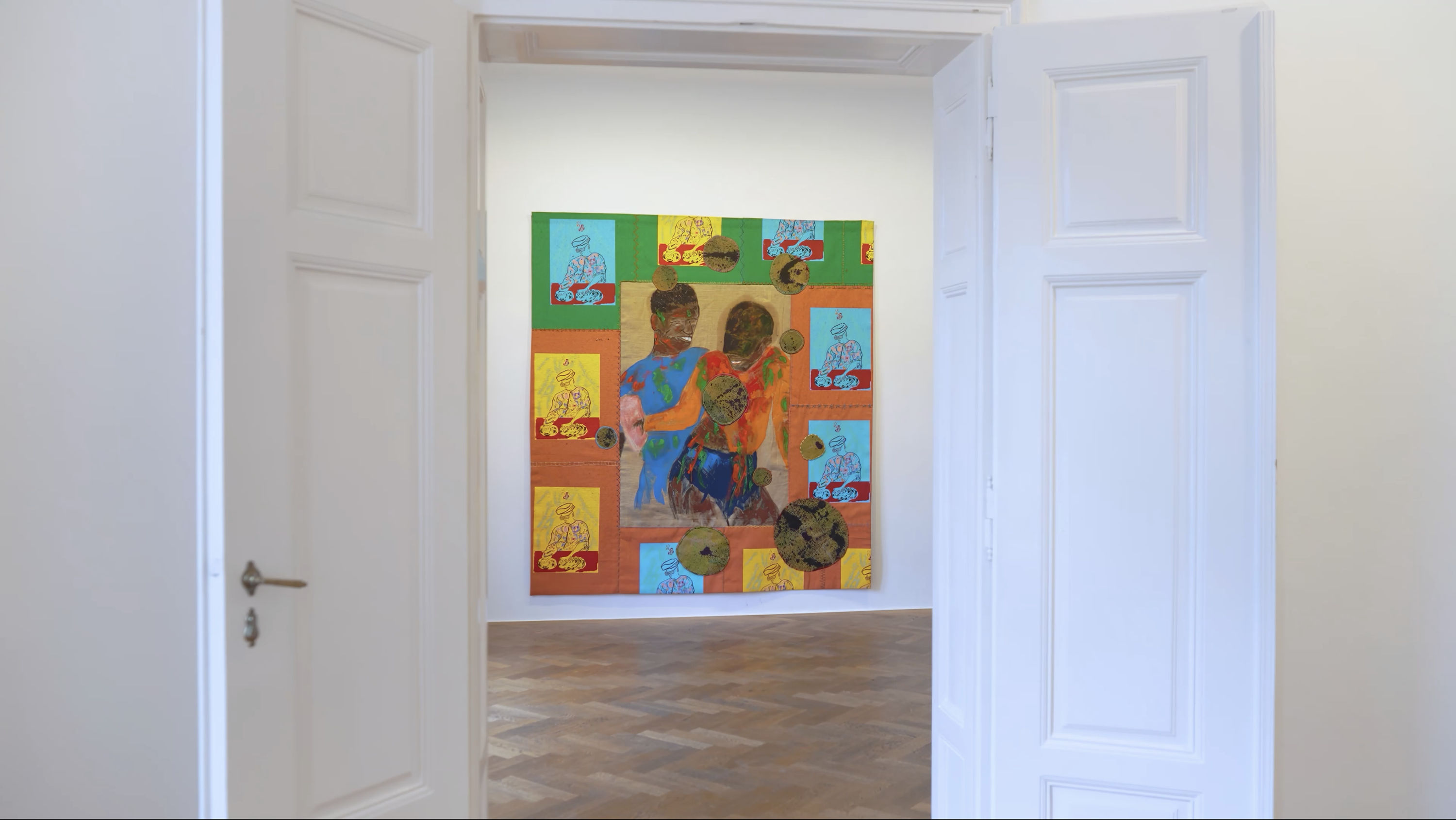
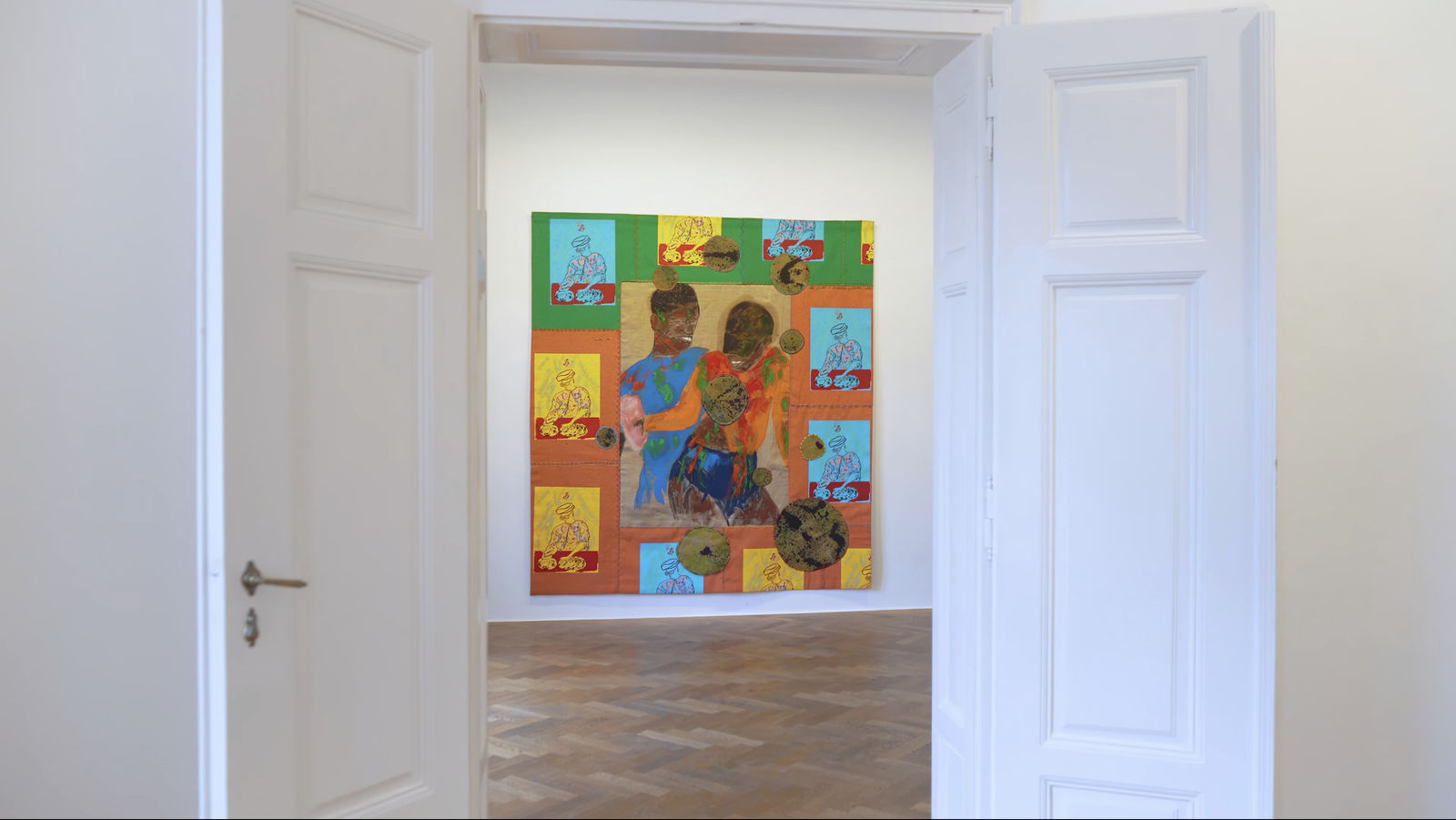
The burlap tapestries in the exhibition depict a variety of Carnival masquerade characters originating from Grenada and Trinidad and Tobago, and draw from the vocabulary of Kuba cloth patterns. Mas, the shortened form of masquerade, fuses religious and traditional aspects – from African masking culture and French colonial influences, to Indigenous cultures. Barrington’s depictions include Moko Jumbie, a stilt walker derived from West African protective figures, Blue Devil, J’ouvert, from the French ‘jour ouvert’, that grew from rebellious dawn rituals of freedom, Pretty Mas, featuring costumes with feathers, sequins and head pieces and Jab Jab, where masqueraders, often covered in black oil or paint and chains, embody the devil to symbolize post-emancipation resistance. Each painting is surrounded by a repeated portrait of the Jamaican dancehall musician Buju Banton, one of the most significant and well-regarded artists in Jamaican music.

For Barrington, identity – or a sense of belonging and community – is today less defined by nationality than by shared culture and interests. ‘It doesn't matter where you are, if you’re a K-pop fan, if you’re in Mexico, Australia, or in the middle of Nebraska, you will recognise other K-pop fans. You are probably on an online forum talking about your love of K-pop. I think Carnival culture is just one of those spaces in which millions of millions of people, including myself, meet. I’m really interested in exploring that as a space,’ he explains.

The works are presented as tapestries, which historically would have been rolled up and carried by families from house to house, passed from generation to generation. ‘I really love this idea of tapestries being about travel. After the Tate and the truck at Notting Hill, for this exhibition, I tried to make the works feel like they had weight and belonged flat on a wall,’ explains the artist. The works are made of burlap, an inexpensive material primarily used to make sacks for transporting cocoa and coffee beans, but also favoured by artists including Paul Gauguin and Alberto Burri. In Barrington’s works, colourful abstract shapes are sewn into the coarse burlap surface using a variety of stitching techniques that hark back to traditionally gendered craft traditions passed down by the women in his family, as well as the Caribbean history of artistic expression in fabric and sewing.

The artworks draw from the sophisticated vocabulary of Kuba cloth patterns. These traditional fabrics are woven from palm leaf fibres, decorated with geometric shapes, stitched or embroidered onto long cloths, and have served as ceremonial attire and currency in the Kuba Kingdom of Central Africa since the seventeenth century. Kuba cloths have a long history of reception in Western art, notably in the work of Henri Matisse, who, after travelling to Africa, collected and hung the textiles in his studio and whose colourful cut-outs and collages – specifically his 1947 Jazz series – also strongly resonate within Barrington’s works. For Barrington, the patterns have a musical connotation and resemble dancing bodies and energetic movement. ‘They testify to the enduring cultural exchanges among artists and the historic roots of trade,’ explains the artist. 

I have this belief that we live fuller lives as human beings through trade, through the ability of trading stories, trading gifts, trading ideas. That was the overall vision. This show is a celebration of the people and places that make us feel like we belong.—Alvaro Barrington

 
    Atmospheric image Atmospheric image
    Atmospheric image Atmospheric image
    Atmospheric image Atmospheric image