
Distancing 거리의 윤리
| Kei Imazu | 케이 이마즈 |
| Juree Kim | 김주리 |
| Nosik Lim | 임노식 |
| Maria Taniguchi | 마리아 타니구치 |
curated by Hannah Kim
Distancing brings together new works by four artists – Kei Imazu, Juree Kim, Nosik Lim and Maria Taniguchi – whose practices explore how images and matter come into focus over time. The exhibition proposes a mode of looking that privileges distance and duration. Here, observing from afar and dwelling in stillness does not obscure perception, but recalibrates focus. Rather than resisting instantaneity, the exhibition traces the point at which sensation catches up with us: when that which escapes immediate grasp begins to settle through distance and time. Across painting and sculpture, the featured artists approach this recalibration through distinct formal and material strategies – repetition, the slow transformation of clay, layered opacity and the juxtaposition of disparate image-worlds.
타데우스 로팍 서울은 2월 24일부터 5월 2일까지 한국, 일본, 필리핀 출신의 작가 4인의 신작을 선보이는 단체전 《거리의 윤리(Distancing)》를 개최한다. 본 전시는 이미지, 물질 그리고 인식이 시간 속에서 어떻게 재구성되고 경험되는지를 탐구하는 케이 이마즈, 김주리, 임노식, 마리아 타니구치의 신작을 소개한다. 《거리의 윤리》는 한 걸음 떨어져 감각하고 두 걸음 물러서서 바라보는 방법을 제안한다. 여기서 전시장은 거리와 머무름이 하나의 작동 조건으로 설정된 장소가 되며, 시간을 들이고 일부러 물러서는 행위는 감각을 흐리게 하기보다 초점을 조율하는 능동적 과정이 된다. 즉각적으로 파악되지 않는 대상이 시간과 거리를 통과하며 어떤 상태로 남게 되는지를 환기하는 것이다. 각자의 고유한 방식으로 이미지와 물질, 그리고 인식이 시간 속에서 어떻게 형성되고 변주되는지 탐구해 온 네 작가의 실천은 바라보는 이로 하여금 쉽게 포착되지 않는 감각과 경험의 잔여를 따라가도록 이끈다.
Watch a video of the featured artists speaking about the exhibition
전시에 대해 설명하는 참여 작가들의 영상을 감상하세요

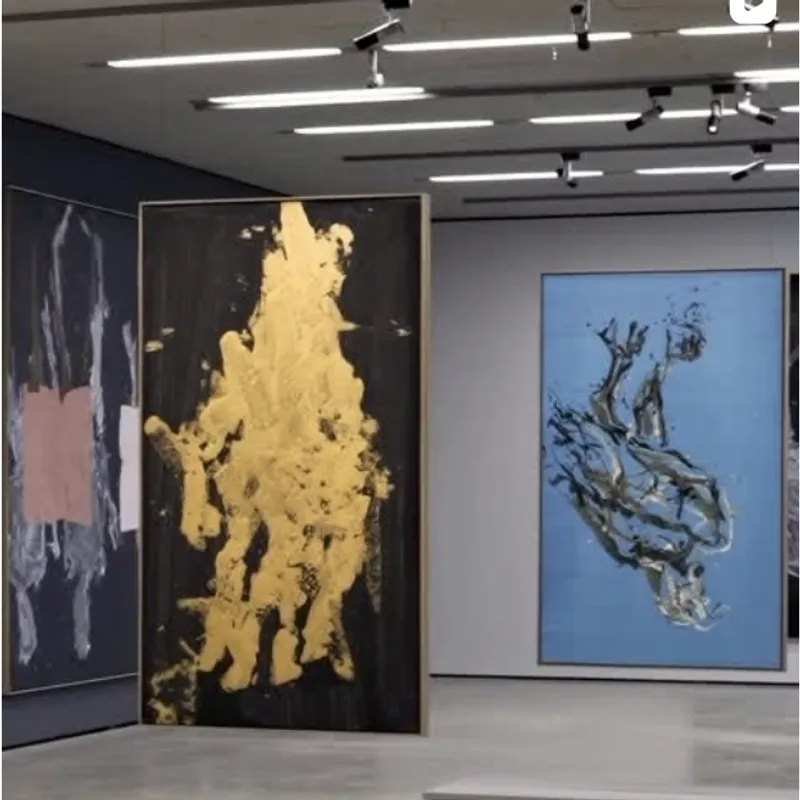
Kei Imazu
Kei Imazu’s paintings carry a sense of distance that is shaped by time, history and the body. Imazu’s images do not cohere into a single moment. Painting, here, is not a vehicle to retrieve the past, but a means to register how what has already passed continues to seep forward, rearranging itself in the present.
케이 이마즈의 회화는 거리와 감각을 시간과 역사, 그리고 신체의 층위로 확장한다. 그의 화면에서 이미지는 하나의 시간을 공유하는 장면으로 수렴하지 않는다. 서로 다른 조건과 서사에서 건져 올린 파편들이 화면 위에 포개지고, 그 중첩이 만들어내는 불안정한 장 안에서 의미는 쉽게 닫히지 않은 채 지속적인 여운을 남긴다. 지나간 시간은 현재의 표면 가까이로 번져 나오고, 회화는 그 스밈과 재배열의 과정을 따라간다.

Oil on canvas
200 × 135 cm (78.74 × 53.15 in)
In Hearth and Wreck (2026), the image does not assert itself as a stable element. It drifts, overlaps and collects beneath the surface. Painting on a semi-translucent cotton support, Imazu leaves the canvas stretcher faintly visible as though to expose the work’s internal scaffolding. Within this permeable plane, a wartime shipwreck and a stone relief of an everyday gesture share the same pictorial ground. Their coexistence softens hierarchies and reorients history away from a linear sequence towards something slowly accumulated.
반투명한 면 캔버스 위에 그려진 〈화로와 난파(Hearth and Wreck)〉(2026)에서 이미지는 표면 아래로 가라앉으며 층을 이룬다. 희미하게 비치는 캔버스 너머의 구조가 마치 뼈대를 연상시키기도 한다. 침몰한 전쟁 선박의 잔해와 일상의 몸짓을 담은 석조 부조가 나란히 놓일 때, 서로 다른 사건의 무게는 자연스럽게 평준화되고 시간은 침전과 침식의 감각으로 축적된다.
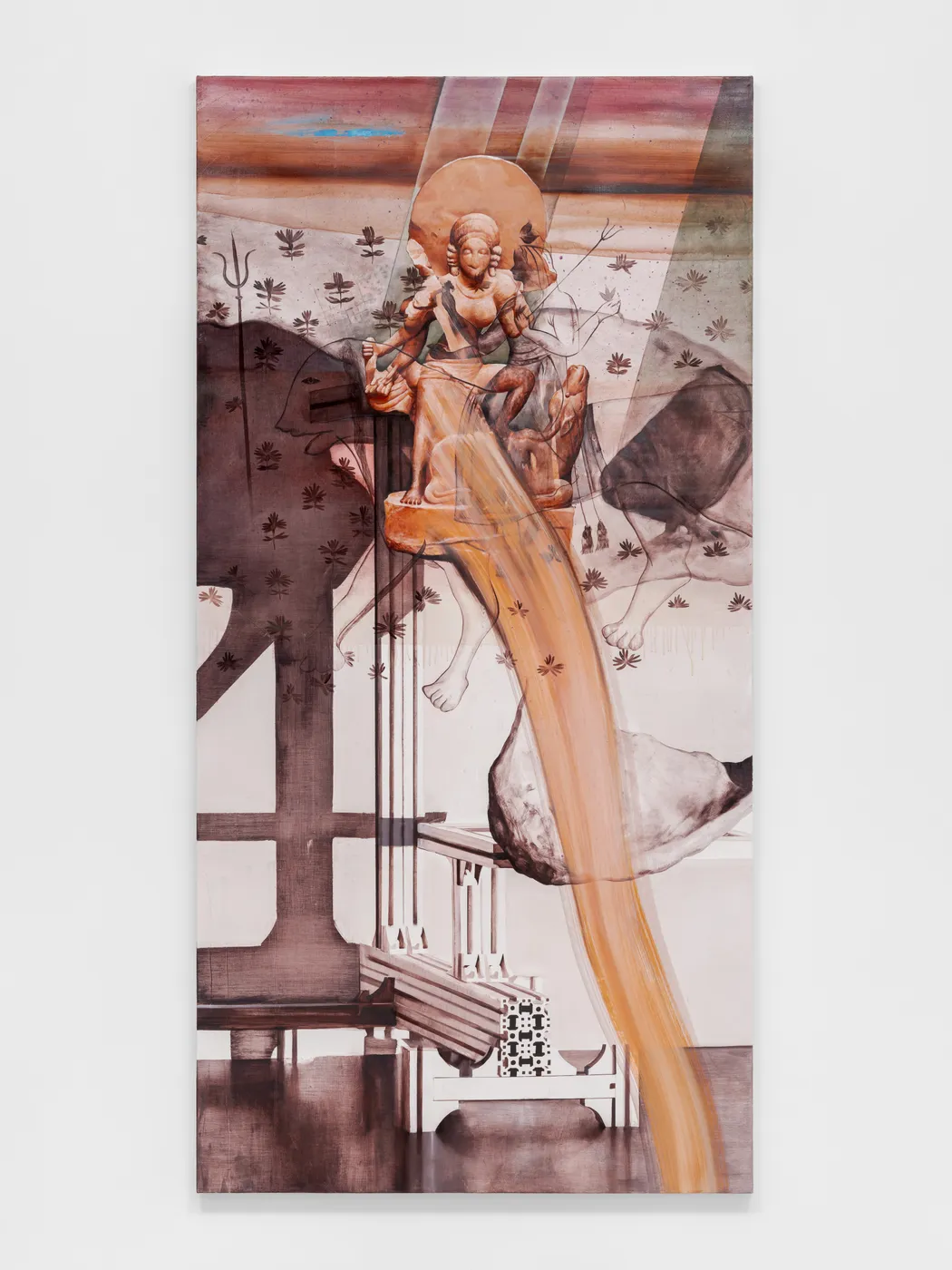
Oil on canvas
194 × 97 cm (76.38 × 38.19 in)
In She Who Treads (2026), by contrast, the surface is fully opaque. A mythic body meets an industrial structure; iron scrollwork drawn from colonial gates leans into anatomical form. As these motifs collide, tensions among belief, the body and systems of power come into view: how bodies are protected and disciplined, how passage is marked and regulated, and how images endure by being repeatedly invoked, revised and re-situated within historical reality. Moving between these modalities, denoting erosion, dissolution and abrasion, Imazu’s paintings ask how memory persists materially in the present.
반면, 〈밟는 이, 그녀(She Who Treads)〉(2026)에서는 이미지가 전면으로 떠오른다. 신화적 신체, 산업적 구조물, 식민지 건축에서 차용된 장식적 요소들이 한 화면 안에서 충돌하고 맞물리며, 믿음, 제도, 신체, 권력이 남긴 일련의 흔적들이 화면의 구조로 드러난다. 각자 다른 시간과 서사에서 건너온 형상들은 한 장면 안에서 충돌하기보다 서로를 지우지 않게 하는 완충의 거리 속에 놓인다. 투명함과 불투명함, 침식과 고정, 방치와 관리의 결이 교차하는 가운데, 그의 회화는 무엇이 표면에 남고 또 무엇이 흐려지며 잊혀지는지, 그리고 그 편차가 현재의 감각을 어떻게 흔드는지에 주목한다.

Oil on canvas
194 × 97 cm (76.38 × 38.19 in)
Imazu's work keeps multiple temporalities active on a single surface, held in a measured distance that allows them to coexist in tension. In this way, her paintings extend the exhibition’s proposition of ‘distancing’: not as detachment, but as a condition for re-encounter.
이마즈의 작품 앞에서 우리는 선후의 질서를 잠시 보류하게 된다. 이미 지나간 시간들이 ‘지금, 여기’와 접속하는 순간을 계속해서 만들어내는 일련의 작업은 본 전시가 제안하는 ‘거리’의 또 다른 양상을 보여준다. 일정한 거리를 유지한 채 서로 다른 시간과 층위가 한 화면 안에 공존하는 상태를 지속시키는 작가는 그렇게 스며든 시간과 다시 조우하는, 조용한 재회를 그려낸다.
Juree Kim
Juree Kim works primarily with earth, developing time-based installations, sculptures and paintings that follow the material’s natural cycles from saturation to desiccation. In her practice, clay is approached less as a stable sculptural medium than as an unpredictable substance that shifts in response to its surrounding conditions. Through such sedimentary transformations, Kim considers how time becomes legible in matter. Grounded in an ongoing interest in changing environments, her work considers how first-hand experiences and geographic conditions manifest in material and form.
김주리는 흙(earth)을 주축으로 벽돌이나 파편, 암석 등 다양한 물질을 다루며, 물질이 겪는 ‘젖음–응고–균열–퇴적’의 변화를 시간 기반 설치, 조각, 평면 작업으로 전개한다. 작가의 작업에서 물질은 완결된 형태로 고정되기보다, 주변 환경과 조건에 반응하며 상태를 달리하는 과정적 물질로 제시된다. 그는 이러한 변화가 남기는 표면의 흔적과 구조의 변형을 통해 시간이 물질에 새겨지는 방식을 드러내고, 생성과 소멸을 대립항이 아닌 연속된 흐름으로 다룬다. 또한 변화하는 주변 환경에 대한 관심을 바탕으로, 장소 경험과 지리적 조건이 작업의 언어로 연결되고 확장되는 방식을 살핀다.
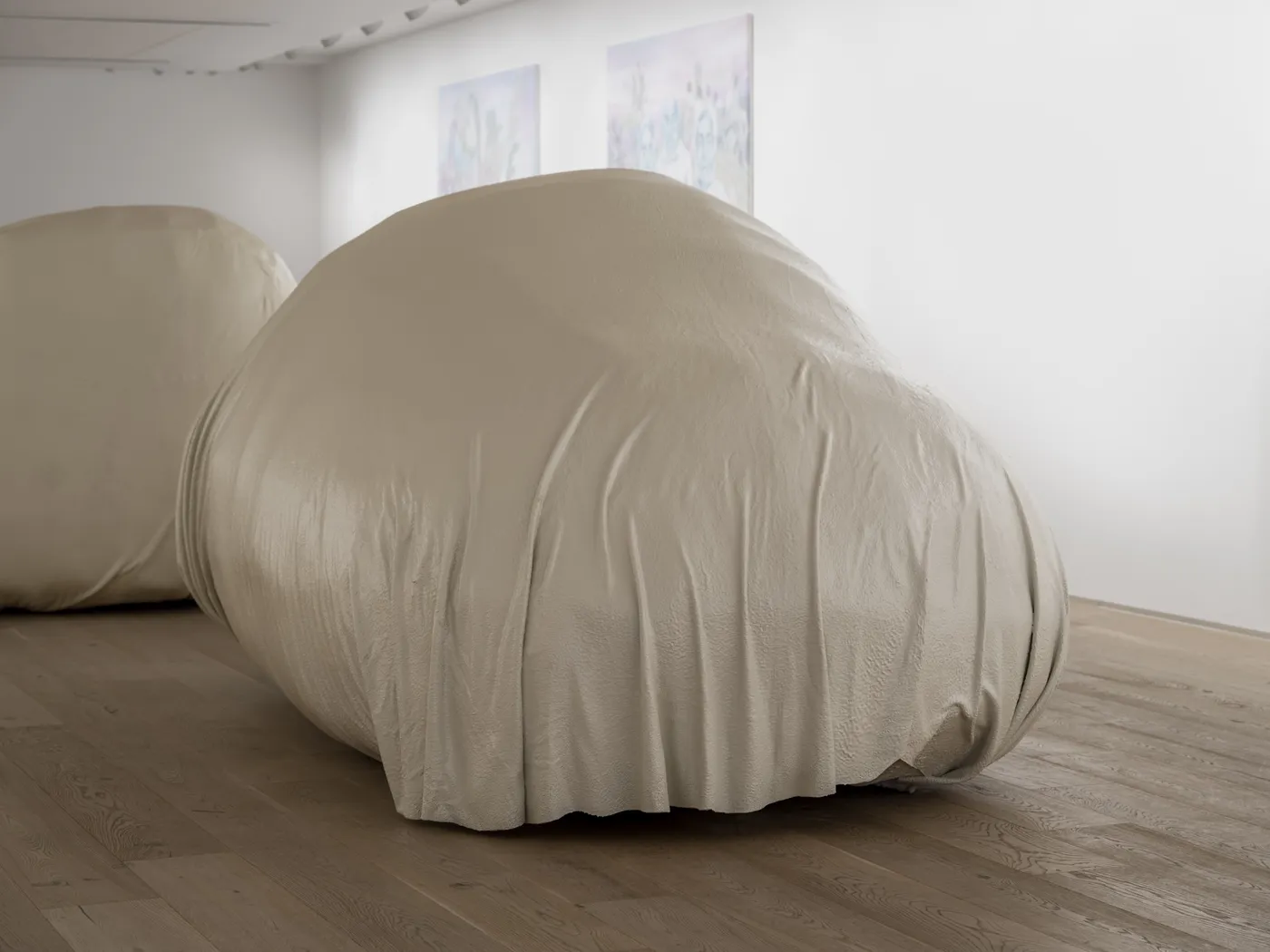
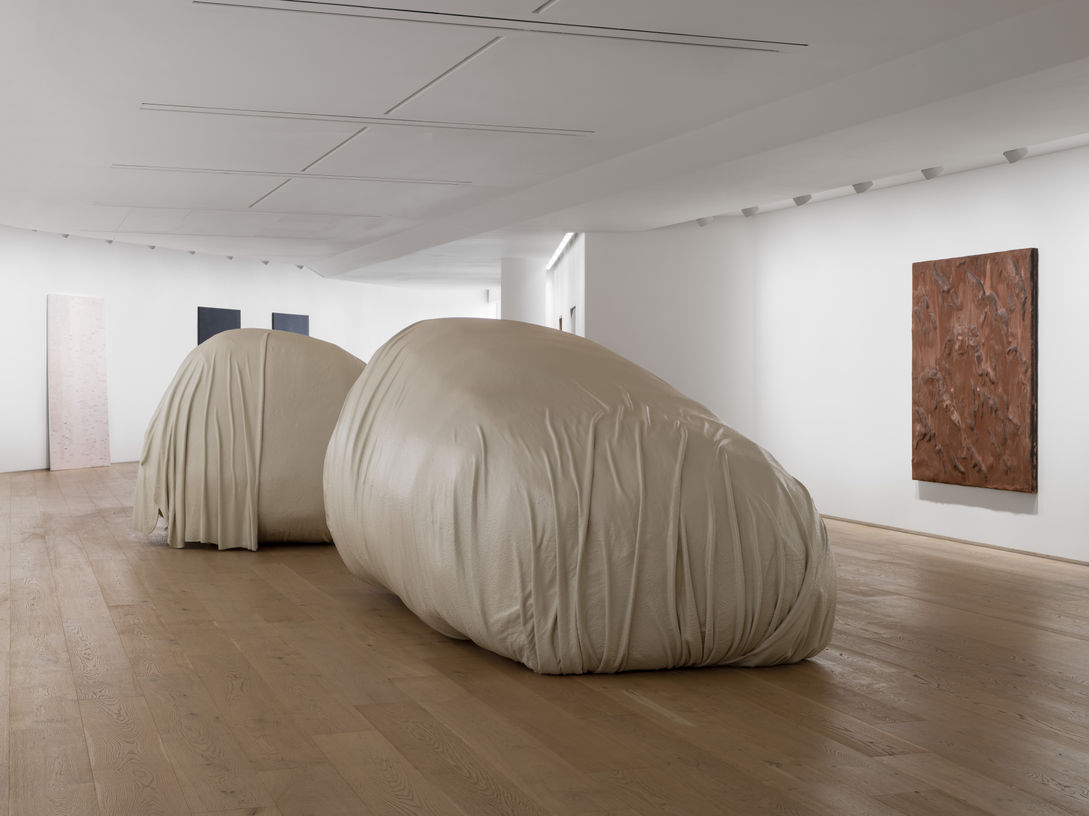
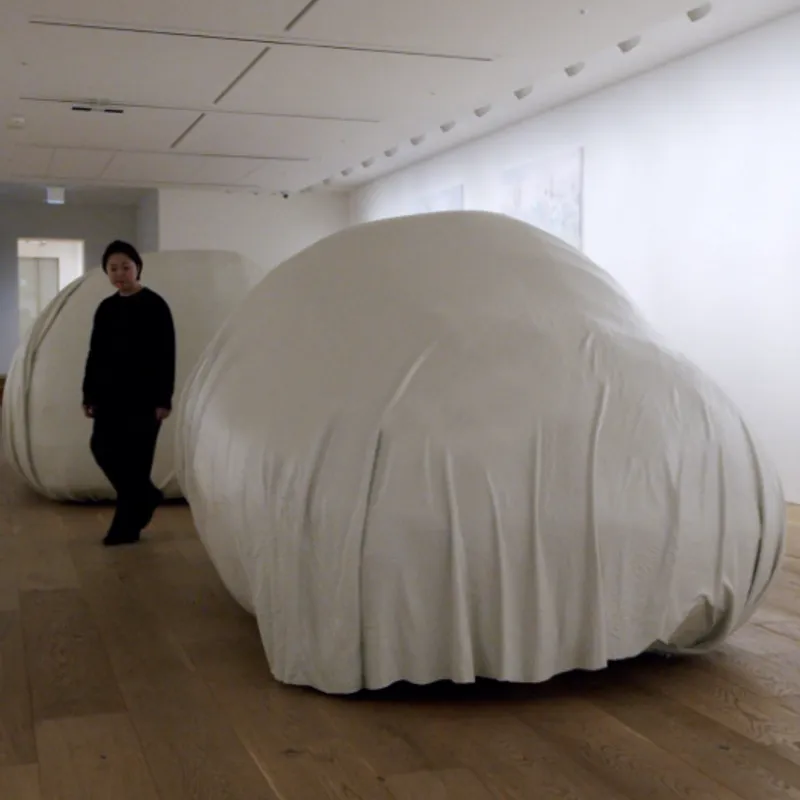
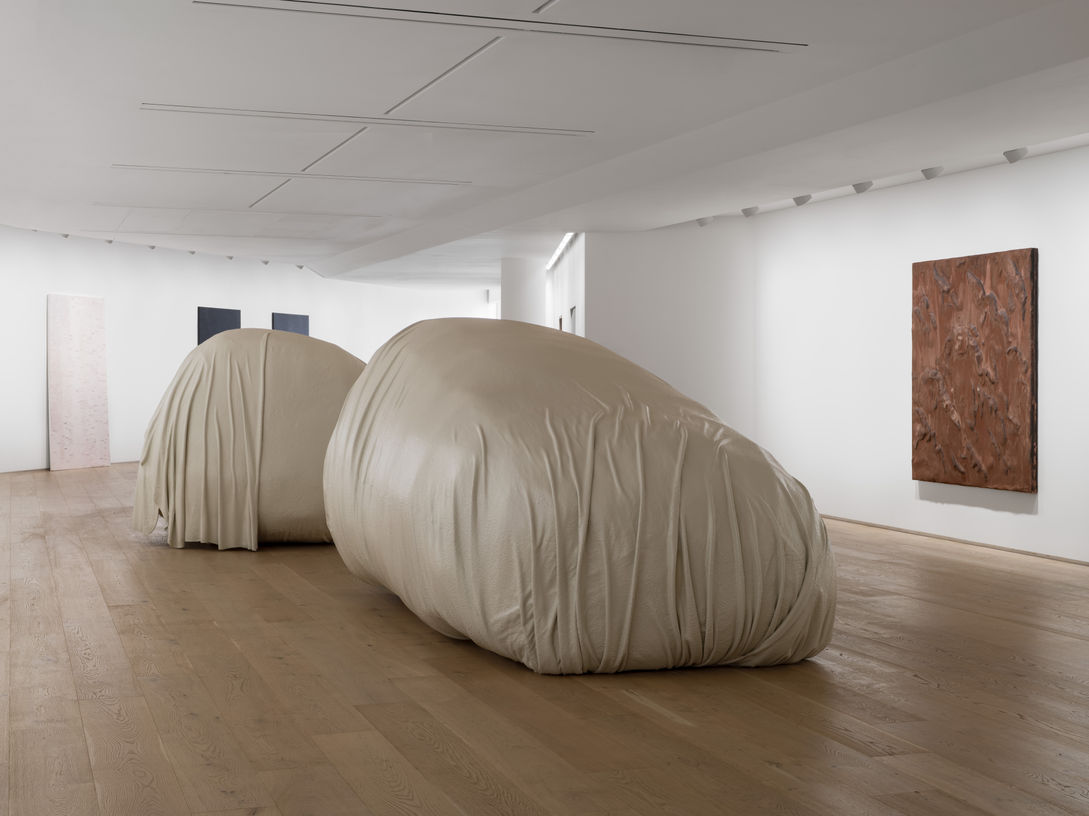
Wet Matter_202602, 2026
Wet soil, mixed media, scent
255 × 350 × 170 cm (100.39 × 137.8 × 66.93 in)
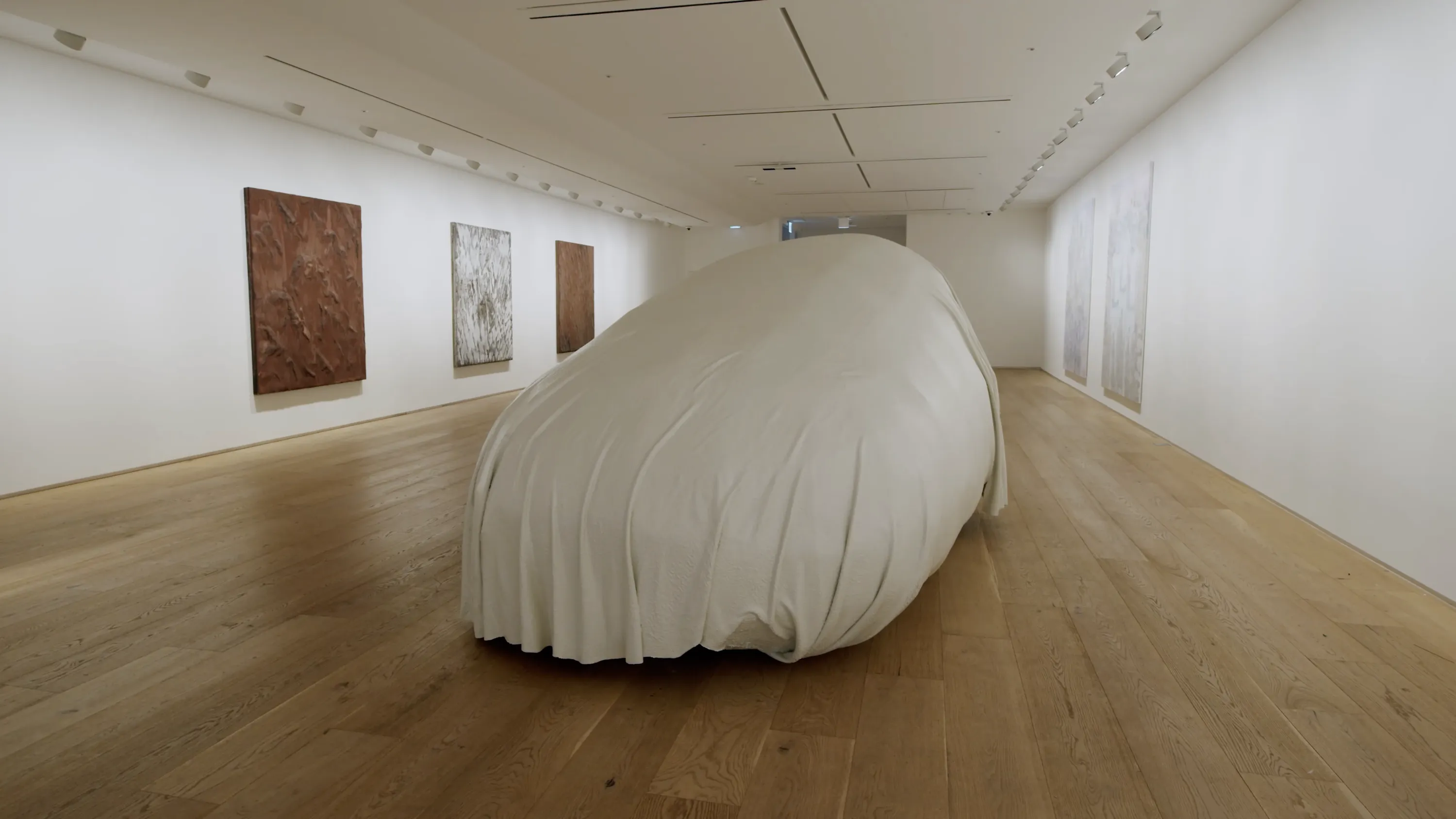
Sculpted primarily with clay, Kim’s works embody elemental cycles of creation, accumulation and disintegration. Wet Matter_202602 (2026) occupies the gallery’s central space, functioning as a core to the exhibition. The work resists fixity, instead continually responding to the shifting light, temperature and humidity of its habitat.
전시장 중앙에 고요히 자리한 〈모습 某濕_202602(Wet Matter_202602)〉(2026)은 완결된 조형물이라기보다 특정한 시간과 조건 속에서 유지되는 하나의 과정에 가깝다. 작품 앞에서 관객은 하나의 장면을 ‘보는’ 데 그치지 않고, 물질이 지닌 무게, 냄새, 온도와 질감 같은 부분적인 감각을 통해 시간과 공기의 흐름을 더듬게 된다.

desert 07_BdCpAC, 2026
Brick dust, ceramic powder, ash, coal, mixed media and artist panel
183 × 161 cm (72.05 × 63.39 in)
While Wet Matter_202602 momentarily suspends earth in the present, Kim’s painting series desert explores the processes that follow. As moisture drains away from the works, fissures appear; surfaces split; strata fracture and break. desert retains the inscriptions left by time, when fertile ground dries and cracks. It becomes a locus of return and transformation: how human traces fold back into the earth, changing form through cycles of use, collapse and sedimentation.
〈모습 某濕〉과 〈desert〉는 각각 다른 작업이지만, 하나의 물질이 겪는 변화와 순환을 보여주는 두 개의 연결된 장면이기도 하다. 〈모습 某濕〉이 젖은 흙의 현재라면 〈desert〉는 그 다음을 바라본다. 수분이 물러난 자리에는 균열이 남고, 표면은 갈라지며, 층은 부서진다. 〈desert〉는 물질이 지나온 시간의 결을 표면에 품고, 시간은 그 위에 자신을 새긴다. 작가는 이를 단지 자연의 변화로만 돌리기보다, 인간의 흔적이 다시 물질로 돌아가며 형태를 바꾸는 순환의 장면으로 살핀다.
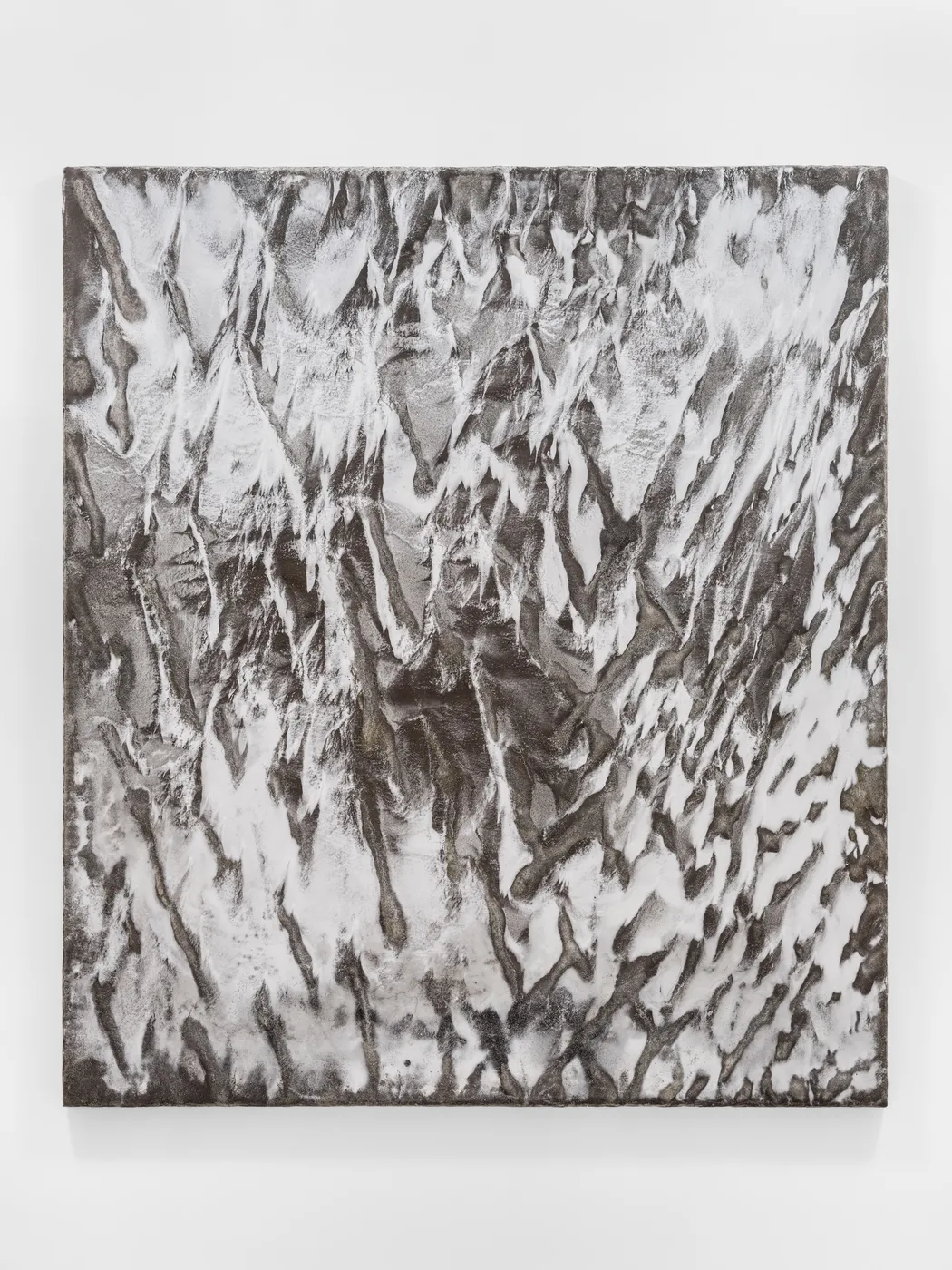
Quartz sand, glass, ash, stone powder, mixed media and arist panel
183 × 161 cm (72.05 × 63.39 in)
Brick dust, ceramic powder, ash, mixed media and artist panel
183 × 161 cm (72.05 × 63.39 in)
desert arrests this moment in suspension. Gripping onto the earth, water and air, these works draw the viewers towards their body and asks them to steady their breath. Thus, rather than stimulating acute sensations, Kim’s work provides the viewers with the time and proximity to uncover and respond to a moment of stillness.
〈모습 某濕_202602〉이 내쉬고 들이쉬는 긴밀한 호흡의 상태라면, 〈desert〉는 큰 숨을 들이마신 채 멈춰 선 장면과도 같다. 폐벽돌과 암석, 물, 공기를 부둥켜 안고 응고된 화면 앞에서 관객은 그것이 품은 기억이나 배경을 알지 못하더라도 잠시 발걸음을 늦추며 함께 숨을 고르게 된다. 이렇듯 김주리의 작업은 감각을 자극하기보다 그것이 스스로 반응할 수 있도록 시간과 곁을 내어준다.

Nosik Lim
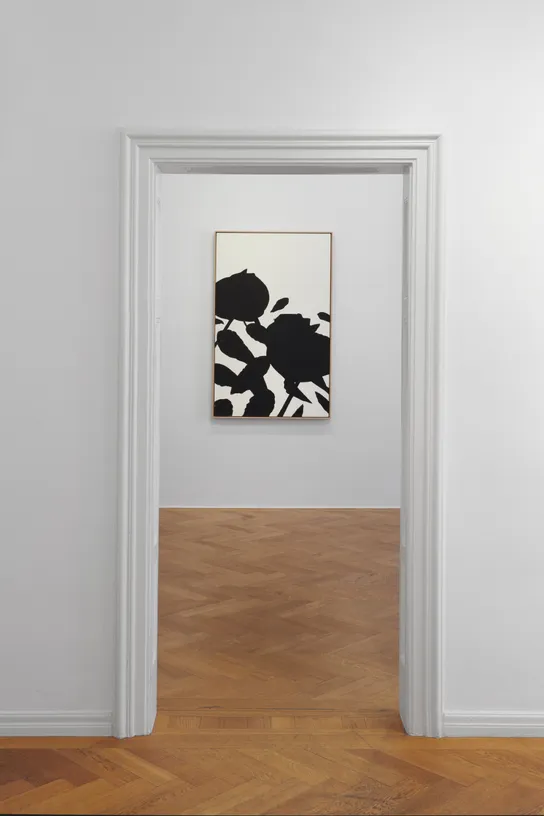
Nosik Lim builds paintings from incidents and sensations drawn from his surroundings, tracing relational states that emerge at the threshold between the visible and the barely perceptible. Working with oil pastel layered over painted images, he modulates the surface by softening edges and recalibrating distance – less through erasure than through a deliberate blurring of boundaries. Forms overlap and jostle against one another, sustaining a precarious balance that generates tension within the pictorial field. Lim positions the canvas as a site where external reality and internal perception converge.
임노식은 자신을 둘러싼 환경과 감각을 출발점으로, 가시와 비가시의 경계에서 발생하는 관계의 상태를 회화로 구축한다. 캔버스 위에 대상을 그린 뒤 오일 파스텔의 층위를 덧입히는 작가는 경계를 흐리게 만드는 방식으로 화면의 밀도와 거리감을 조정한다. 이때 이미지의 선명함은 단일한 초점으로 수렴하기보다 겹침과 침투 속에서 불안정한 균형을 유지하며 화면 내부의 긴장을 형성한다. 작가는 캔버스를 외부 현실과 내적 인식이 교차하는 장으로 설정하고, 그 교차가 남기는 잔여와 편차를 회화의 구조로 다룬다.

Oil on canvas
250 × 205 cm (98.43 × 80.71 in)
Nosik Lim’s paintings conjure the elusive sensations encountered at the start of the exhibition. Corporeal and botanical forms do not appear in sharp relief; rather, they diffuse through the faint pink and blue pastel-hued canvas, lingering like afterimages of memory. Lim’s principal focus is the depiction of coexistence. Drawn from his surroundings and personal experiences, these images crystallise what remains beyond visible events—like the erosion of mountains or villages falling into oblivion. Through painting, Lim reimagines the intangible sensations as profound layers of relations.
임노식의 회화 속 형상은 명확히 드러나기보다 공기 안에서 아스라이 번지며 기억의 잔상처럼 머문다. 그의 방점은 대상이나 풍경을 재현하는 데 있지 않다. 오히려 하나의 환경 안에 병치된 대상들이 어떻게 서로를 떠받치며 공존하는지, 그리고 그 관계들이 어떤 상태로 감각되는지에 놓여 있다. 작가는 산이 깎이고 마을이 조용해지는 변화처럼 눈에 보이는 사건 너머에 남는 흐름과 기류를 오랫동안 응시해 왔다. 그의 회화는 이러한 비가시적인 감각을 관계의 상태로 포착한다.

Oil on canvas
250 × 205 cm (98.43 × 80.71 in)
While Lim’s earlier paintings remained softly blurred, these new works suggest a step closer to a sense of narrative, as forms begin to materialise with a stronger sense of presence, allowing new stories to emerge. Various elements press against and seep into one another on the canvas, maintaining a precarious balance between legibility and illegibility. Here, the boundaries between human and non-human, natural and artificial, organic and inorganic, life and death are not separated but placed in states of contact and entanglement. By allowing elements to encroach upon one another rather than erasing them, Lim’s paintings simultaneously blur and activate boundaries.
이번 전시에서 선보이는 작업은 그가 지속적으로 다뤄온 거리의 감각을 또 다른 국면으로 이동시킨다. 이전의 회화가 비교적 원경에 머물렀다면, 신작에서는 한 발짝 다가선 위치가 감지된다. 형상은 더 이상 흐려지기만 하지 않으며, 화면에는 다양한 요소들이 등장한다. 각각의 요소들은 서로를 밀어내고 침투하며 불안정한 균형을 이룬다. 이곳에서 인간과 비인간, 자연과 비자연, 유기적인 것과 인공적인 것, 살아 있는 것과 죽은 것의 경계는 분리되지 않은 채, 맞닿고 얽힌 상태로 놓인다. 대상을 지우는 대신 서로를 침범하게 만드는 그의 회화적 선택은 경계를 흐리는 동시에 그 경계가 여전히 작동하고 있음을 보여준다. 부드러운 색면과 번짐 속에 잠복한 날카로운 긴장은 화면을 쉽게 소화하지 못하게 만들며, 어떠한 대상도 명료하게 이름 붙여질 수 없고, 중심과 초점 또한 무력화된다.

Oil on canvas
250 × 205 cm (98.43 × 80.71 in)
After delineating his subjects, Lim builds a translucent layer of oil pastel onto the surface of the canvas. In this process, forms overlap and permeate one another, creating intimate juxtapositions. This allows the narratives to escape the contained perimeter of the canvas and continuously rearrange themselves.
작가는 대상을 그린 뒤 오일 파스텔로 투명한 층위를 덧입히며 화면을 구축한다. 이때 덧입힘은 단순한 가림이나 소거가 아닌 이미 놓여 있는 관계들을 다시 조정하는 과정이 된다. 대상이 완전히 사라지지 않은 채 서로 겹치고 스며들수록 화면에는 다가가거나 물러서는 시점의 문제를 넘어, 쉽게 벗어날 수 없는 거리와 관계의 밀도가 형성된다. 이로써 그의 회화는 고정되지 않고 감각이 계속해서 재배치되는 상태로 유지된다.
Confronted with the work, the viewer no longer remains in the position of a one-sided observer. Instead, their gaze constantly moves across the borders of the canvas, as the viewer searches for direction through the hazy terrain. This shift takes distancing beyond the idea of repositioning the body, proposing an attempt to confront a state where boundaries collide and blur. Here, ‘distance’ becomes not a mode of avoidance or contemplation, but a way of reconnecting with the world.
작품을 마주한 관객은 더 이상 이미지를 일방적으로 응시하는 위치에 머물지 않는다. 시선은 화면이라는 경계를 기준으로 끊임없이 교환되고, 안개 낀 선산에서 길을 찾듯 방향을 가늠하며 장면 안으로 서서히 진입하게 된다. 이러한 전환은 거리를 확보하던 태도에서 더 나아가, 경계가 서로 부딪히고 번지는 상태를 마주하려는 시도로 읽힌다. 이 지점에서 ‘거리’는 회피나 관조가 아닌, 세계와 다시 접속하기 위한 조건이 된다.
Maria Taniguchi
Maria Taniguchi works across painting, sculpture, video and installation, developing structures through repetition and the accumulation of labour. Her practice treats geometric frameworks not as fixed schemas but as operating matrices – stable systems that admit minute deviations over time. Placing the organisation of the surface at the centre of her practice, Taniguchi directs her attention to how an image is built rather than to narrative resolution. Repetition functions as a rigorous method: forms emerge gradually through incremental action, allowing their processual and durational dimension to remain legible in the final work.
마리아 타니구치는 반복과 노동의 축적을 통해 화면에 시간의 단위를 쌓아 올리는 방식으로 작업해 왔다. 회화를 주축으로 조각, 영상, 설치 등 다양한 매체를 넘나드는 작가는 기하학적 구조를 고정된 도식이 아닌 미세한 편차가 스며드는 작동하는 프레임으로 다룬다. 그는 화면의 구조와 구성 자체를 핵심 언어로 삼아, 화자로써의 이미지와 더불어 어떻게 조직되는지 주의를 기울인다. 반복과 노동의 축적은 그의 작업에서 중요한 방법론으로, 형태가 단번에 완성되기보다 누적되는 행위와 시간의 흔적을 통해 형성되는 과정을 드러낸다.

Acrylic and pencil on canvas
228 × 114 cm (89.76 × 44.88 in)
Taniguchi has developed these brick paintings since 2008. While each canvas is unique, these works nonetheless seem to extend from one surface to the next like a body unfolding – not yet fully formed and perpetually in progress. In Untitled (2026), time reveals itself in the everyday measure of repeated action, each brick a testament to an act carried out meticulously under the same conditions.
벽돌 회화는 작가가 2008년부터 이어온 작업이다. 일련의 화면은 각기 다른 지점에 도달하게 되지만, 모두 같은 기원에서 출발한 하나의 흐름 위에 놓여 있다. 작업은 여러 캔버스를 건너며 아직 끝나지 않은 하나의 ‘몸’처럼 지속된다. 〈무제(Untitled)〉(2026)에서 시간은 반복 행위가 만들어내는 일상적 단위로 쌓이며, 벽돌 하나하나는 특별한 상징이 되기보다 동일한 조건 아래에서 이어진 행위의 흔적으로 남는다.

Acrylic and pencil on canvas
44.5 × 34.5 cm (17.52 × 13.58 in)
Rather than operating as a metaphor for meditation or self-reflection, the work relies on a set of rules while refusing total control over outcomes: a stable framework open to chance and minute deviation. Repetition becomes a way of suspending prediction; of keeping meaning from immediate resolution and allowing perception to form at its own pace.
이 작업은 명상이나 자기 성찰의 은유가 아니다. 규칙을 세우되 결과를 끝까지 통제하지 않는 태도에 기대어 있다. 작가는 일정한 틀을 유지하면서도 우연과 미세한 편차가 스며들 여지를 남겨두며, 여기서 반복은 예측을 유예하는 하나의 방식이 된다. 의미가 서둘러 고정되지 않도록, 감각이 쉽게 정렬되지 않도록 화면을 천천히 붙잡아두는 것이다.
Maria Taniguchi’s paintings foreground the accumulation of time and form over any specific narrative. With their consistent scale and format, and their minimally varied fields of colour, the works resist rapid reading, instead inviting a durational way of looking based on modularity and sequence.
마리아 타니구치의 작업은 이번 전시가 제안하는 태도를 가장 절제된 밀도로 펼쳐 보인다. 반복되는 벽돌 형상으로 구성된 그의 회화는 특정한 이미지나 서사를 앞세우기보다 화면 앞에 서는 시간 자체를 조율한다. 일정한 크기와 형식, 거의 변주되지 않는 색면으로 이루어진 화면은 빠르게 읽히기를 거부하며, 해석 대신 ‘머무름’의 시간을 요청한다.
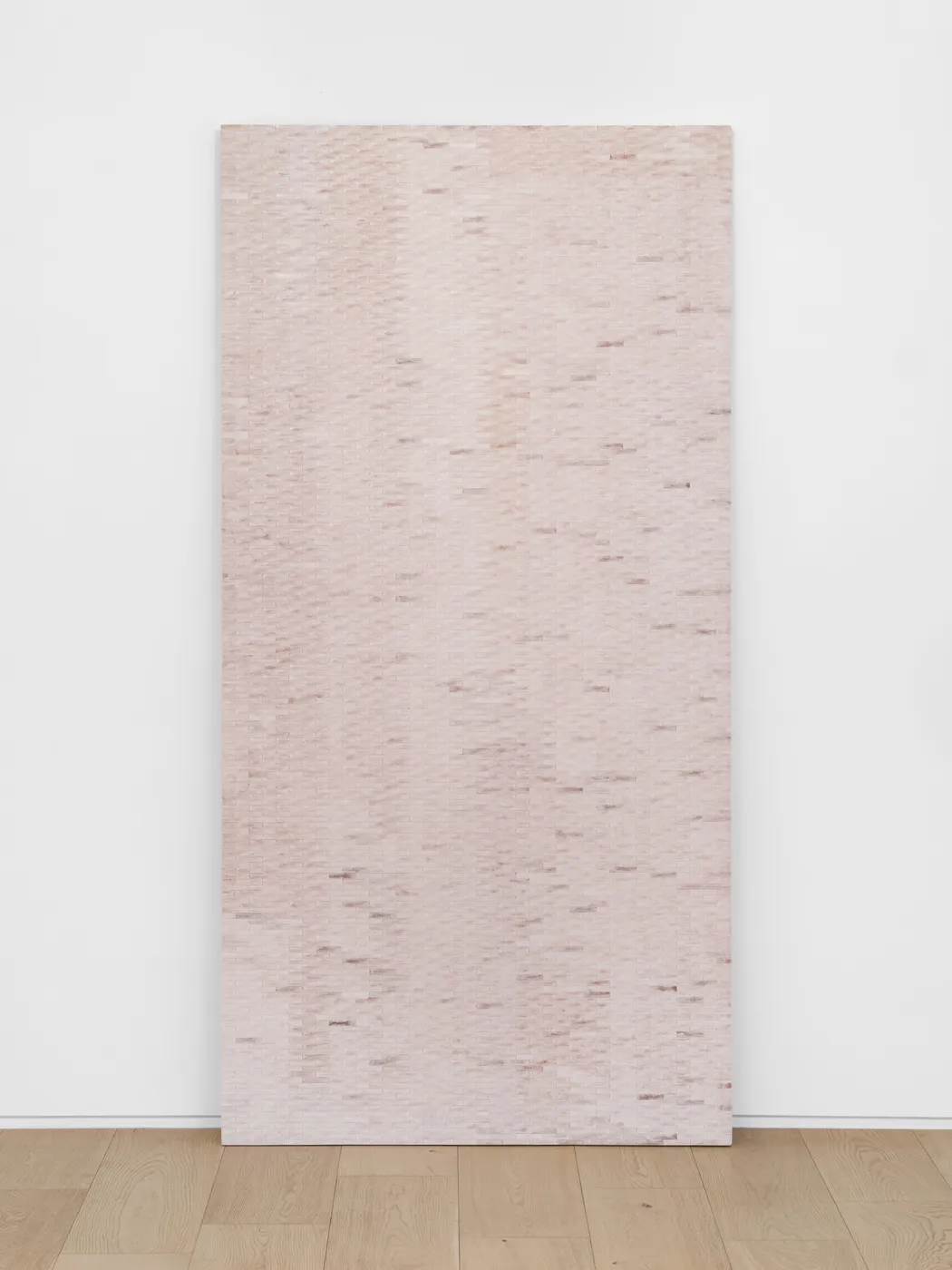
Acrylic and pencil on canvas
228 × 114 cm (89.76 × 44.88 in)
For Taniguchi, painting exists as a physical state in which time, labour and bodily intervention are layered. As the work builds, its surface shifts almost imperceptibly; fine irregularities, shallow ridges and slight misalignments register traces of the body and time in equal measure. In front of these paintings, viewers often find themselves stepping forward and back, where looking becomes a form of presence. Attention tilts away from deciphering a narrative and towards the pure sensation of standing, breathing and the subtle tremor of one’s own gaze.
그에게 회화는 시간, 노동 그리고 신체의 개입이 중첩된 물리적 상태로 존재한다. 축적되는 행위의 밀도만큼 화면은 미세하게 어긋나고 흔들리며, 표면에 남는 미세한 불규칙과 요철은 반복이 필연적으로 수반하는 신체적 소모와 시간의 누적을 고스란히 드러낸다. 타니구치의 작업을 마주한 관객은 앞뒤로 제자리 걸음을 걸으며 닿을 듯 멀어질 듯 끊임없이 초점과 거리를 맞추게 되고, 시선은 깊이 내재된 의미나 서사의 해독보다 머무르고 있는 지금의 감각과 박동, 그리고 시선의 흔들림으로 서서히 기울어진다.
Themes emerge, overlap and commingle through the exhibition, as viewers are invited not simply to encounter the works, but to consider the conditions under which the act of seeing takes place. Distancing considers the possibilities of a slowed state of perception, the residual sensations that remain long after an image has been ‘understood’, or indeed long before it coheres in the mind’s eye. Together, the works on view seek to momentarily step back from the world, countering the contemporary desire for speed and instantaneity.
서로 다른 속도와 밀도를 지닌 작업들이 만들어내는 흐름을 따라가도록 구성된 본 전시에서 관객은 작품을 ‘읽기’보다 ‘통과’하며 이동한다. 물질에서 신체로, 지각에서 시간으로 이어지는 느슨한 이동 속에서 감각은 서서히 조율되고, 시각은 더 이상 중심적인 감각으로 작동하지 않는다. ⟪거리의 윤리⟫는 가까워진 세계로부터 잠시 물러서서, 감각이 다시 제 속도를 찾을 수 있는 자리를 마련하고자 한다. 이미 지나가 버린 감각을 다시 따라잡을 수 있는 지점들에서 시간을 들여 바라보고, 숨을 고르고, 다시 생각할 수 있도록.