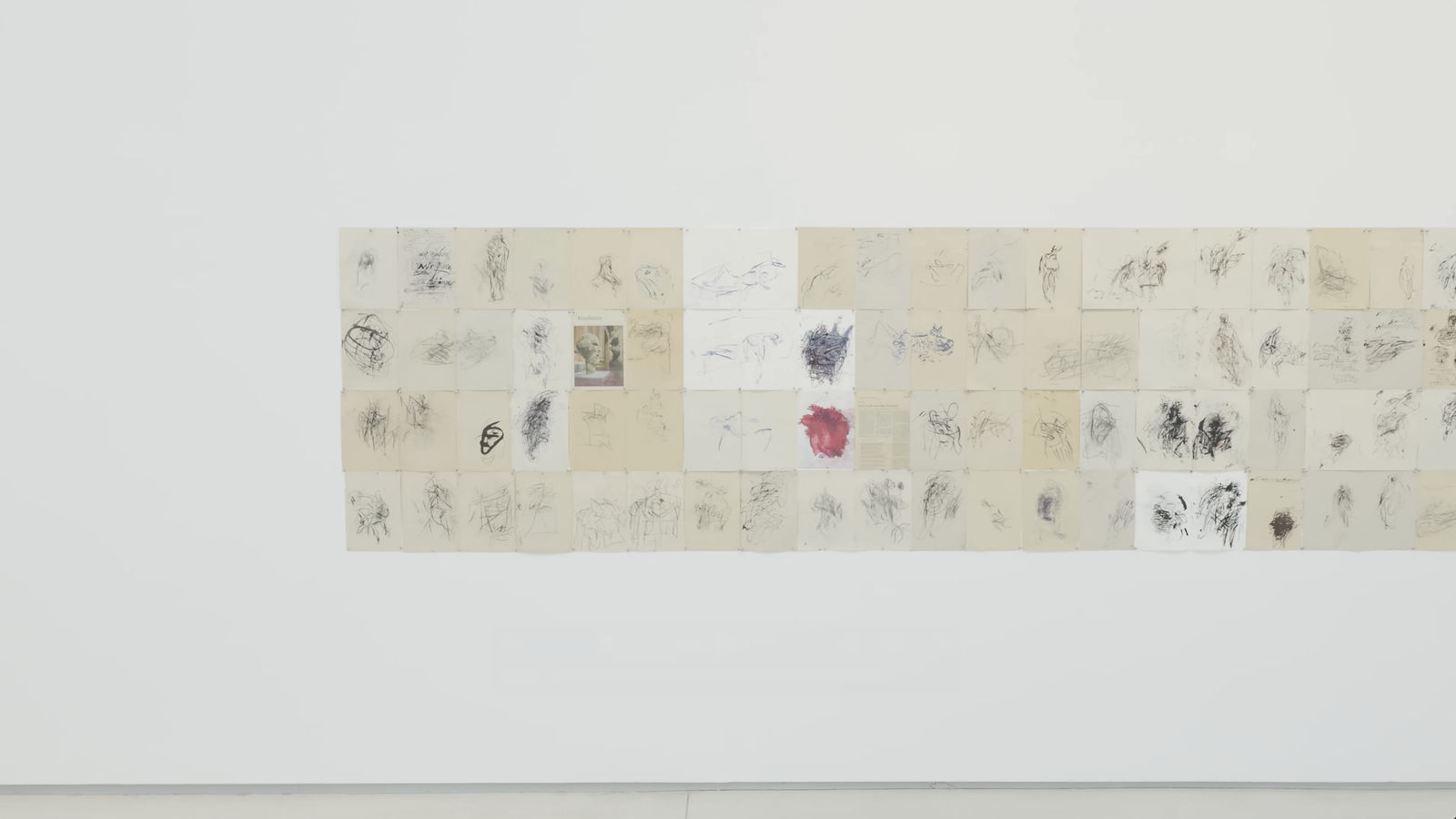
Thaddaeus Ropac presents an exhibition of works by Austrian artist Martha Jungwirth centred around a remarkable large-scale 131-part installation of drawings and paintings on paper interspersed with texts cut from newspapers – described by Bernard Blistène as a ‘great frieze of unruly images’ – created over the course of several years. This monumental work is accompanied by a selection of the artist’s recent paintings, as well as a group of watercolours, the earliest of which date from the 1980s.
Watch a video of the artist discussing the exhibition


The monumental work at the heart of the exhibition exemplifies the artist’s diaristic approach to abstraction. She made its component drawings half-looking at the paper in an instinctive process resembling automatic writing, and they are hung on the wall page-by-page like an unbound, unravelling journal, stacked four high. In some, thoughts seethe across the page in the form of furtive notes and annotations in the artist’s hand. There is a striking sense of confidentiality in Jungwirth’s work; a sense that we are privy to a secret.

The title of the exhibition, Geh nicht aus dem Zimmer (Don’t leave your room), manifests this diaristic introspection. It refers to a poem by Russian-American poet Joseph Brodsky that bears no title but is known by these opening words. Impassioned yet obstinate, it implores the reader: ‘Don’t leave your room. Pretend a cold in the head. / What could be more exciting than wallpaper, chair and bed?’

You’ve got cheap smokes, so why should you need the sun?
Nothing makes sense outside, happiness least of all.
You may go to the loo but avoid the hall.
Space consists of the hall and ends at the door; its axis
bends when the meter’s on. If your tootsie comes in – before
she starts blabbing, undressing – throw her out of the door.
Why leave a room to which you will come back later,
unchanged at best, more probably mutilated?
on the radio. Nude but for shoes and coat, dance a samba.
Cabbage smell in the hall fills every nook and cranny.
You wrote so many words; one more would be one too many.
know what you look like. Incognito ergo sum,
as substance informed its form when it felt despair.
Don’t leave the room! You know, it’s not France out there.
Don’t leave the room! Let furniture keep you company,
vanish, merge with the wall, barricade your iris
from the chronos, the eros, the cosmos, the virus.
Jungwirth works intuitively, making works that convey a palpable sense of self, yet are far from absolute introspection. Though created in a context of sublime solitude, the narrative that unfolds on the wall is grounded in the real world, as testified to by the pages Jungwirth has cut out from the culture sections of newspapers to intersperse with her own drawings and paintings. They start art-historical conversations within the frieze itself – with the sewn-up scars of a fabric Louise Bourgeois head, or Rogier van der Weyden’s sorrowful The Descent from the Cross – but also invite the viewer to imagine Jungwirth flicking through the newspaper as she works. Current affairs are among her key inspirations.
Martha Jungwirth’s newspaper clippings


Asger Jorn
Untitled, 1960–64
Oil on canvas (disfiguration)
122 × 97 cm (48 × 38.19 in)
Museum Jorn, Silkeborg. Photo © Donation Jorn, Silkeborg
Arnulf Rainer
Christus, 1989
Book page reworked with oil pastels
37 × 28 cm (14.57 × 11.02 in)
In this multipart work, across a variety of media – ink, charcoal, watercolour, oil paint – figuration appears from amidst abstraction, before being concealed again. Faces, torsos, limbs and the digits of hands and feet surface from within flurries of lines: ‘insistent lines – a combination of erasures and crossings-out [...] which scar the surface of the paper as figures emerge’, as Blistène describes. Jungwirth’s jerky strokes recall Asger Jorn’s New Disfigurations or Arnulf Rainer’s Overpaintings.
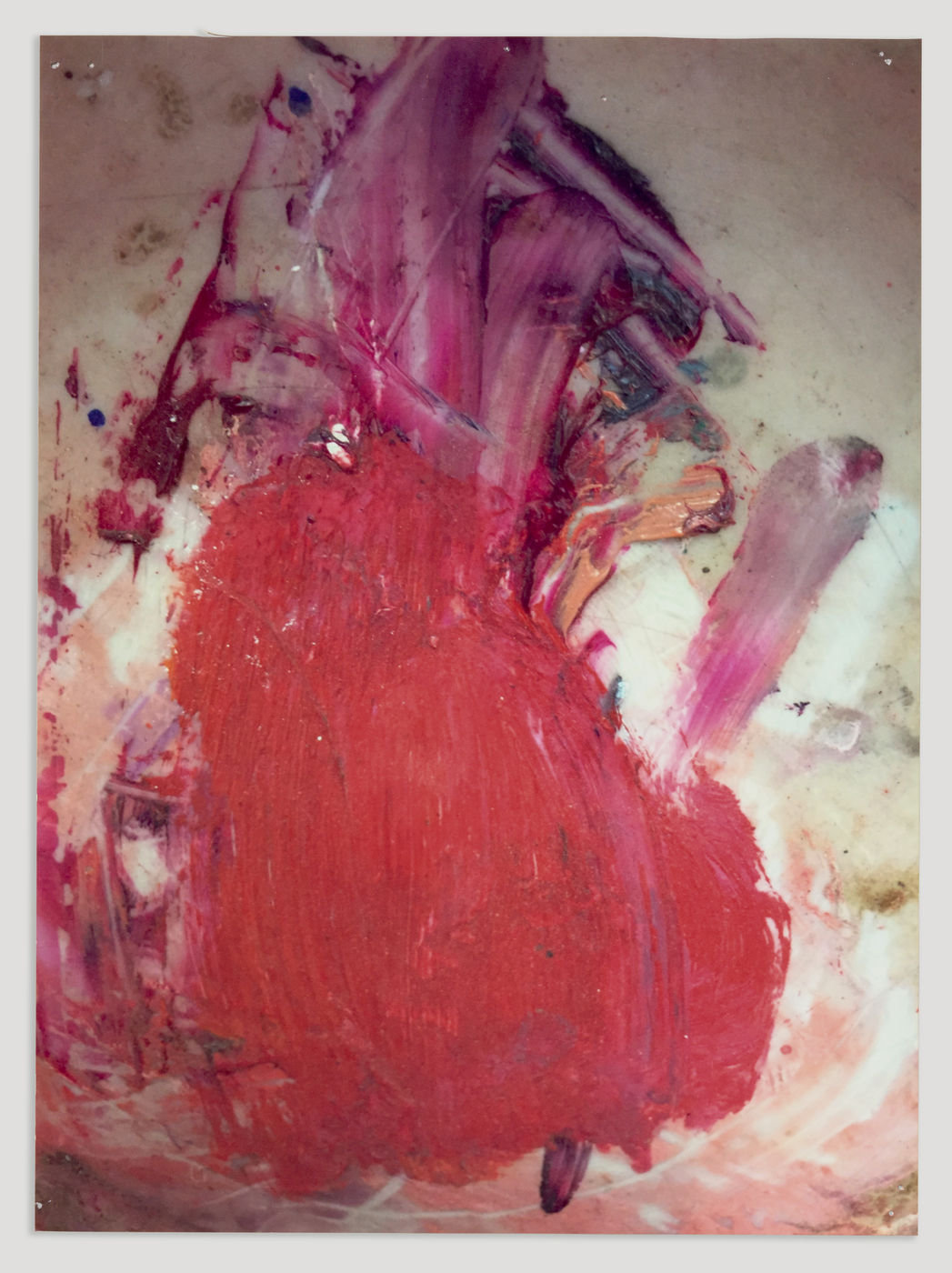

Martha Jungwirth
Untitled, 1994
Watercolour on paper
209.5 × 163 cm (82.48 × 64.17 in)
Jungwirth’s watercolours are just as elusive. Watercolour, the medium with which the artist commenced her painting career, is represented in the exhibition with a small group of works from the 1980s and 1990s. It is possible to understand Jungwirth’s watercolours from this period, as curator and critic Thomas Mießgang has written, ‘as a phenomenological approximation of those things which remain fleeting and evasive in their time-bound lack of contour.’

Martha Jungwirth
Untitled, 1994
Watercolour on paper
202 × 165.3 cm (79.53 × 65.08 in)
Shapes and lines cluster together at the centre of the paper as if constructing something that never quite solidifies. They are both evasive and evasions: as Blistène writes, ‘Jungwirth says that her paintings invite an escape: ‘Malfluchten’. Listen to the sound of the word, don’t look for a literal meaning. ‘Flüchten’ means ‘to flee’ in English.’

Untitled, 2025
Oil on paper on canvas
242 × 340.6 (95.28 × 134.25 in)
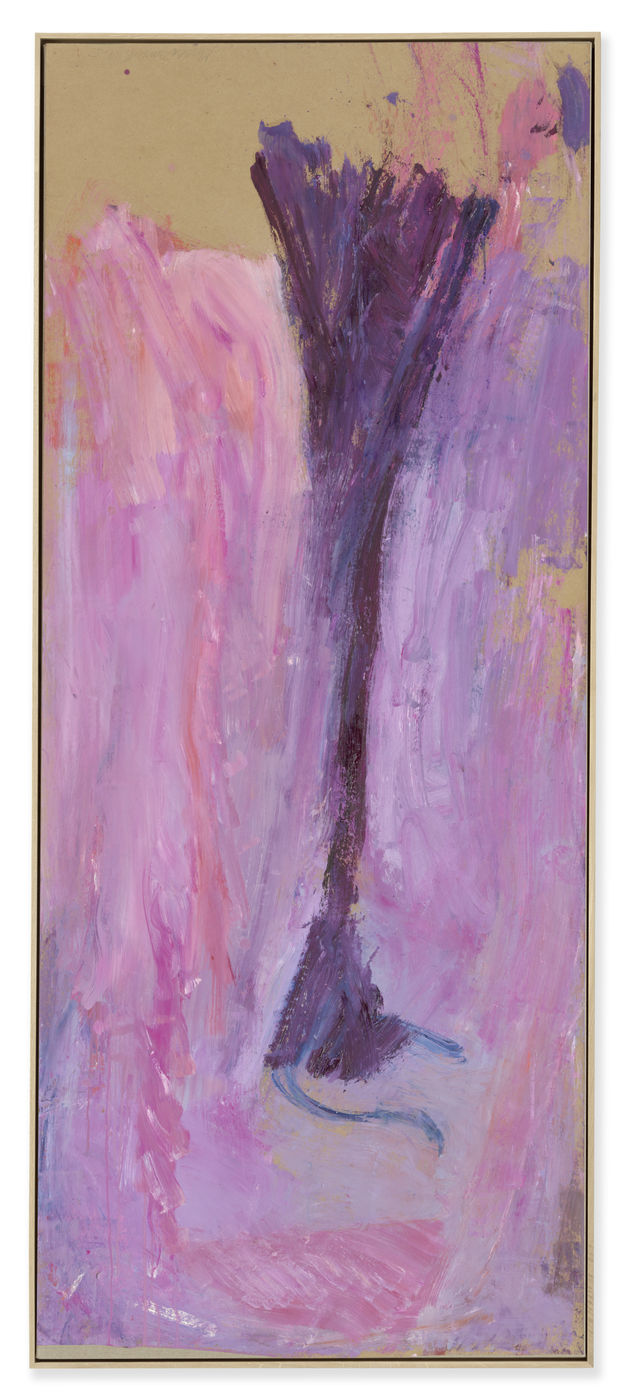
Martha Jungwirth
Untitled, 2025
Oil on paper on canvas
219.9 × 91.2 cm (86.42 × 35.83 in)
‘I want to create out of abundance’, Jungwirth explains, a position that aligns her approach to colour with her distinctive mark-making, where accumulating gestures remain like an index of her process. That same impulse finds its fullest expression in the central frieze, whose richness arises from acts of gathering, amassing and assembling.


My pictorial reality is charged with passion, a language tied to the body, to dynamic movement.
Painting is a matter of form, and then it receives a soul – through me.
— Martha Jungwirth


Publication