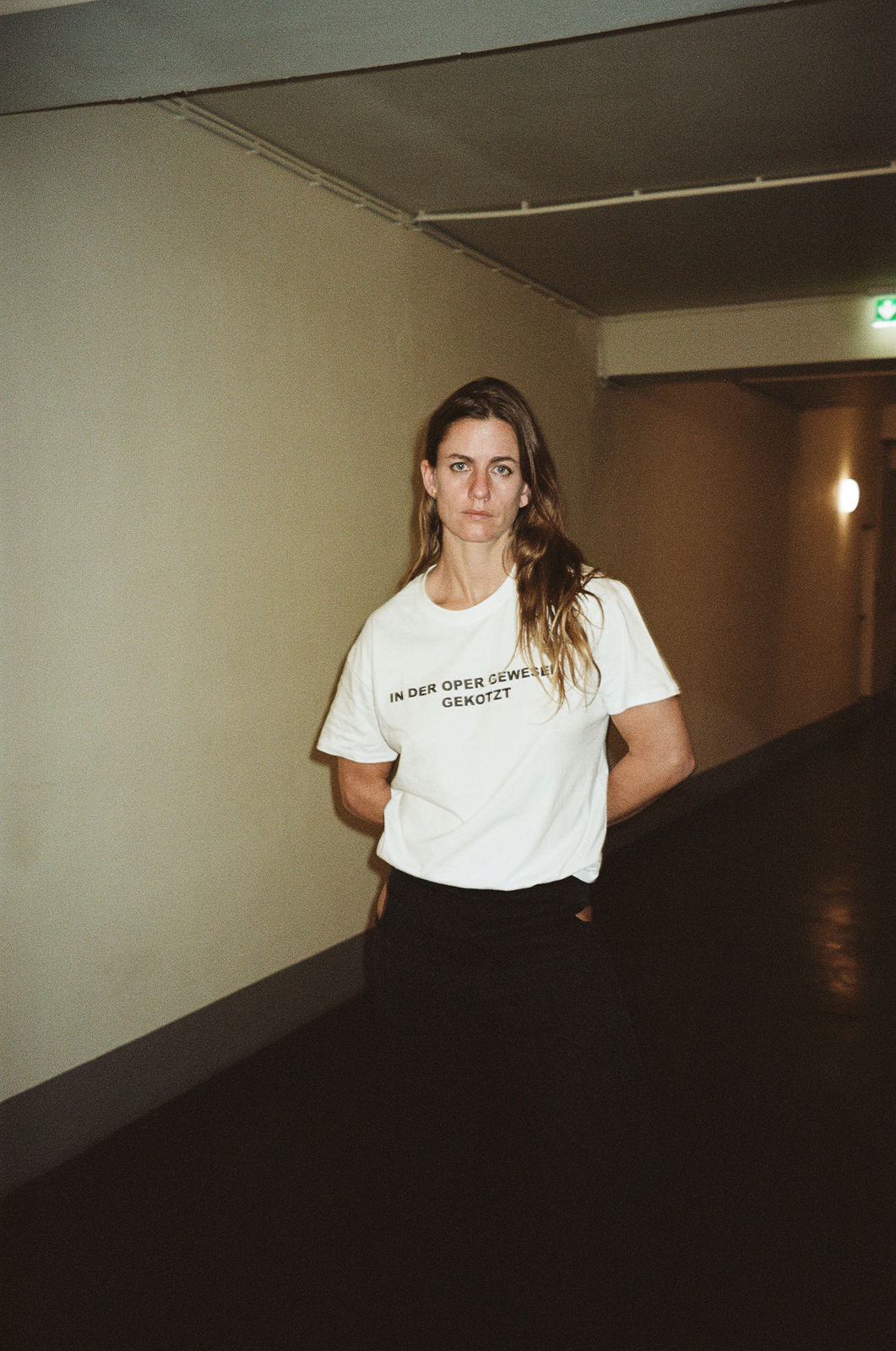
Mandy El-Sayegh in Angels and Mara Why the Bangkok Art Biennale is now one of Asia’s most relevant international exhibitions
By Enid Tsui
At first glance, Mandy El-Sayegh’s The Campaign (2026) at the Bangkok Art & Culture Centre (BACC) looks like a luxury boutique whose creative director has gone for an “Oriental spiritual” look.
Mannequins draped in patterned silks guard a red-floored, high-ceilinged temple, its walls plastered with silkscreened collages in amber and cumin tones. Above a video of the work’s making is a neon sign resembling a designer monogram. But it is all camouflage.
The sign is the amateur radio identifier of El-Sayegh’s Gaza-born father, who died recently.
He had told her that ham radio remains one of the last means of broadcasting messages undetected, and it is in this spirit that the Malaysian-born artist of mixed Palestinian and Chinese heritage – keenly aware of how she views the world from the margin – has embedded news reports and images of military incursions (in Gaza and beyond) among the luxury logos and serene Buddhist images printed on the walls.
This is an attempt to disguise trauma within the visual syntax of desire and to subvert the Western appropriation of exoticised Orientalist culture, she says, pointing to the phrase “No aesthetic without my freedom”, translated from Palestinian poet Mahmoud Darwish’s 2002 work State of Siege, on the wall.
The gallery’s saturated crimson floor could be a red carpet, a pool of blood or seeping political red lines. With many exhibitions censoring art that addresses the Israel-Gaza conflict and other contentious subjects, El-Sayegh offers a way of hiding in plain sight, letting art slip past unsuspecting audiences.
This installation serves as a metaphor for the Bangkok Art Biennale (BAB), which commissioned the piece for its 2026 edition titled “Angels and Mara”, running until February 2027. The name Mara has multiple origins, but often symbolises the darker elements of the human condition.