Martha Diamond The city as a site of painterly experience
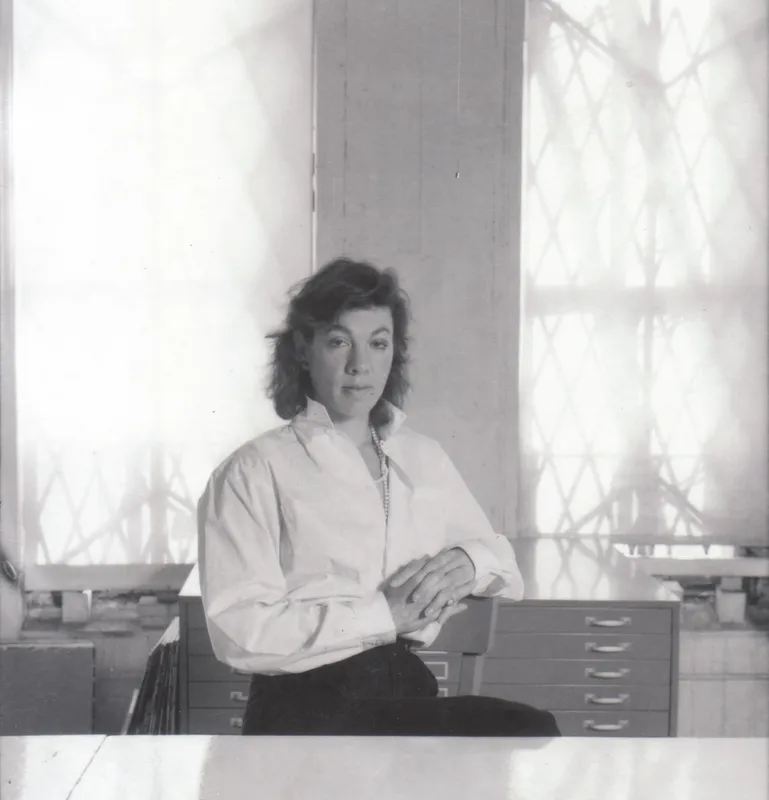
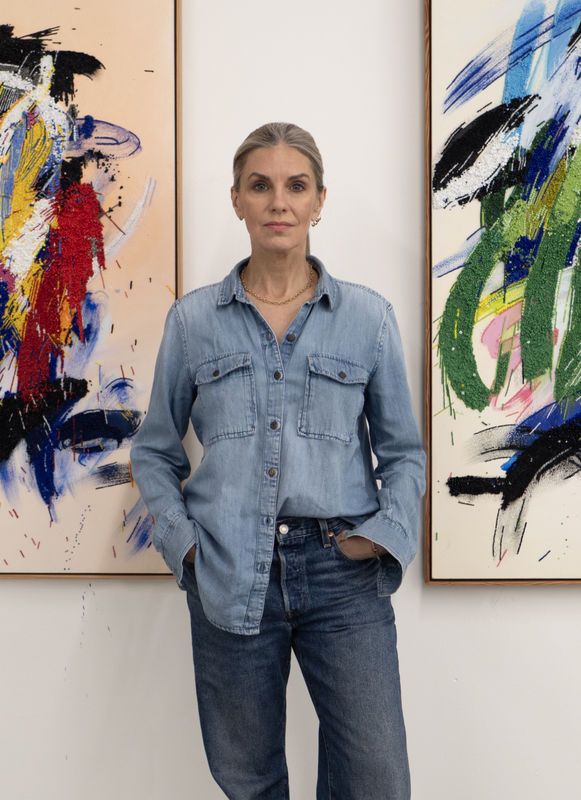
Martha Diamond died in New York in 2023 at the age of 79. She left behind a body of work that revolves around fundamental questions: How does colour enable us to experience space? How does light alter our perception of architecture? And when does a representational image begin to appear abstract? The Sara Hildén Art Museum in Tampere, Finland, is dedicating the first solo exhibition in Europe to the artist – which is also the most comprehensive show of her work to date. Since March 2026, her estate – or rather the Martha Diamond Trust – has been represented by Thaddaeus Ropac in collaboration with the David Kordansky Gallery, with the aim of raising the artist’s profile in Europe.
The exhibition at the Sara Hildén Art Museum in Tampere offers a compelling insight into the work of an American painter whose paintings were long perceived primarily within the context of the New York art scene. The Sara Hildén Art Museum describes her retrospectively as an ‘artist’s artist’ – an artist who was particularly esteemed by her peers. Martha Diamond was represented by renowned galleries such as Brooke Alexander (1976–1985) and, until the 1990s, by the Robert Miller Gallery, which at the time also represented artists including Louise Bourgeois, Lee Krasner, Robert Mapplethorpe and Joan Mitchell. The exhibition in Tampere not only makes her work accessible to a European audience but also re-evaluates it through scholarly analysis. Diamond herself ensured during her lifetime that her artistic legacy would be preserved: in 2020, she founded the Martha Diamond Trust. Today, this institution, together with museums and galleries, is helping to re-contextualise her work. The exhibition therefore does not rescue Martha Diamond from obscurity. Rather, it shifts the focus to an artist who has long held her place in the US art scene – but whose significance is only now beginning to be recognised more widely on the international stage.
Diamond’s painting currently resonates in Europe with an increasing interest in female artists whose positions do not readily fit into established art-historical narratives. She was neither exclusively an Abstract Expressionist nor a classical city painter. Her high-rises, façades and urban spaces are both concrete motifs and starting points for a style of painting that moves ever further towards abstraction. Perhaps this is precisely the reason for the renewed attention. Diamond defies easy categorisation within art history. Her work combines figuration and abstraction, architecture and gesture, observation and free painterly invention. What may long have appeared to be an idiosyncratic, isolated position can now be read as a thoroughly consistent exploration of the question of what painting can make of our experience of the world. This extensive exhibition reveals how consistently Diamond has worked on a central theme over the decades: the perception of the modern city.
Born in Manhattan, raised in Queens and educated at Carleton College, the Alliance Française de Paris and New York University, she moved into a loft on Bowery in 1969 and became an active member of the Downtown scene. There she joined the poets of the New York School and became part of the circle of New York School artists including Jackson Pollock, Franz Kline, Joan Mitchell and Alex Katz. Even her early works reveal a pronounced interest in architecture and space: ‘My fascination is mostly with man-made spaces,’ said Diamond. Her works on paper were followed by early paintings on aluminium, in which she depicted huts, towers or haystacks against monochrome backgrounds. Thickly applied paint and energetic brushstrokes lent the paintings a physical presence.