Jordan Casteel on Hilma af Klint’s Watercolours, Nature and Mothering
By Laura Allsop
“I found this watercolour in a book from my studio library – Hilma af Klint: What Stands Behind the Flowers. It’s been open to this page for the past few months as I paint and it stands out among the other works I’ve been looking at for its documentary quality. I was drawn to the sensitivity that af Klint brings to the relationship between nature and observation. The composition feels similar to a diagram but still rooted in what was directly in front of her. She’s gathering multiple ways of seeing into a single image, paying close attention to colour and form, adding handwritten notes. The subjects begin to carry something more interior or symbolic. That combination speaks to the way I work in my own paintings, bringing together multiple images, observations and memories to arrive at a final point of view. My son was born in April of this year, so nearly everything I’ve engaged with since then has had him in mind as I shift perspective and take on this new role of mother. A lot of mothering, I find, is the observing and record-taking that is essential to care. It’s possible I was drawn to af Klint’s studies and her notes for their similarity to the notes I’m taking regularly of my child’s development. Seeds and newborns are wildly different, don’t get me wrong, but both involve paying attention to small changes over time and responding to what is needed.”
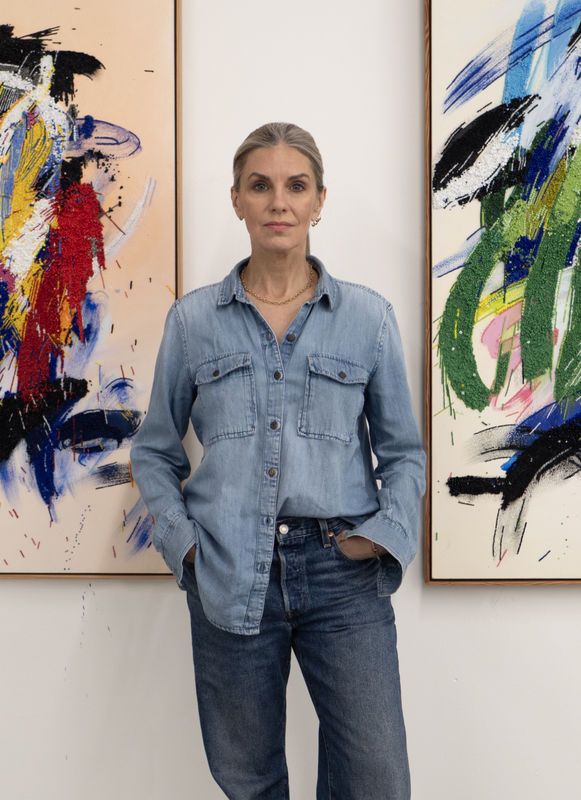
In Hilma af Klint’s 1919 botanical painting Convolvulus arvensis (Field Bindweed), Monotropa hypopitys (Pinesap), trailing bindweed and earthy pinesap frame a pair of curious celestial objects that hover in the centre of the composition. The piece is part of the pioneering Swedish artist and mystic’s Nature Studies portfolio (1919–20) – drawings of flowering plants accompanied by esoteric diagrams and a related notebook ascribing a spirit to each specimen. Nature Studies has kept the artist Jordan Casteel company as she prepares for her autumn exhibition, Winter Sun, at Thaddaeus Ropac’s Marais gallery in Paris – a reminder “that subtle examinations of environments can capture the essence of the human condition”. Casteel is known primarily for her luminous, large-scale portraits of her community, producing still lifes and landscape paintings that shimmer with the same attention to detail and interiority. Based in New York, the artist captures her surroundings with a loving sensitivity to their subtleties.