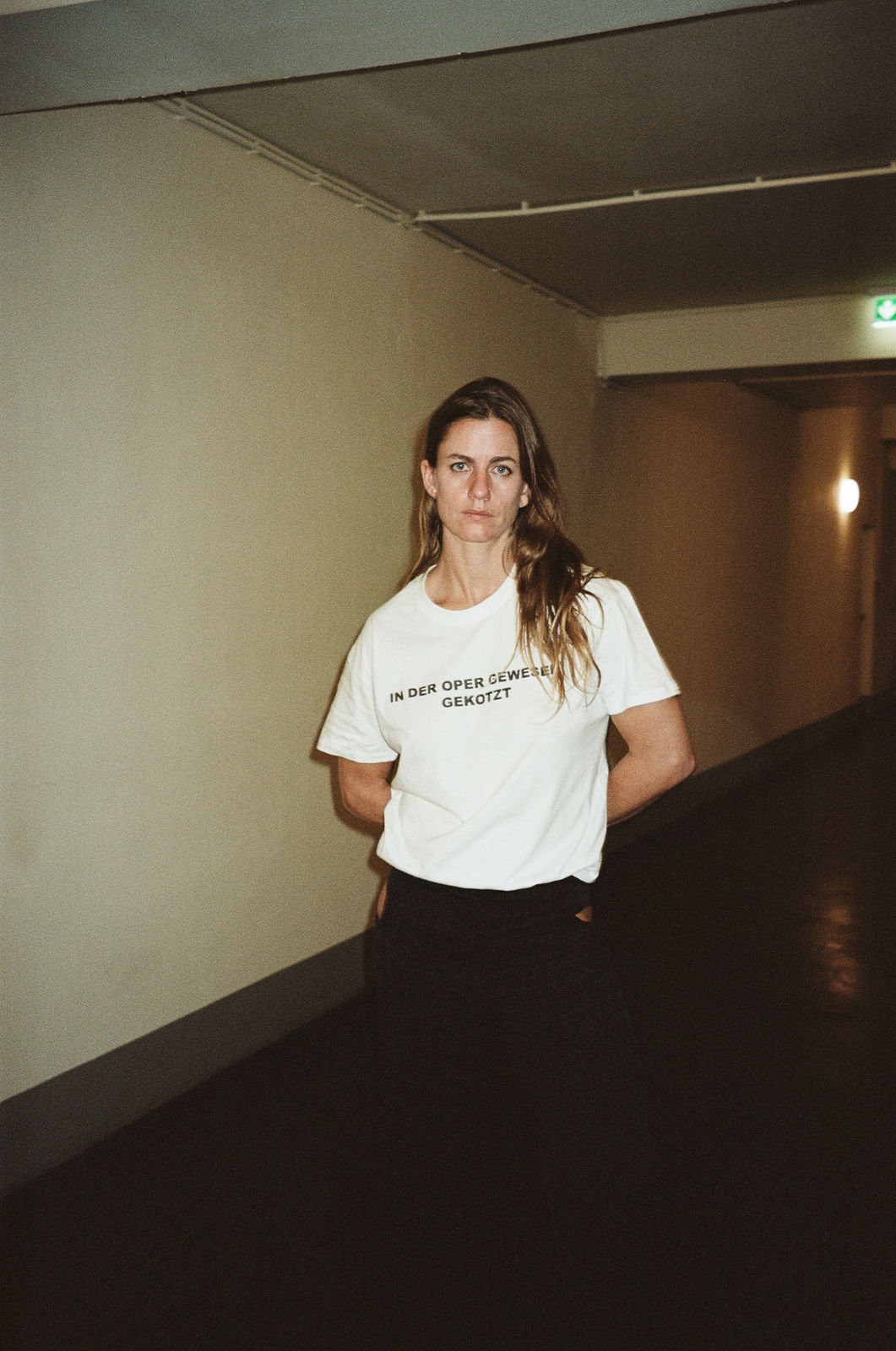
VALIE EXPORT (1940–2026)
By Michael Loebenstein
It was the middle of the COVID-19 pandemic when we opened the retrospective of VALIE EXPORT’s film work at the Österreichisches Filmmuseum, Vienna. It was 2021 and cinemas had only just reopened; distancing rules were still in force and masks were required in public places. Yet, night after night the theatre filled with people who had no lived memory of the Actionist scandals of 1968 or the feminist and progressive struggles of the following decade. They were young: students and first-time visitors, who had perhaps encountered the canonical photo of EXPORT presenting a rebranded pack of cigarettes or a clip of TAPP und TASTKINO (1968) online, but never the films themselves, unfolding at length on a large screen in the dark. What struck me at the time was a palpable sense of urgency. This was not old material being represented as art history, but work that still hurt. The rawness held. And, to my surprise, so did the humour and the tenderness. A body of work made to call out and disrupt gender-based violence and oppression at the time of its creation – an era still marked by the legacy of National Socialism – was speaking just as directly to a generation facing the rise of a new, digitally enabled fascism and violent hostility towards women and gender-nonconforming people.
That the retrospective could do this – feel less like commemoration than confrontation – says something essential about what kind of film-maker EXPORT, who died on 14th May 2026 aged eighty-five, was. She never accepted the categories imposed on film-makers and artists alike. Her film work bled out into other domains: performance art, street action, photography, video and even broadcasting. Long before public space and the economies of surveillance and commodification became familiar critical territory, EXPORT was already there, a black box strapped to her chest as she walked the streets of Munich. Most radically, she turned her own body into both camera and broadcast medium by inserting an endoscopic camera into her body and transmitting a live image of her glottis to an auditorium at the 52nd Venice Biennale in 2007. Expanded cinema was, in this sense, never a genre for her so much as a working method: ‘cinema’ was something that could happen anywhere.