How Robert Rauschenberg Made the Real Realer The artist bent the medium of photography to suit his creations
By Hilton Als
When Robert Rauschenberg (1925-2008) enrolled at Black Mountain College, in 1948, ravenous to learn everything he could about art in general and about the art that he wanted to make, the photographer and curator Beaumont Newhall and his wife, Nancy, a photography critic, had recently been in residence there. Curators pop up in famous artists’ biographies all the time, usually as handmaidens to the creator’s genius, opening a door to a gallery here or supporting a grant application there. But the Newhalls were, by then, stars in their own right; in 1940, Beaumont had helped found the Museum of Modern Art’s department of photography and had become its first curator, and, while he served in the military during the Second World War, Nancy had taken his place.
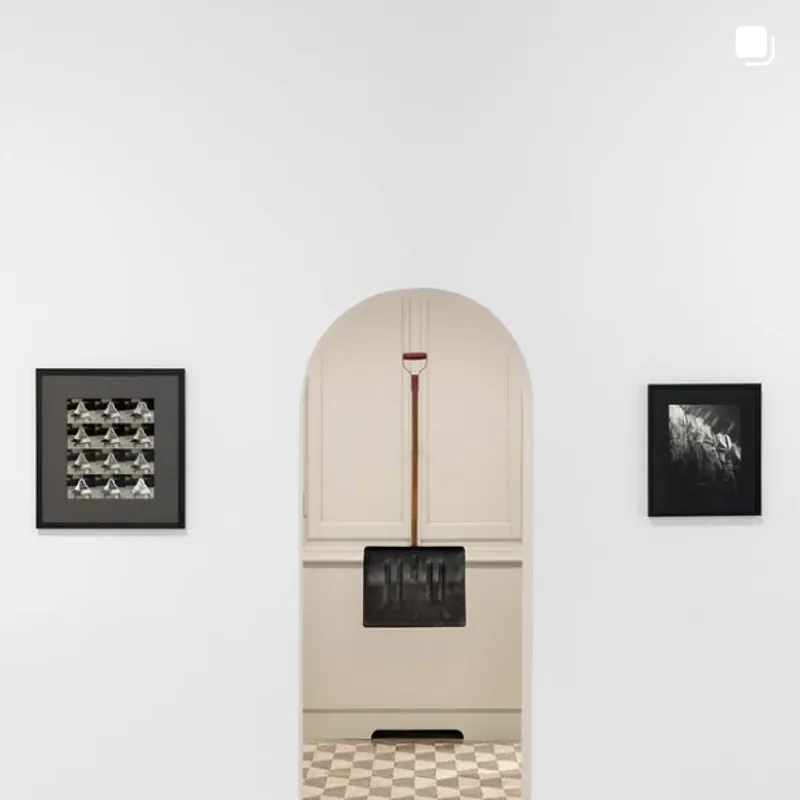
Looking at the photographs in the current show “Robert Rauschenberg’s New York: Pictures from the Real World” (curated by Sean Corcoran, at the Museum of the City of New York, through April 19th) made me want to know more about Rauschenberg’s education. Although there’s no evidence that he met the Newhalls during his time at Black Mountain, I trust Rauschenberg’s eye: he wasn’t the kind of person to miss anything. He would have been well aware of Newhall’s recent tenure and of his eminent place in the art world, a world he wanted to belong to, and I believe that he would have been interested enough by Newhall’s images to tuck them away in his mind for future reference or inspiration. What I suspect he would have liked in Newhall’s photographs—“Cape Cod” (1941), for instance, a shot of a sand dune with spiky growths piercing its surface, or “Souvenir of Chatham” (1941), an image of a depot and a truck near train tracks a few hours from New York City—is their stillness. Rauschenberg, throughout his career, regarded stillness as a form of energy; for someone as kinetic as he was, stillness was a non-native force, attractive though not always easy to achieve. Or attractive because it wasn’t easy.