When Two Exiles Cross Paths Mandy El-Sayegh Conjures Theresa Hak Kyung Cha
By Soyoung Lee
[English translation from the original article in Korean]
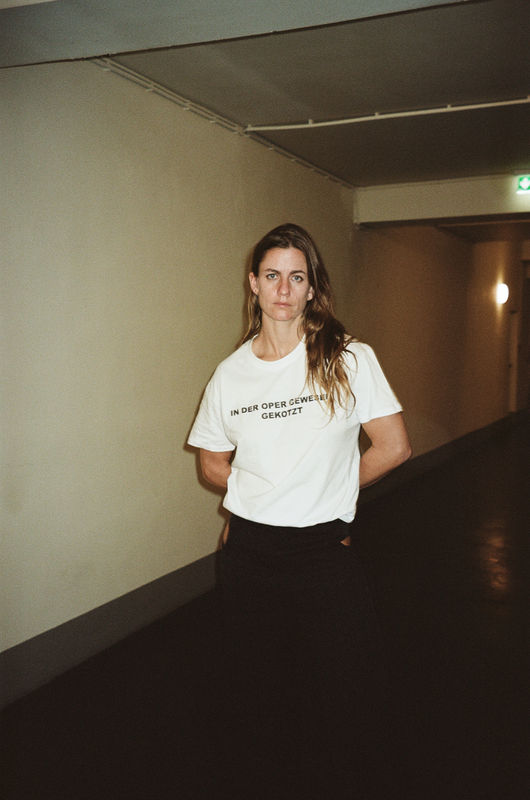
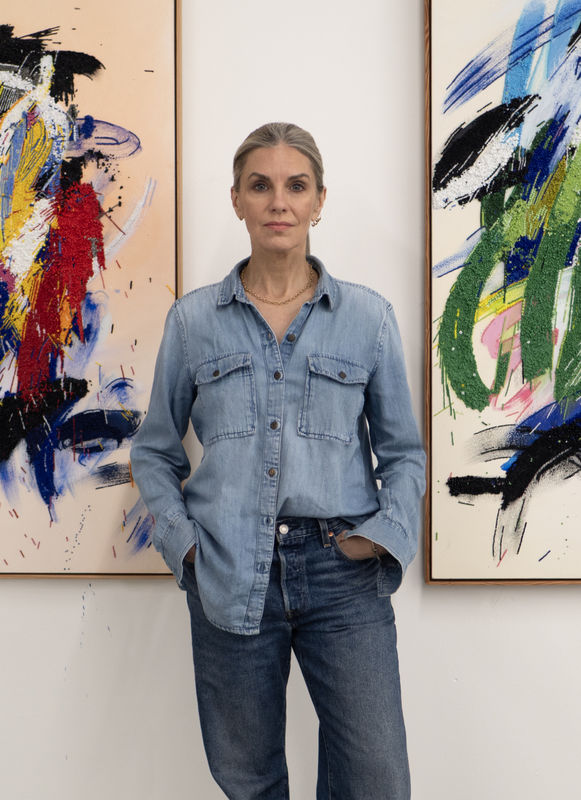
I recently met with the artist Mandy El-Sayegh, whose work elegantly mirrors the diverse cultural heritage of her parents. Her latest creations are particularly captivating, drawing profound inspiration from Korean artist Theresa Hak Kyung Cha, who established a significant artistic legacy in the United States before her passing at the age of thirty-one.
How does an artist’s upbringing shape their creative world? For London-based Mandy El-Sayegh, her family history is exceptionally rich. Her mother is of Chinese-Malaysian descent, and her father is Palestinian. Her mother’s background as a midwife and her time on a latex plantation have become vital sources of inspiration. Her father, a devoted practitioner of calligraphy and martial arts, remained at the heart of the family’s care and affection. Though Mandy spoke Chinese and Arabic in her youth, those languages have since evolved into a quiet, cherished memory since her move to the UK.
Her signature ‘Net-Grid’ patterns find their origins in the delicate gauze used by her mother, while the crimson latex floors offer a rich metaphor for the prosperity associated with Chinese culture and the profound reverence for life’s cycles in Palestinian heritage. Interestingly, her parents maintained a peaceful silence regarding these histories, allowing Mandy to discover them through her own artistic intuition.
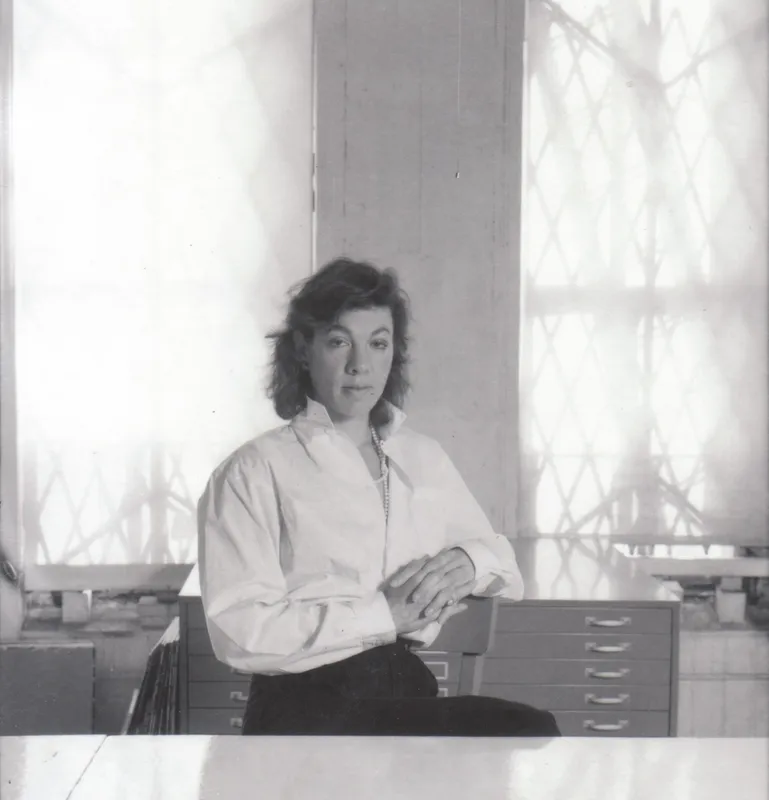
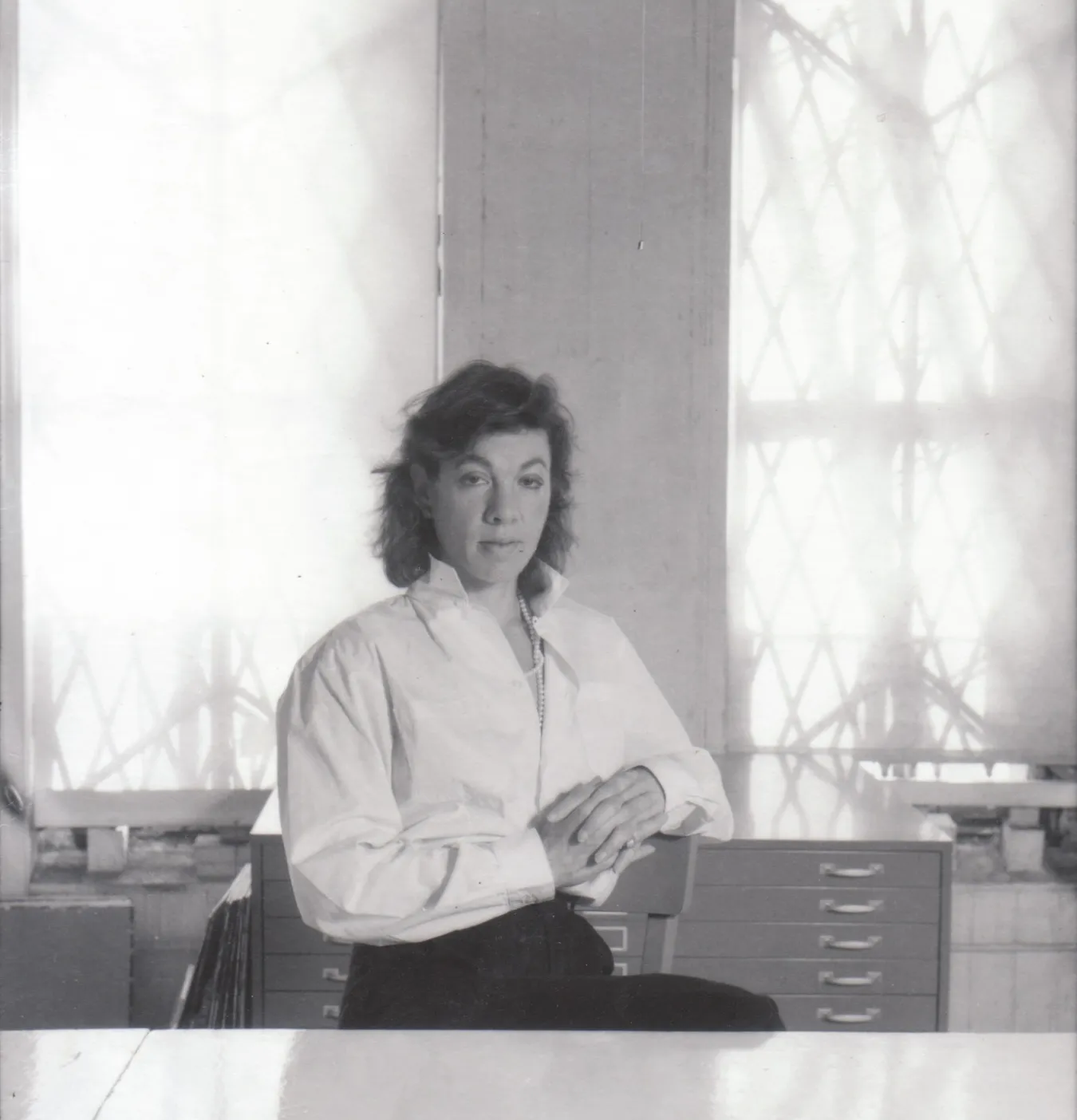
The exhibition is titled For Theresa, openly celebrating the influence of Theresa Hak Kyung Cha (1951–1982), the visionary Korean artist. Mandy notes a shared affinity with Cha in the art of gathering fragments to cultivate new meaning. Just as Cha assembled linguistic echoes to honour voices within history, El-Sayegh layers collected materials to illuminate the beauty of personal, unwritten narratives.
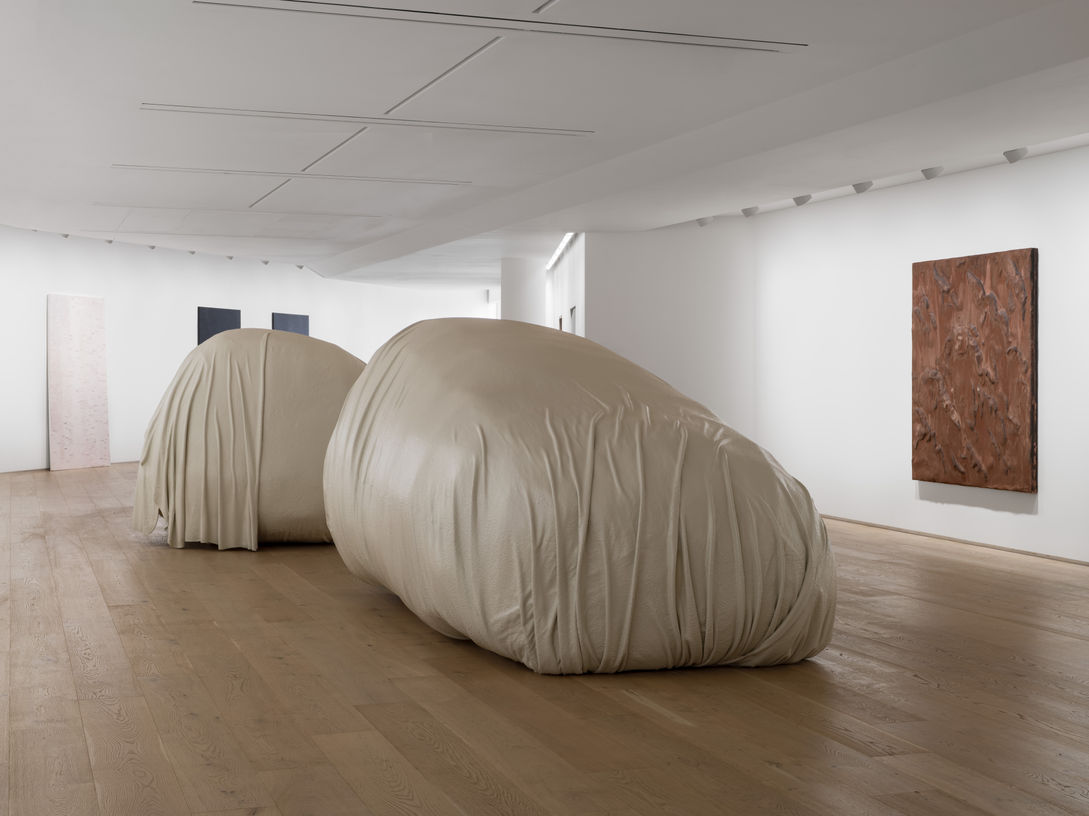
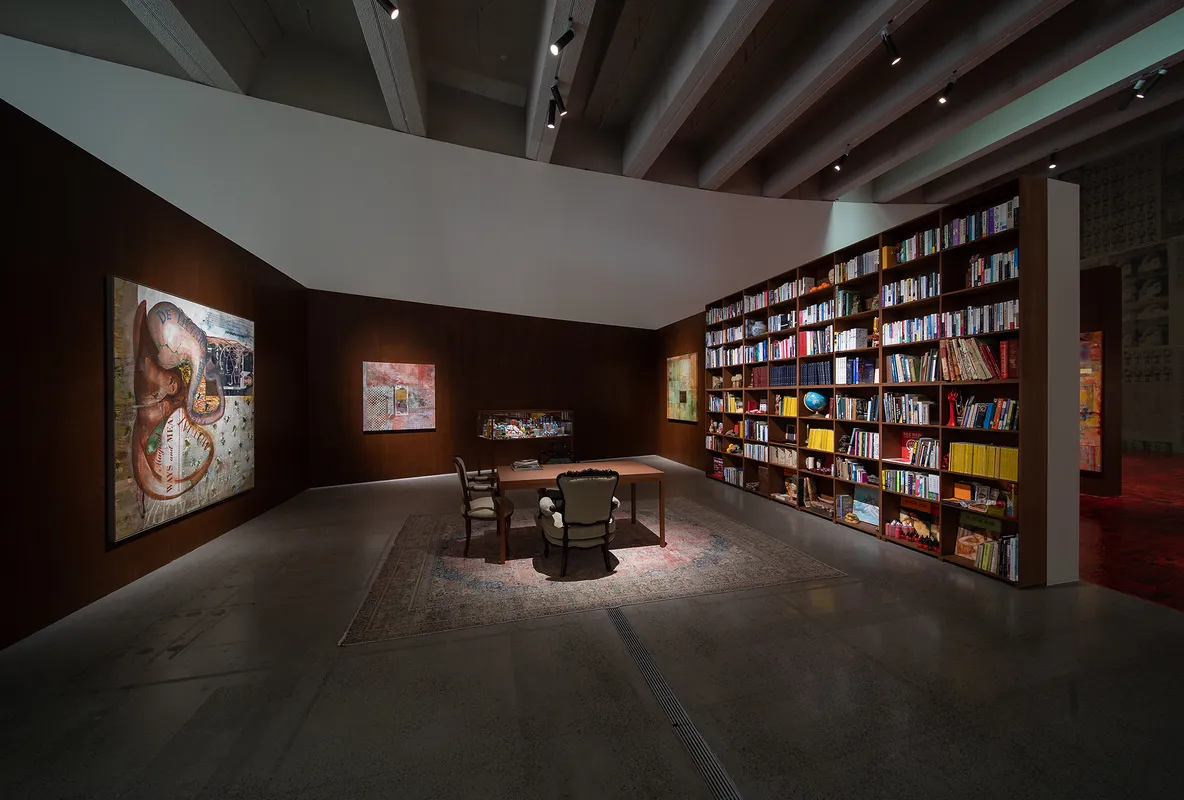
A highlight of the exhibition is the series Grand Collection of World Art. Inspired by a book cover found in a Korean second-hand bookshop, Mandy captured the image of Jean-Auguste-Dominique Ingres’s Grande Odalisque and reimagined it through silkscreen printing. She was fascinated by the journey of French Neoclassical art to Korea, blending Western imagery with fragments of Hangul to create something entirely fresh. This exhibition possesses a maturity and depth that belies the artist’s youth, making it a must-visit for art enthusiasts. The exhibition is on view at Space K Seoul in Magok until 21 June.
Q: Your work spans painting, installation, sound, and performance. Where does your creative energy originate?
"I define myself as a ‘collagist’. I communicate by moving across various geographies and disciplines. I find a beautiful commonality with Theresa Hak Kyung Cha in the way I personally explore historical and social themes. The process of assembling and re-ordering fragments mirrors the wonderful mysteries of the human body."
Q: What is the significance of the title For Theresa?
"Theresa Hak Kyung Cha holds immense meaning for me; her legacy continues to thrive. She was an artist who gathered fragments to speak to our universal experience, and I have been deeply moved by her book Dictee. This exhibition is a love letter to Theresa. Our processes are similar in their constant refinement—a dedicated effort that often brings forth a sense of grace and good fortune."
Q: As I understand you discovered Cha’s work six years ago through a recommendation. Could you elaborate?
"I was drawn to her as a multilingual artist. My own upbringing allowed me to experience various languages, which I weave into my work. Those who have experienced life in new lands understand this journey well. What some might see as a linguistic gap, Cha embraced as a courageous space for self-discovery. This exploration isn't new for this exhibition; I have been researching her for years. I hope my work helps her artistry become even better known in Korea. I deeply resonate with her desire to look beyond conventional structures."
Q: How has the environment of Space K Seoul influenced you?
"I was truly inspired by the sheer scale of the gallery—it is the kind of expansive space that artists and curators dream of. I spent a great deal of time researching how to nestle my delicate fragments within such a grand setting, especially with the impressive nine-metre ceilings. It was a thoughtful process of harmonising my work with the specific time and place of Korea."
Q: The archive recreating your study is fascinating, reminiscent of the Joseon-era ‘Chaekgado’. What guides your collecting?
"I collect anything that fascinates me. It is an intuitive, subconscious act rather than a deliberate collection. I am drawn to things that evoke memories—atlases, art books, and texts on psychoanalysis or medicine. I even keep the hair of those I hold dear. I enjoy visiting local markets before a show; finding the series Grand Collection of World Art in a Korean bookshop was a delightful moment. I take these instinctively gathered materials and thoughtfully explore how to give them new life.
For the walls, I used source materials like newspapers. The paintings were inspired by Korean tigers and shamanic traditions found online. My work brings together diverse elements—from Palestinian maps to vintage Korean materials—into a ‘patchwork’ grid. Painting is about the surface and the phenomenon of seeing; from afar it is a singular vision, but up close, it reveals a wealth of intricate fragments."
Q: Your heritage suggests a unique perspective. I noticed your particular interest in the colonial era of Korea.
"Art, like all forms of communication, is never entirely neutral, and I embrace that subjectivity. I prioritise bringing aesthetic depth to my work, allowing each viewer to find their own meaningful interpretation."
Q: The red floor, which feels like a vast ‘skin’, is striking. What does the colour represent?
"The red latex floor first appeared in Dubai in 2023. Red is wonderfully polysemic. It can symbolise prosperity or serve as a poignant tribute to the resilience of the Palestinian people. I used newspapers as a base and coated them in latex, inspired by my mother’s memories of the rubber plantations. The way latex matures and changes tone is a beautiful reminder of the delicate nature of the human form."
Q: It seems your parents’ heritage is a primary influence, yet you mentioned they rarely spoke of the past?
"Indeed, my home was a space of quietude—two distinct territories filled with a serene silence. While I once felt this as a void, I have come to realise that the space between sequences is exactly where an artist is born. My sense of connection with Theresa Hak Kyung Cha comes from this shared experience of navigating complex paths. These unique circumstances provided the very spark that allowed me to become an artist."
Q: Do you have a final message for your visitors?
"I don’t intend for there to be a strict narrative. I enjoy showing the various stages of my process—for instance, the study installation reveals my passion for collecting. I want the exhibition to be seen through many lenses. If you miss one part, you can find focus in another. There is no set sequence, so please feel free to interpret the work in a way that feels comfortable to you. It is perfectly fine not to ‘understand’ everything immediately. Just as I collect materials, I hope you find your own unique connections. Much like Cha’s Dictee, where any page offers a beginning, I invite you to enjoy this exhibition as an intuitive and joyful experience."