Distance as the Essential Condition for Reflection Interview with Kei Imazu
By Sunjun Ryu
[An English translation and digest of the interview]
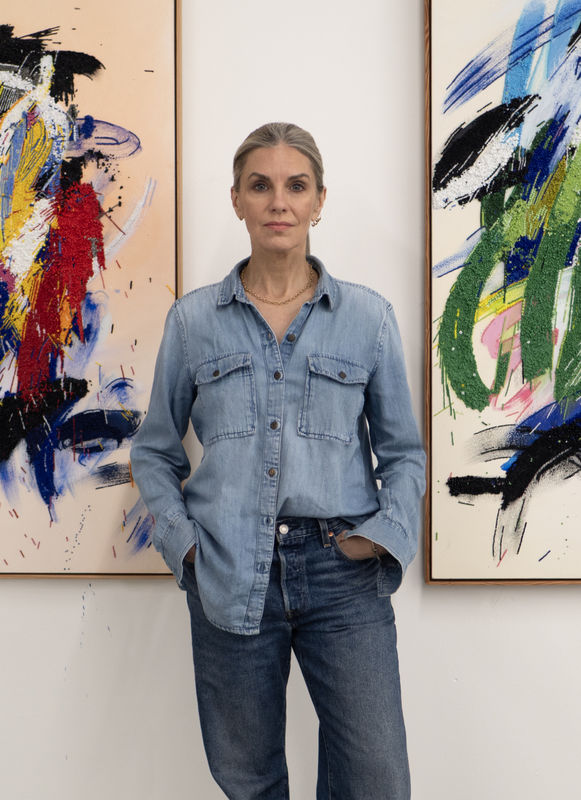
The practice of Kei Imazu, a Japanese-born artist based in Bandung, Indonesia, originates at the intersection where images from disparate eras and locales converge within a single plane. Fragments of wartime wreckage, mythological figures, colonial memories, and everyday gestures overlap, resisting a linear historical narrative.
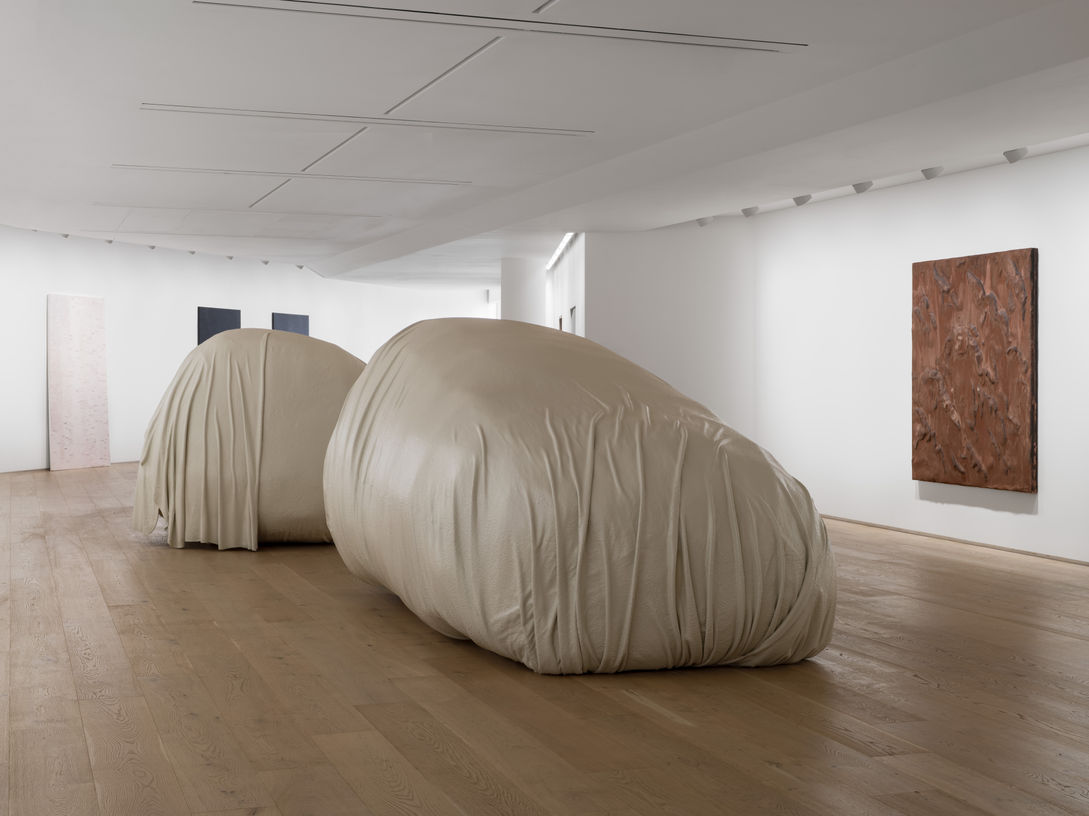
In the interview, Kei Imazu shared that her decision to participate in the exhibition Distancing at Thaddaeus Ropac Seoul was guided by "an opportunity to place my work within a Korean context". Currently, the gallery presents its first exhibition of the year, 2026, featuring 19 new paintings and a sculpture by Imazu alongside artists Juree Kim, Nosik Lim, and Maria Taniguchi.
Open until 2 May, the exhibition explores how the relationships between image, material, the body, and time are reconstructed through the viewer's perception. Imazu notes that her central inquiry in recent years involves "how histories of memory, movement, and the aftereffects of colonialism might be rearticulated within Asia".
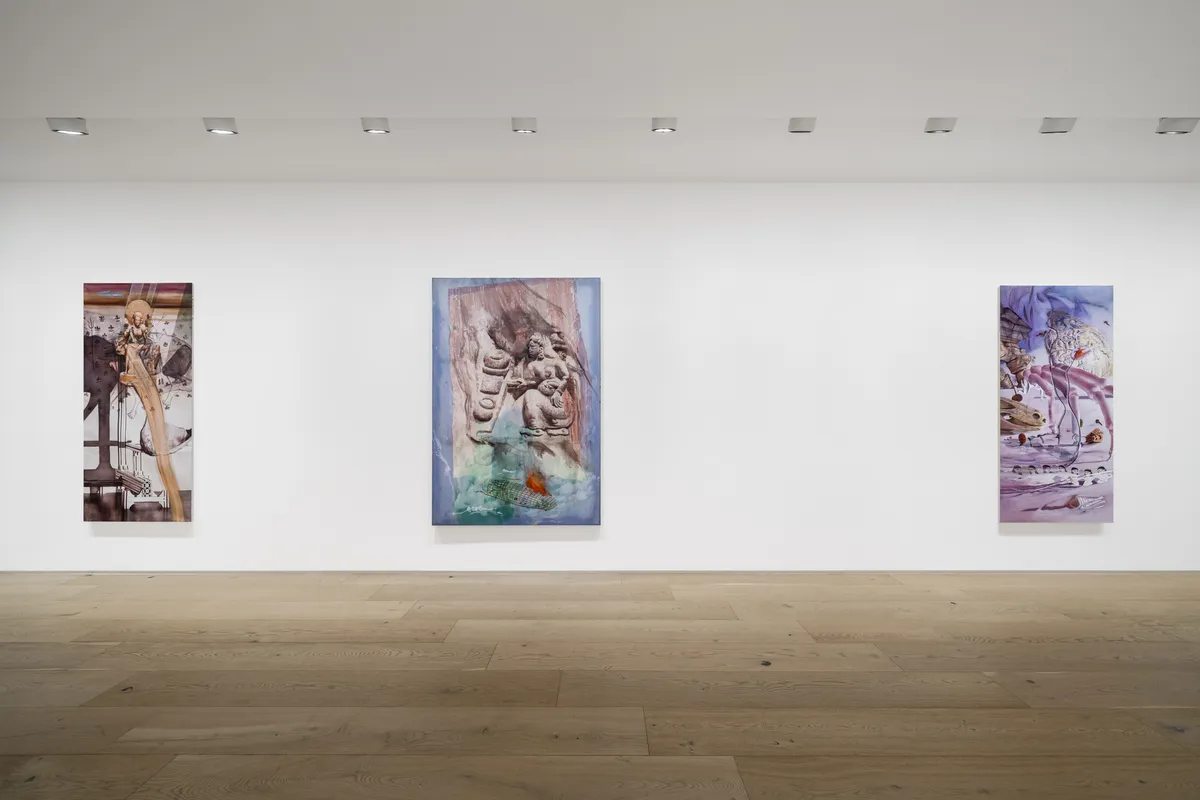
Sharing these questions with a Korean audience holds great significance for the artist. Regarding the three new works on display, she explains that while they "engage with different kinds of imagery, they are all rooted in a shared theme: imperialism and the female figure".
The work Hearth and Wreck (2026) brings together the remains of a Japanese warship—a "skeleton wreck"—lying on the seabed in the Philippines with the figure of a woman standing before a hearth in Java. "I wanted to place the forgotten history of war alongside the anonymous rhythms of everyday life within a single pictorial space," Imazu remarks. By crossing the remnants of "grand history" with the female body that sustains the everyday, she considers how historical violence settles behind an "ordinary landscape".
Violet Trade (2026) addresses the imperial desire underlying the spice trade, using motifs such as the seven nymphs of Indonesian mythology, nutmeg, cloves, and artifacts from the sunken colonial ship Batavia. While plants may appear decorative, their histories are "deeply entangled with systems of classification, collection, domination, and exploitation". Imazu connects this to the myth of a bathing nymph whose sash is stolen by a human, symbolising "projected desire". Through this, she seeks to suggest "the presence of power that lingers beneath beauty".
[…]
For Imazu, the history of imperialism is not merely a matter of nations or trade; it "deeply enters into women's bodies, representation, labor, and everyday life". The female figures in her work—whether goddesses, unnamed individuals, or objects of desire—reflect the structures of history in varied ways.
Her transition from Japan to Indonesia has profoundly shifted her perspective. "The closer I try to get [to a place], the more I feel that it cannot be easily grasped," she reflects. This awareness informs the concept of 'distancing,' which she defines not as separation, but as a "condition for thinking". "When something is too close, it can become difficult to see," she observes. In this context, distancing is a way of "questioning one's own position while trying to engage with a subject more carefully".
Her creative process begins with extensive research, gathering fragments from archival materials, online images, and museum artefacts. "I rarely begin with a fixed conclusion," she says, preferring to focus on "unexpected connections". These elements are layered digitally before moving into painting, which she views as "a way of holding different times and memories together in one place".
Addressing the "imperial violence that is still unfolding in the present" , Imazu admits that confronting these persistent structures of domination can be painful. However, she avoids reducing these realities to a simple message, choosing instead to approach them through layers of imagery.
"I think of history and memory not as fixed records of the past, but as things that are constantly being reconstructed in the present". Rather than teaching history, her goal is to "make visible the unseen layers of time that underlie familiar images, systems, and landscapes". Her work spans painting, installation, and digital media, with the medium emerging naturally through the process of determining the most "appropriate form for a particular image".