Ariana Papademetropoulos exposes the flaws in reality Review of the exhibition 'Glass Slipper' in Paris
By Justine Sebbag
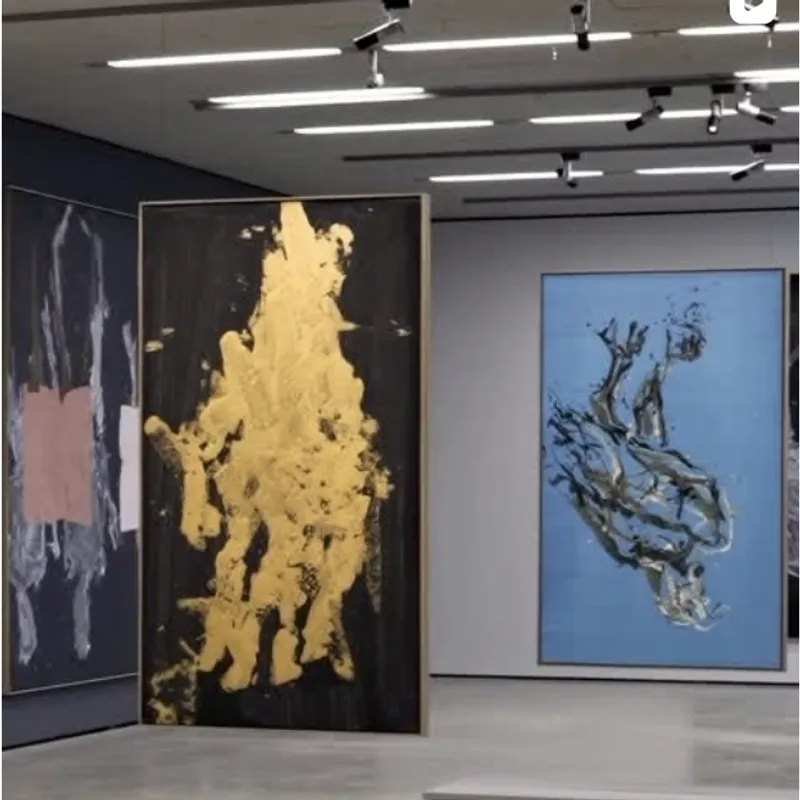
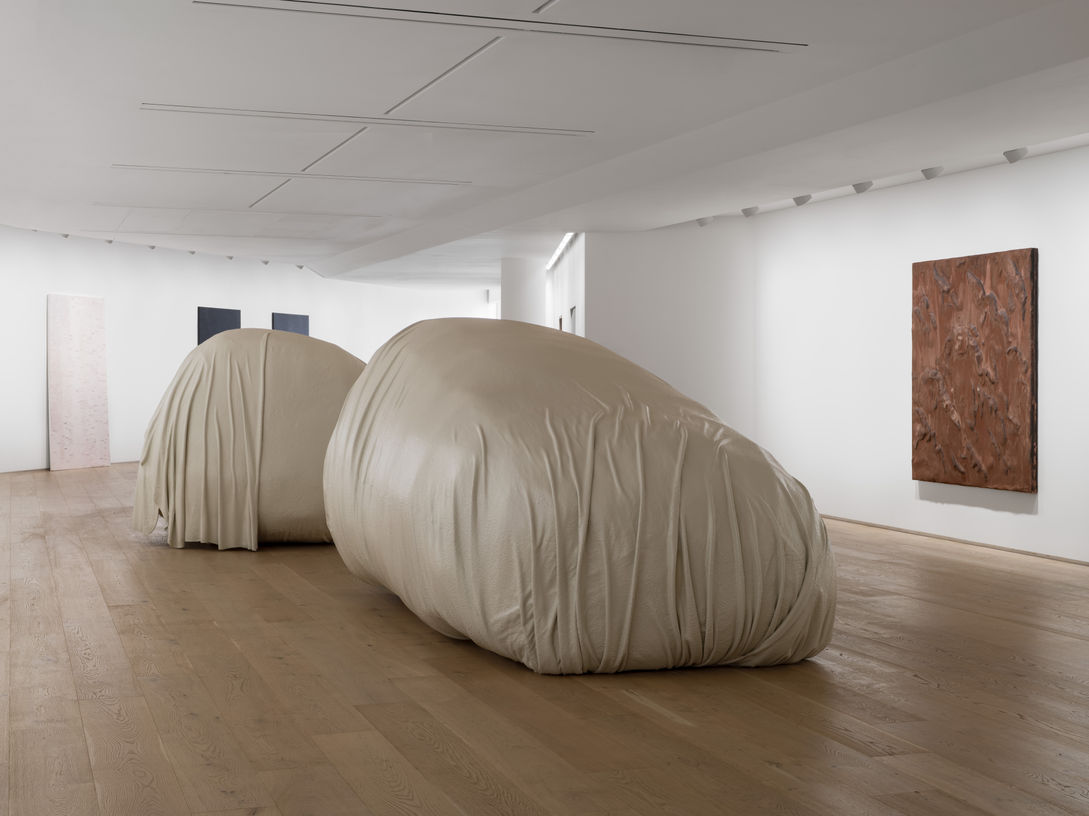
The first solo exhibition in France by Californian artist Ariana Papademetropoulos, “Glass Slipper” at Thaddaeus Ropac presents a hyperrealist world with resolutely symbolist subjects: a habitable aquarium, telephone handsets shaped like seashells, and large-scale paintings in which domestic furniture drifts atop erupting volcanoes. A body of work situated somewhere between Leonora Carrington, the internet and the afterlife.
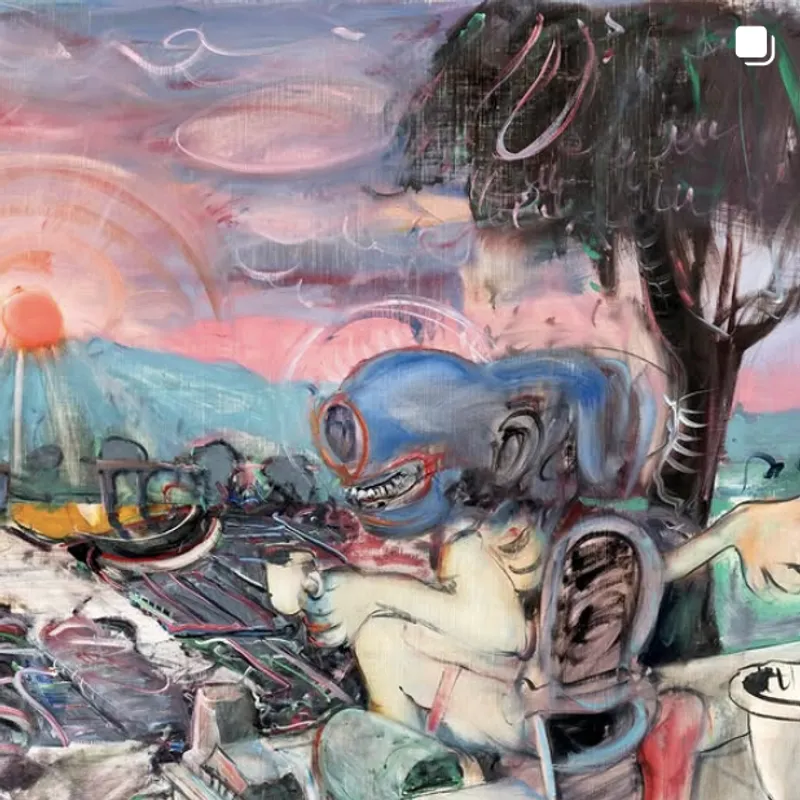
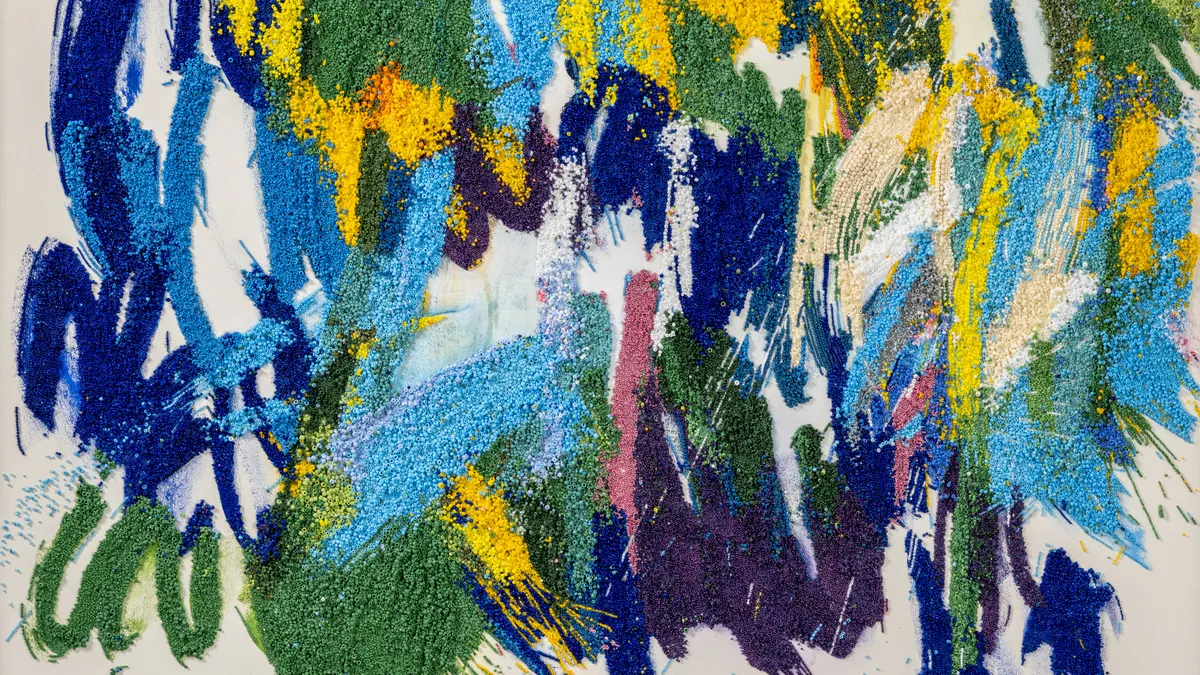
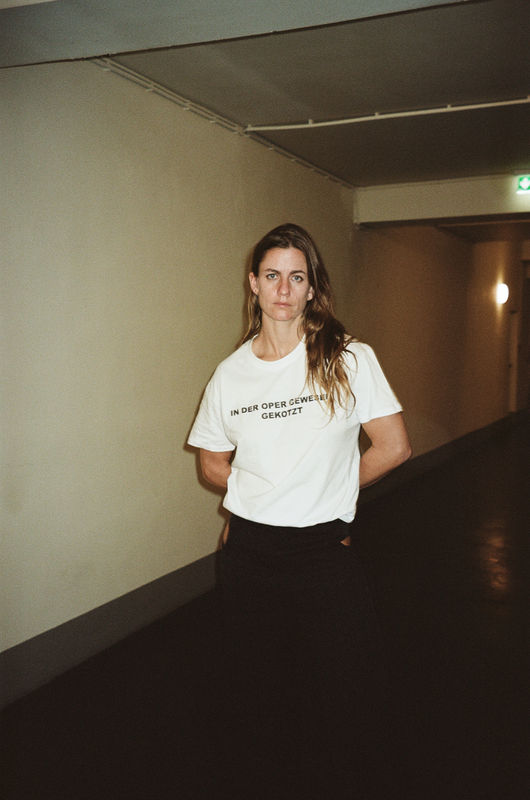
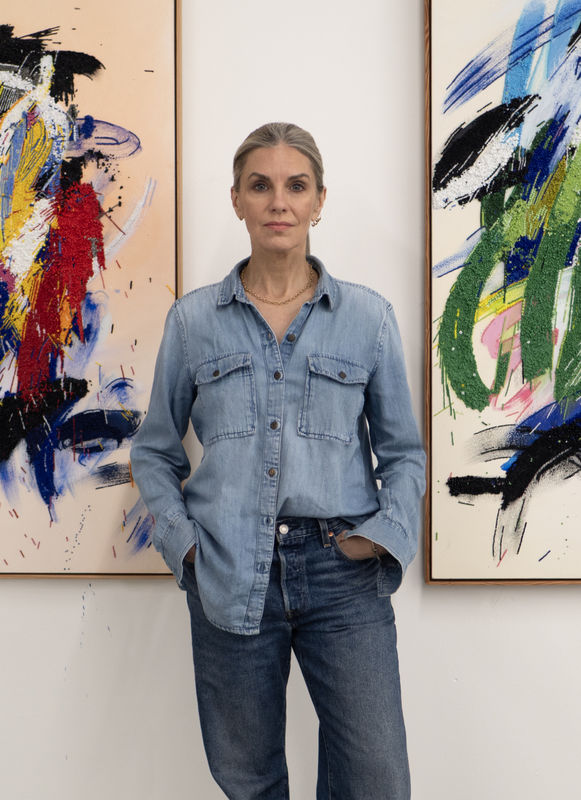
There is, in the painting of Ariana Papademetropoulos (born in 1990), something immediately recognisable and yet impossible to situate within reality. The intense blues, the purples, the saturated rainbows, the holographic colours, water everywhere, domestic interiors floating above bubbling lava: we’ve seen it all before, but not in real life. We’ve experienced it online. This aesthetic known as vaporwave—that blend of ancient sculptures and 1990s web design that saturated screens in the 2010s—she tackles head-on, filtering it through oil on canvas, Jungian psychology and Californian occultism. In doing so, the artist gives it a depth that Photoshop never could.
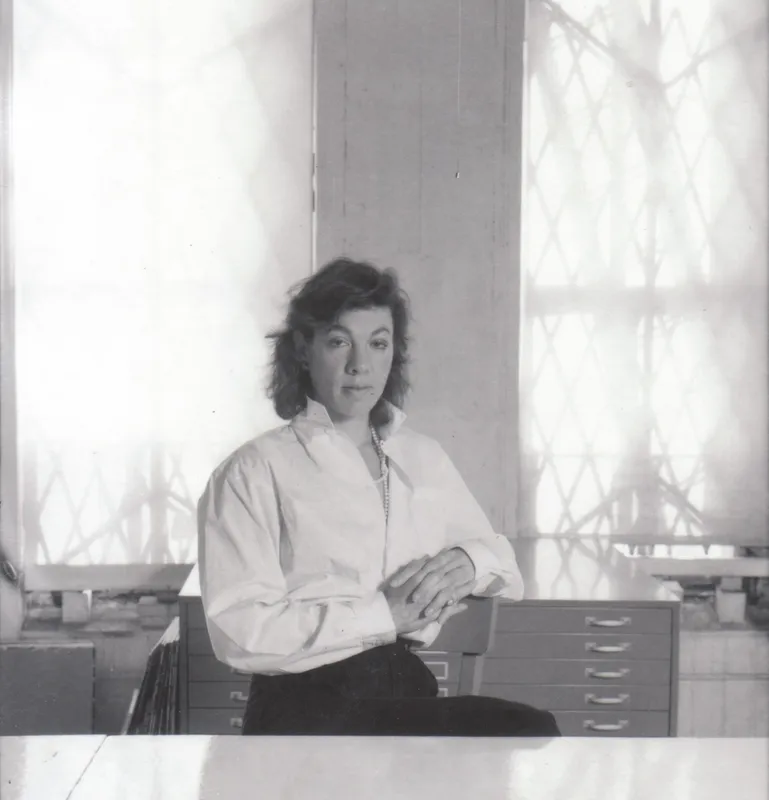
Ariana Papademetropoulos is, first and foremost, a remarkable technician. Working on a life-size scale from personal or found photographs, she renders the transparent plastic of dry-cleaning bags with a meticulous attention to reflections and folds that evokes the Flemish masters, painting worlds that no one has ever physically inhabited. Her hyperrealism is, in fact, deeply symbolist: precision serves not reality but its double, that parallel and familiar world which Dorothea Tanning called ‘the boundless expanse of possibilities’. Leonora Carrington is not far off either, with that same strangeness, that same sense of domestic ritual derailing into something else. What sets Ariana Papademetropoulos apart from her surrealist predecessors is an additional layer: that of a generation that has grown up as much online as in the physical world, and whose inner landscapes bear the mark of both. It is no coincidence that Thaddaeus Ropac had already included her, in 2024 in Pantin, in a group exhibition entitled “Re-enchantment”: the word sums up quite well what her work is all about.
On the ground floor of the gallery, Vichy-check dining chairs and Louis XV armchairs are perched atop an erupting volcano or swept up by the eye of a twilight tornado. The scenes are devoid of human figures. This is not a melancholic absence but a collision: the domestic against the telluric, 19th-century bourgeois furniture engulfed by primal geological forces. It is an image that is as political as it is dreamlike. One is reminded of the tornado sequence in The Wizard of Oz, a reference the artist claims as her own, that shift from black and white to Technicolor signalling that the world has just changed in nature. Colour, in Ariana Papademetropoulos’s work as in Victor Fleming’s, is not a detail: it is the sign that something has changed.
At the centre of the large hall stands the installation *Water Based Treatment*: an aquarium into which visitors are invited to step and lie down. Kissing fish swim around them whilst they listen through headphones to a piece by Nicolas Godin, one half of the duo Air, composed from ambient sound therapy tapes from the 1970s. Ariana Papademetropoulos says she is fascinated by the transparency of water, that surface which we see but which distorts what it conceals. The exhibition photograph shows her lying inside, dressed in white, her hair flowing: an odalisque in her aquarium. The installation functions as a heterotopia in Foucault’s sense: a real space containing another, incompatible one—a seabed at the heart of a gallery in the Marais. Visitors are invited to lie down there in turn, and nothing compels them to replicate the pose. Depending on how one chooses to position oneself, one either offers oneself to the gaze of others or withdraws from it. This choice mirrors exactly the logic of social media, where everyone constantly negotiates their visibility. Ariana Papademetropoulos herself has a strong online presence; she is a figure whose self-presentation has become inseparable from her work, as is the case for many artists of her generation. One might note the discomfort created by the installation: in an exhibition that depicts a world on the brink of collapse, live fish are confined to a cramped aquarium to serve the effect.
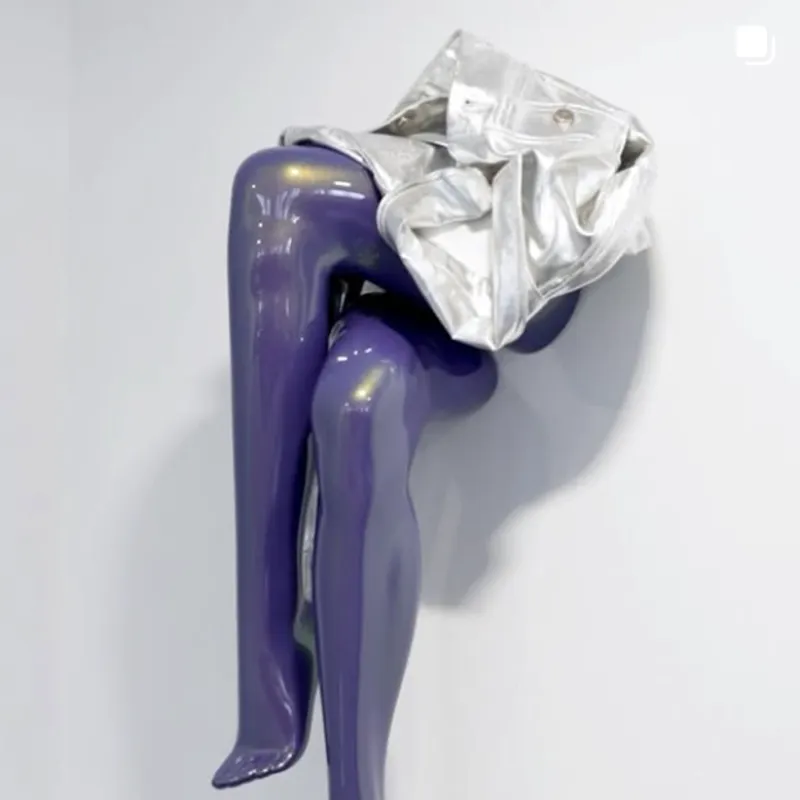
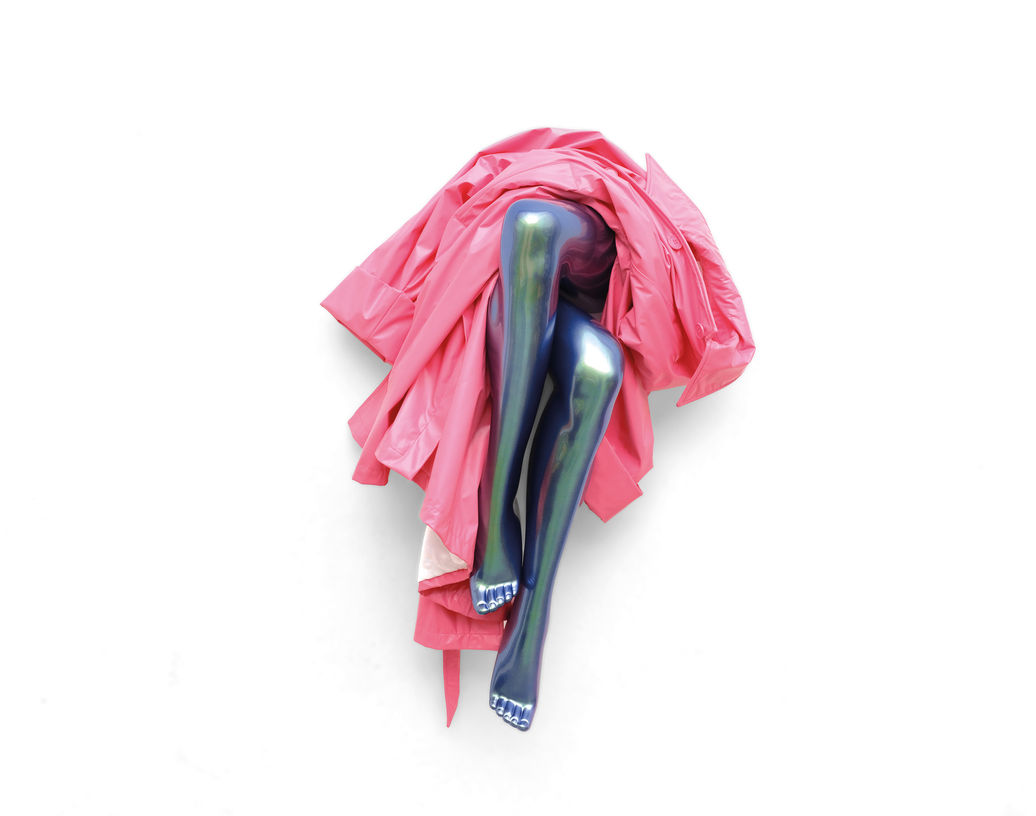
Upstairs, the exhibition shifts towards something reminiscent of the concept of ‘camp’, as defined by Susan Sontag in her *Notes on Camp* (1964): a taste for the unapologetically artificial, kitsch elevated to the status of art, artifice as a form of sincerity. Three iridescent, shell-shaped telephone booths, inspired by those at the Tropicana hotel-casino in Las Vegas, hang from the walls. When you pick up the receiver, you hear intimate conversations between the artist and her medium. Beside them, microwaves in various stages of combustion, and a saucepan on a hob from which steam rises in the shape of a female figure: a direct reworking of Correggio’s Jupiter and Io (1530–1532), a divine apparition emerging from the most ordinary of appliances.
Glass Slipper, Cinderella’s glass slipper, is what remains of a spell after midnight. Ariana Papademetropoulos calls the cracks in her paintings ‘the fissures of the imagination’. What she paints are the places where the familiar world begins to crack.
[Translated from French]