Erwin Wurm: 'Eating, putting on weight – that in itself is creating a sculpture' Interview by Fabrice Bousteau on the occasion of Erwin Wurm's exhibition 'Tomorrow: Yes' in Paris
English translation
By Fabrice Bousteau
An interview with the Austrian visual artist Erwin Wurm, who has turned sculpture into an intellectual experience that challenges the creator, the subject and the material – in short, the entire practice. We meet him in Pantin, where he is exhibiting at Thaddaeus Ropac, showcasing new works alongside others that have made his name – works that are not quite as funny and absurd as they seem…
For 45 years, you have devoted yourself to a wide-ranging exploration questioning the very nature of sculpture. How would you define it?
Everything I have done—be it drawings, photographs, paintings, performances or three-dimensional works—all of it is sculpture. The first pieces I created were made from waste materials, such as scrap wood. Then I realised that during the first six or seven years of my career, I had tried to avoid replicating what others had done before me. Yet that is not how an artist builds a body of work over time. So I decided to find the starting point of sculpture – hence my dust sculptures. I then tried to combine social (and even political) issues with questions of form. It was a long and difficult journey.
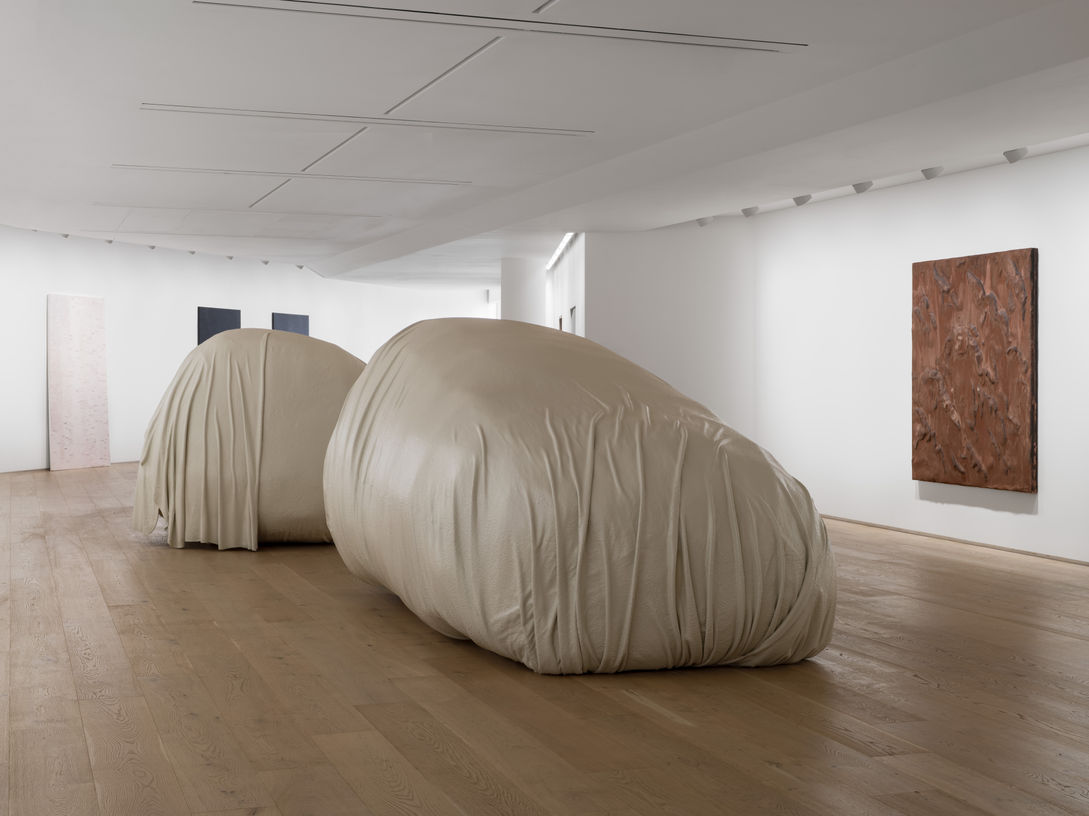
I was oscillating between performative sculptures (the One Minute Sculptures) and actual 3D sculptures, such as the Fat Cars. I went about it much like Gerhard Richter or Picasso, who also experimented with different things simultaneously, exploring various angles, perspectives and possibilities to discover what worked and what didn’t. My approach was very experimental – and still is. But to answer your question: no, I don’t have a definition of sculpture because anything remains possible. [...]
Your work has a strong autobiographical dimension. This is the case with School, a shrunken and distorted version of the school in your village, but in a ‘French’ version, as inside we find school posters seen in France from 1890 to 1980. There is a strong sense of claustrophobia and oppression within it, far removed from the humour the piece exudes from the outside. What is the meaning of this work?
At my school in Austria, in a society still shaped by the post-war period, the teachers used to hit us, and every day we pupils spent our time hurling insults at one another. We thought this was normal, as no one ever told us it wasn’t. Twenty years later, I realised the horror and brutality of what we had been through. Read the French school textbooks of the time: very young children are encouraged to drink alcohol, the virtues of the housewife are extolled, colonisation is glorified… Education and knowledge can be seen as a sculptural bubble. School deals with the sculptural mass of knowledge and its evolution over the decades. [...]
Can you tell us about the importance of clothing to you and its connection to sculpture?
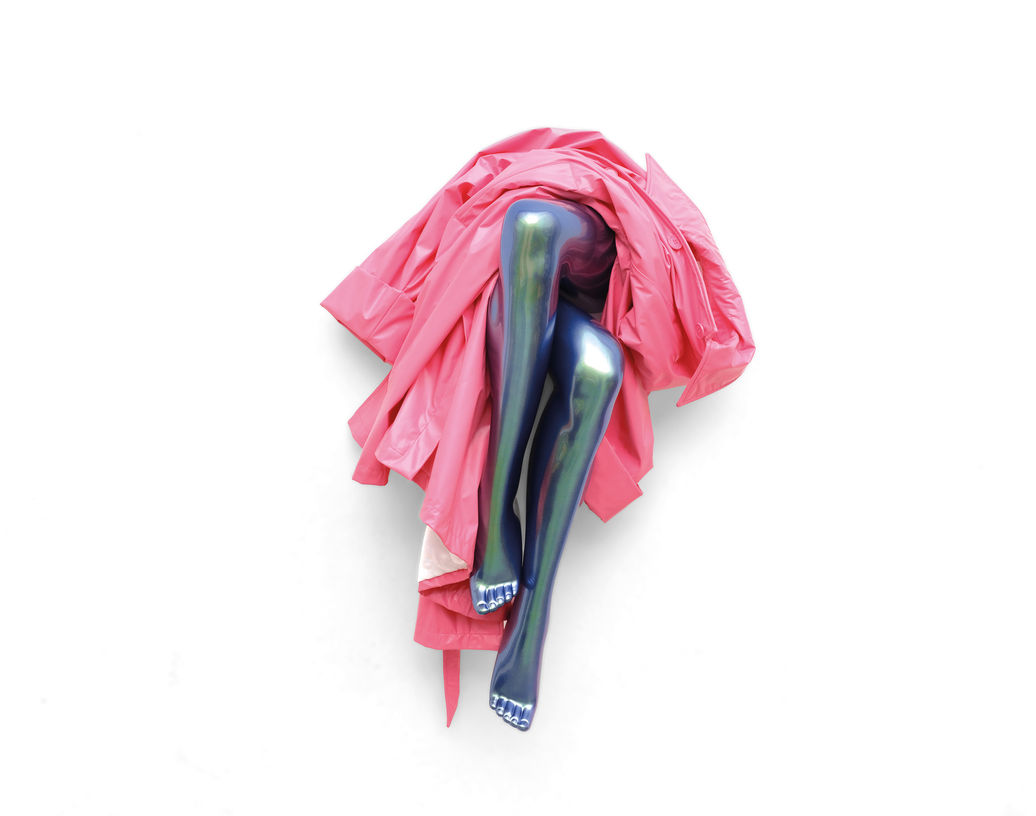
Ancient bronze sculptures depict massive forms – those of gods, warriors or horses – which are in fact made up of a very thin layer of bronze. That is their skin. And their second skin is their clothing. All these sculptures are hollow inside. When I was starting out, as I didn’t have the money to buy materials, I used clothes as the material for my sculptures: they were easy to work with. And I carried on. When you work with clothes, you’re working on the idea of protecting the body, but also on a social issue: our clothes show our social status, just like a house or a car. They are a substitute for the body. [...]