The Lesser-Known Robert Rauschenberg The Menil Collection gives centre stage to the proto-Pop star’s ‘minor’ fabric works
By Jenny Wu
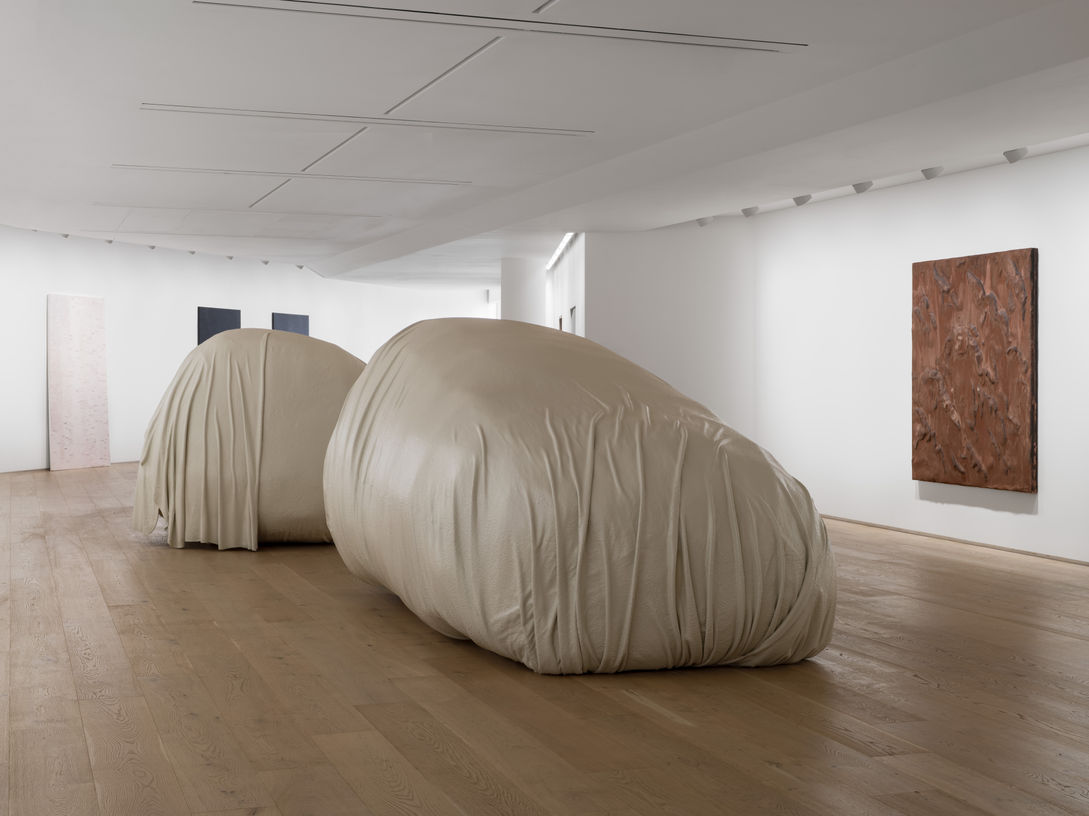
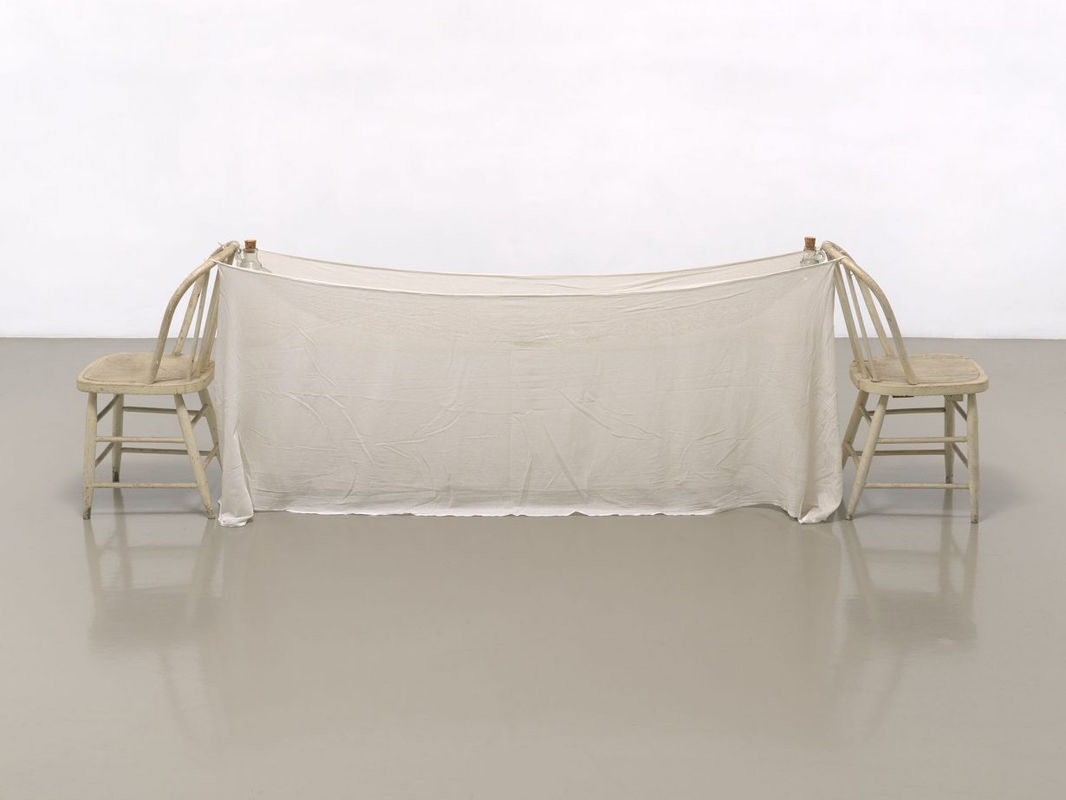
There is an air of austerity to the nearly three dozen fabric works in the Menil Collection’s galleries, made by Robert Rauschenberg during the 1970s on blustery Captiva Island, Florida, where the formerly New York-based artist moved following his Castelli-finessed market success and award-winning Venice Biennale presentation. Large but quiet pieces like the wall-mounted assemblage Untitled (Venetian) (1973), which features a canvas canopy he found bearing the logo of the construction manufacturer Caterpillar Inc., and the sculpture Sant’Agnese (Venetian) (1973), in which a diaphanous mosquito net is stretched like drying laundry between two chairs – evoke the dailiness of manual and domestic labour. Vibrant selections from the ‘Hoarfrosts’ series (1974–76) such as the electric blue Untitled and lemon-yellow Sulphur Bank (both 1975) screen and subdue Rauschenberg’s signature collages of mass media imagery beneath utilitarian-looking patches of cloth, cardboard and paper.
Pieces from the ‘Jammers’ series (1975–76), readymades that most explicitly mark Rauschenberg’s ‘turn to austerity’ (as art historian Yve-Alain Bois put it), stand like makeshift shelters of textiles, rattan and string. Per the Menil’s catalogue, they ‘consist of such simple elements’ that they could be ‘rolled up’ and transported across the US ‘in the back of a station wagon’. In one such work, Pilot (1975), the inclusion of a selvedge bearing red ‘Made in Switzerland’ stamps suggests that the artist intended to preserve all he could – and alter as little as possible – of the castoffs at his disposal.
[...]
As one of over 30 Rauschenberg Centennial exhibitions staged globally from 2025 to 2026, the Menil’s show nuances the legacy of the proto-Pop art star by presenting a medium-and time-bound grouping of his ‘minor’ works on their own terms. Seen independently of his previous claims to fame, these ragged gems bearing at most dustings of appropriated imagery and text are both sympathetic in their shabbiness and conceptually fertile. As found and repurposed objects, they retain their functional aspect while flirting noncommittally with signification, like a bed sheet being flown as a flag. In their restraint, they evince what minimal alteration is needed – a tug here, a fold there – to turn mundane materials into a sculpture. By giving centre stage to a short rattan pole cradled in an unevenly woven fabric sling, or a grubby lace curtain hung from a long piece of driftwood, the Menil’s exhibition trims away not only excess data but also superfluous assertions of significance, revealing what breadth and freedom lie within the minor key.