Mandy El-Sayegh In conversation with Chloe Stagaman
By Chloe Stagaman
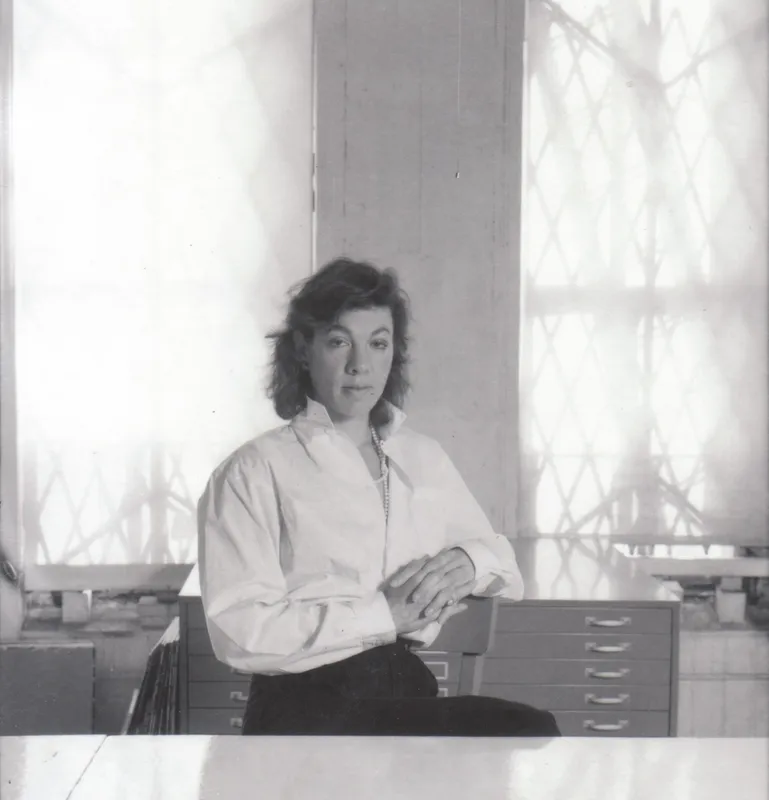
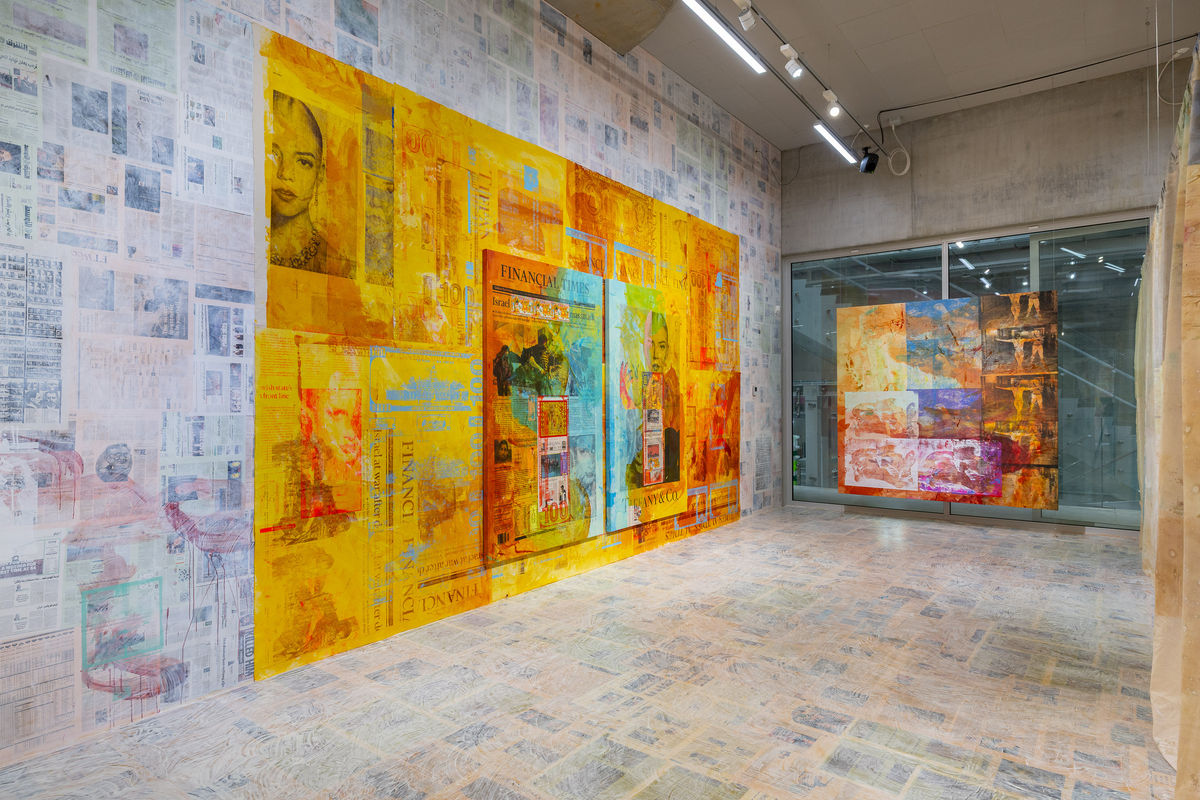
Mandy El-Sayegh uses collage to examine political and social power structures. The shelves of her South London library brim with newspaper spreads, maps, psychoanalytic texts, textiles, and family calligraphy, among many other fragments to be incorporated into her work. El-Sayegh grew up speaking English between her Malaysian Chinese mother’s Malay, Cantonese, and Mandarin, and her Palestinian father’s Arabic. Her elaborate compositions reflect this experience and resist privileging any one manner of communication over another. Across her body of work, images, words, and painted gestures speak in every direction and await identification and close looking. Often they are layered beneath the framework of a gossamer grid, a structure that extends to any site where her work is displayed. Every exhibition includes a floor to ceiling installation, frequently of newspaper spreads gridded and held in place by latex, a material with a history of colonialism and extraction. Among an accrued architecture of print media, El-Sayegh re-presents the news, apparatus and all, as something to be held, scrutinized, and—crucially—felt.
This winter, curator Amira Gad commissioned El-Sayegh to make her first solo exhibition in the Netherlands, a site-specific survey at Rotterdam’s The Depot titled Figure, Field, Grid that layers years of the artist’s projects across the institution’s third-floor gallery. An apt context for El-Sayegh’s work, The Depot is a mirrored, publicly-accessible storage building that houses the over 154,000 objects in the collection of the neighboring municipal Museum Boijmans van Beuningen, publicly viewable by appointment. If you forget to make a reservation, stacked glass and metal vitrines display a selection of the institution’s famous paintings and objects around its central staircase. Amid this environment of smooth, suspended time, El-Sayegh’s exhibition feels like entering the wound of our violent present. Images of atrocity, war, mass death, and torture are layered with headlines of political upheaval and paintings and drawings from the museum’s collection.
On a cold London day in December, I spoke with Mandy in her studio as we walked among in-progress artworks, sat in her library, and looked at newsprint together. What follows is a version of our conversation that has been edited for length and clarity.