Raqib Shaw and “Echoes Over Arabia” Interview with the artist ahead of Art Basel Qatar
By Ana Novi
As Art Basel Qatar approaches, Raqib Shaw’s “Echoes Over Arabia” emerges as one of the fair’s most quietly focused presentations [...] Rather than addressing Arabia as a site to be depicted, the presentation operates through atmosphere, duration, and attention—foregrounding experience over description. “Arabia entered my imagination long before it entered my thinking as a place,” Raqib Shaw reflects, describing a geography formed through scripture, oral transmission, and distance rather than direct encounter.
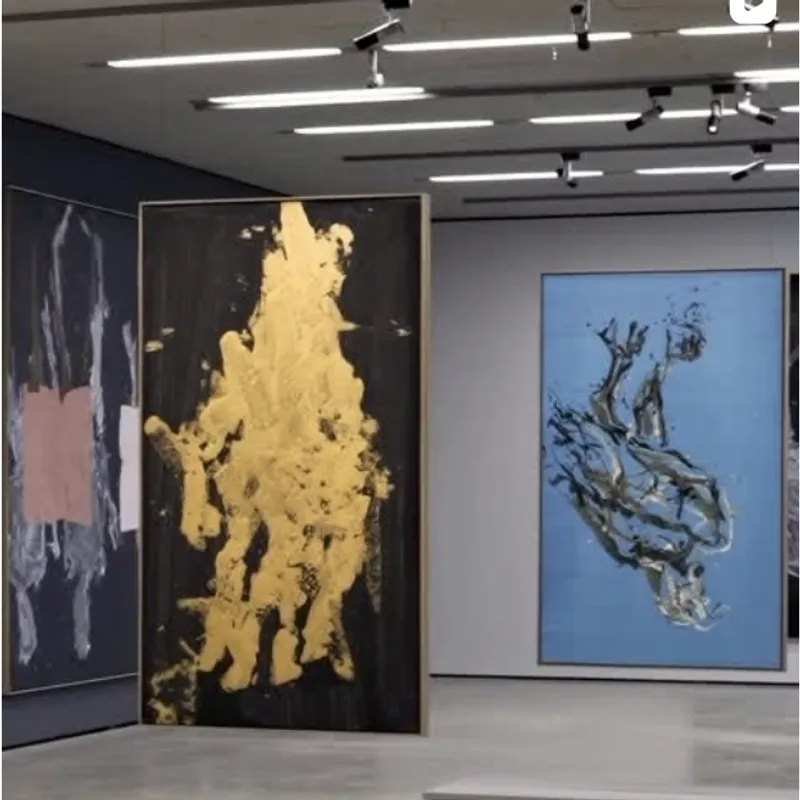
Born in Calcutta, raised in Kashmir, and now based in London, Raqib Shaw draws multiple cultural and spiritual lineages into careful alignment. Across these works, histories of unrest, repetition, and human ambition are present but never declared. Informed by the ethos of Kashmiri Sufism—its emphasis on love, beauty, and inward attention—the paintings sustain composure even as they register fracture and loss. Firelight and moonlight regulate tempo rather than drama; unrest is absorbed into structure. As Shaw notes, light does not consume but reveals.
Formally, the works echo the ornamentation and intricate borders of sacred Islamic manuscripts while withholding calligraphy, allowing visual language to operate without textual authority. Eroded margins, burn marks, and insect passages introduce interruption and instability, turning ornament into a contested threshold—a zone where order strains to hold and buried material begins to surface. “Echoes Over Arabia” by Raqib Shaw unfolds not as a sequence to be read, but as a state to be entered—“what we inherit, what we bury, and what insists on returning in the form of light.”
Ahead of the fair in Doha, Whitewall spoke with Raqib Shaw about the conditions that shaped this body of work, the role of memory and shadow in his process, and why painting—slow, inward, and resistant to immediacy—continues to function as a space for reflection and endurance.