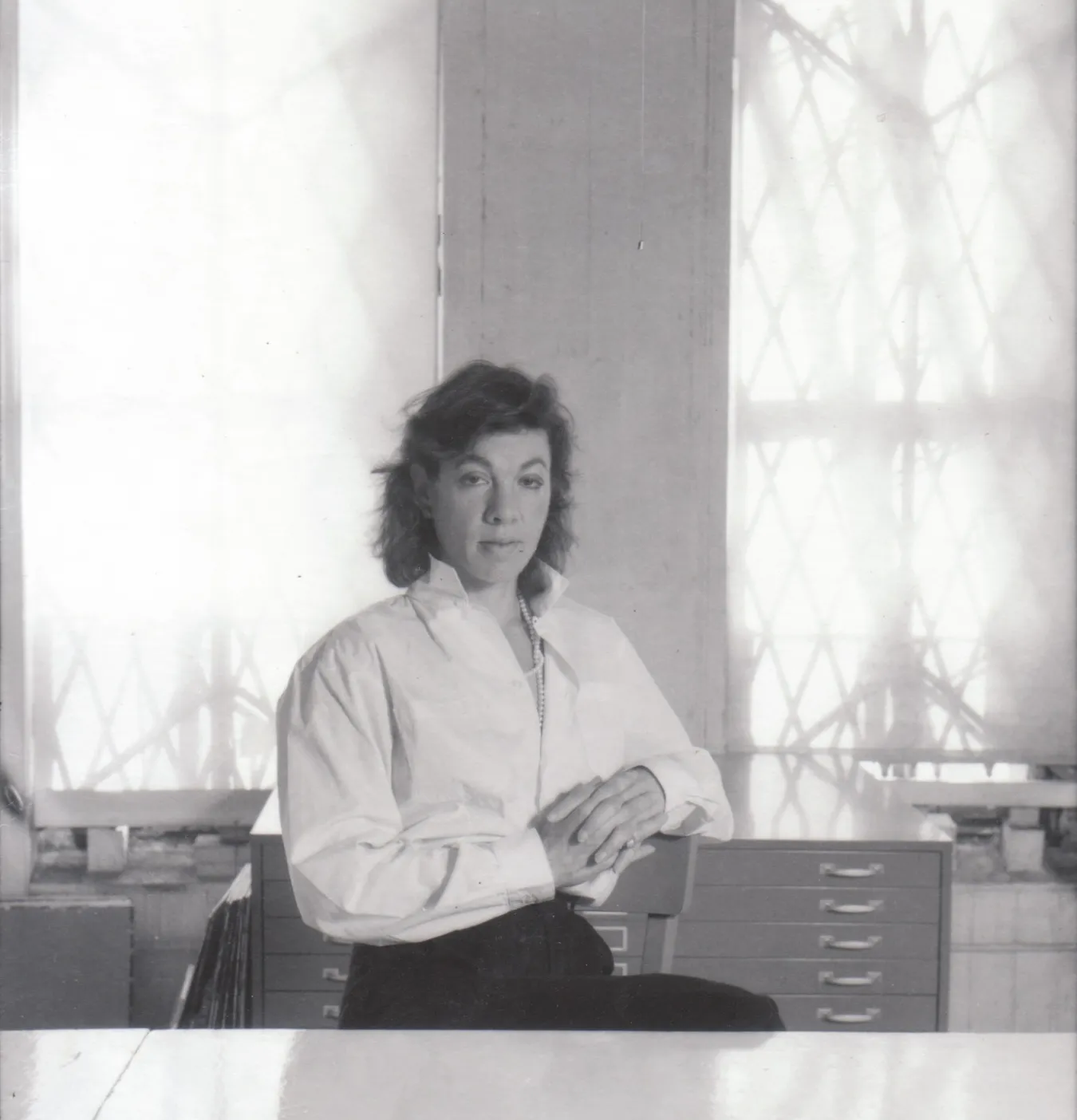
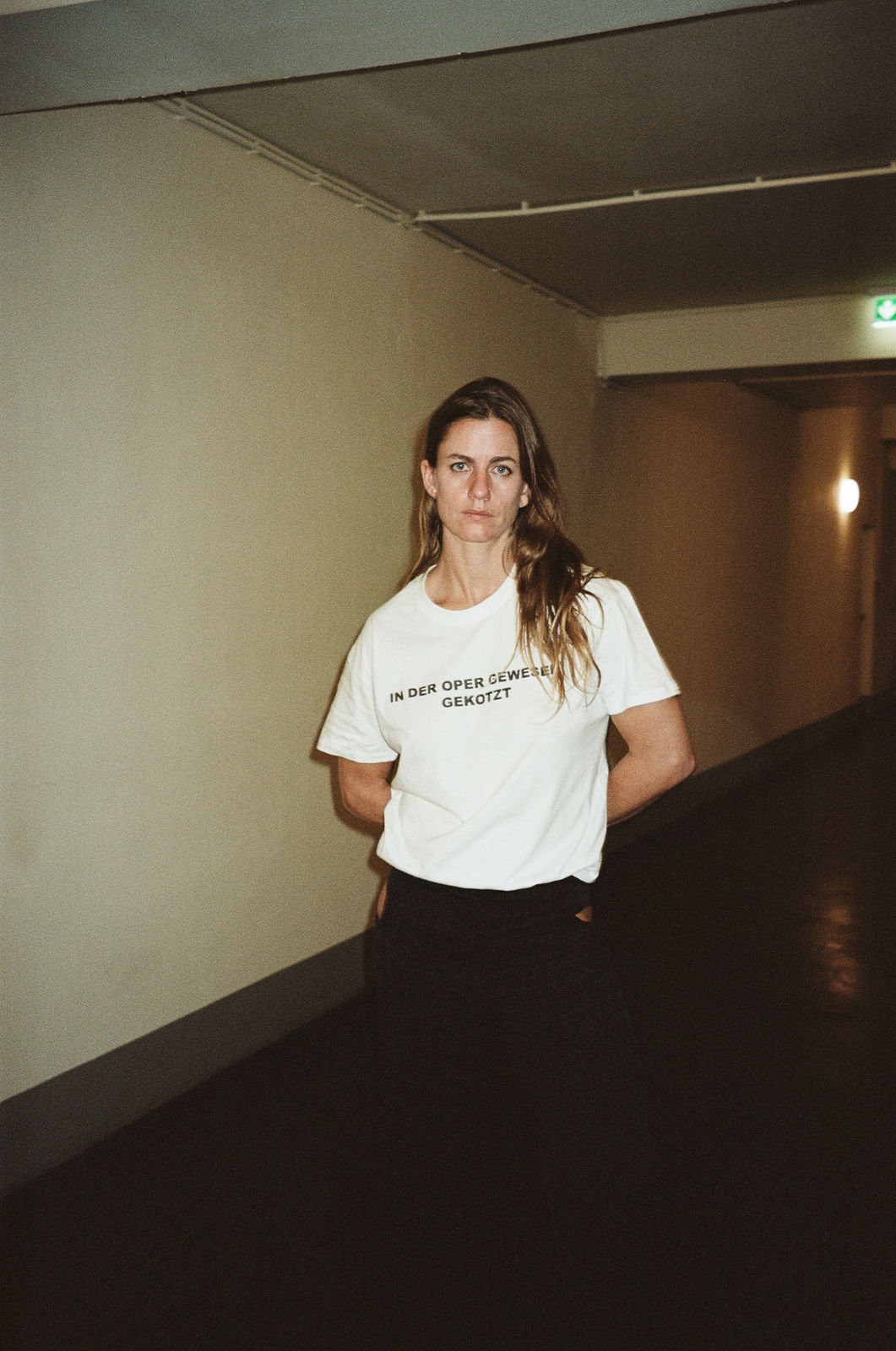
Sirens take the stage Anna Leon looks back on ten years of Florentina Holzinger, one stunt at a time.
For Florentina Holzinger, ballet isn’t delicate, and opera isn’t sacred. In the ‘Holzinger system’, bodies, stunts, and machinery collide in a form of expertly, artistically crafted spectacle exploring pleasure, pain, and power.
Florentina Holzinger had made several early-career works, some in collaboration with Vincent Riebeek, and was already a topical name in contemporary dance, before her breakthrough to international recognition and large-scale funding came with a trilogy revisiting canonical moments of Western dance history: Agon in 2014 and Apollon in 2017, drawing from George Balanchine, and TANZ (Eine sylphidische Träumerei in Stunts — A Sylphidic Reverie in Stunts) in 2019, a critical response to romantic ballet. TANZ opened the floodgates: it won the prestigious Nestroy Theatre Prize for best director and was selected for the 2020 Theatertreffen festival. This performance not only propelled Holzinger’s name beyond the field of dance but also became a canonical work in its own right.
The pieces that followed — a take on Dante with A Divine Comedy in 2021, a take on Shakespeare with Ophelia’s Got Talent in 2022, and a take on the catholic church and opera with SANCTA in 2024, interspersed by smaller-scale, often one-off, non-repertoire works — received jaw-dropping institutional support and drew crowds of spectators. From Apollon onwards, Holzinger has been premiering spectacular, complex productions at a rate of almost one per year, while continuing to tour previous works in repertoire, an extremely rare phenomenon in the project-based economy of contemporary dance.
THE HOLZINGER SYSTEM
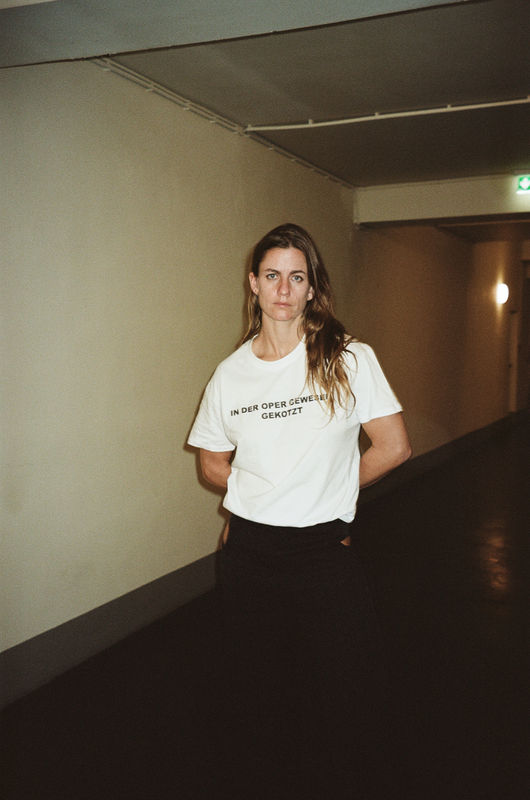
One has come to expect several things in a Holzinger performance. A large cast, composed of non-cis-male bodies of diverse skill backgrounds (ballet and CrossFit, circus and acting), in particular including performers of a wide range of ages and types of mobility. Holzinger herself on stage with her cast; everybody naked with the exception of black harnesses holding microphones and/or climbing gear; most with tattoos, piercings or other chosen body modifications. Some join several works: Annina Machaz in comic acting roles; Netti Nüganen climbing on improbable contraptions; Renée Copraij a discreet but stealthy presence; Nikola Knežević doing stage design; and Stefan Schneider designing sound.
Trigger warnings in the programme note; bloodflow, both fake and real; sex imagined, spoken, performed; live filming of all this, projected in real time on screens, the stickiness of gore and sex coming closer to spectators, albeit in slightly pixelated form. A performance lasting significantly more than the fifty to seventy minutes that are often seen as contemporary dance’s gold standard. The performance takes place in a large theatre, its stage large, its audience-capacity large. A central, recognisable, canonical reference point (ballet, opera, Shakespeare, the catholic church), its cultural sanctity ruptured by under-represented aesthetics and practices (vaudeville, stunts, sideshow, contortion, circus). Some transport medium — motorcycle, car, helicopter — or other piece of machinery suspended from the ceiling with bodies climbing onto and hanging from it. A climax (or two), stomach-turning moments, funny moments, poignant moments, beautiful moments, messy moments.