Sylvie Fleury and the Allure of Glamour On the artist's work after Coco Chanel
By Paige K. Bradley
An opaque, lacquered case of sensuously curving angles which, when unclasped, reveals a compact quadrant of dazzling eyeshadows and highlighter – the lightest swipe of a fingertip can illuminate your look. Or: a small yet cumbersomely shaped black box with anywhere between one and four compressed mounds of variously coloured powders – you can rub them on your face. Two ways to say the same thing.
I’m writing about the design of a Chanel compact. I’m writing about a Sylvie Fleury painting. To write about one is to write about the other. This is not about blurring boundaries, it’s about Fleury’s capricious, conceptual game of value: each is a gateway drug that deposits you as if through a trapdoor into industrially scaled desire, and it doesn’t matter which you got into using first. Feeding the bottomless aspiration of art or fashion is an enlivening tightrope walk – you could really ruin your life or become a legend.
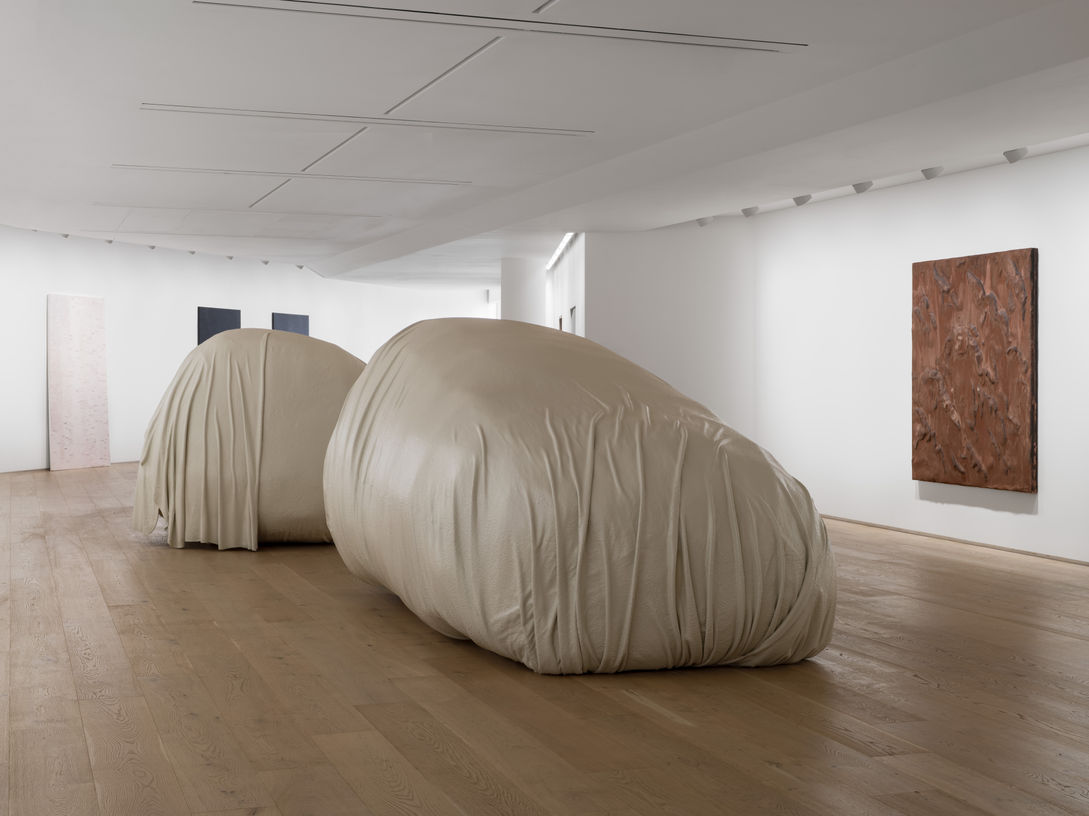
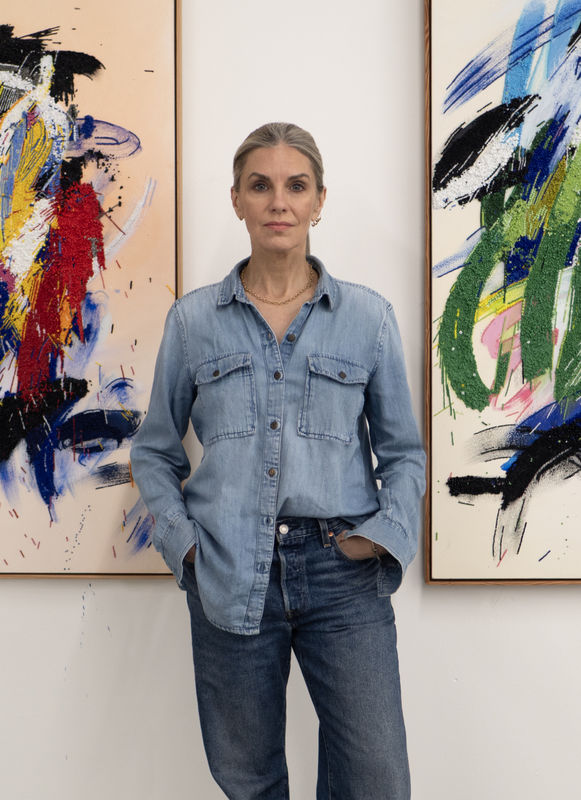
In ‘Joy’, her 2019–20 solo show at Karma International in Zurich, Fleury included four acrylic on shaped canvas and wood paintings (Turbulent, Légèreté et expérience, Coral Burnt and Rose Pétale, all 2019) that we could say are ‘after Coco Chanel’ in the way that certain other paintings are credited as ‘after Rembrandt’. Proximity can make one minor. An artist can leverage it in a tawdry, desperate grasping after agency – or as a cunning, even satirical move against the very premise of stature.