Ali Banisadr The Silence Beneath the Storm
By Jae Kim
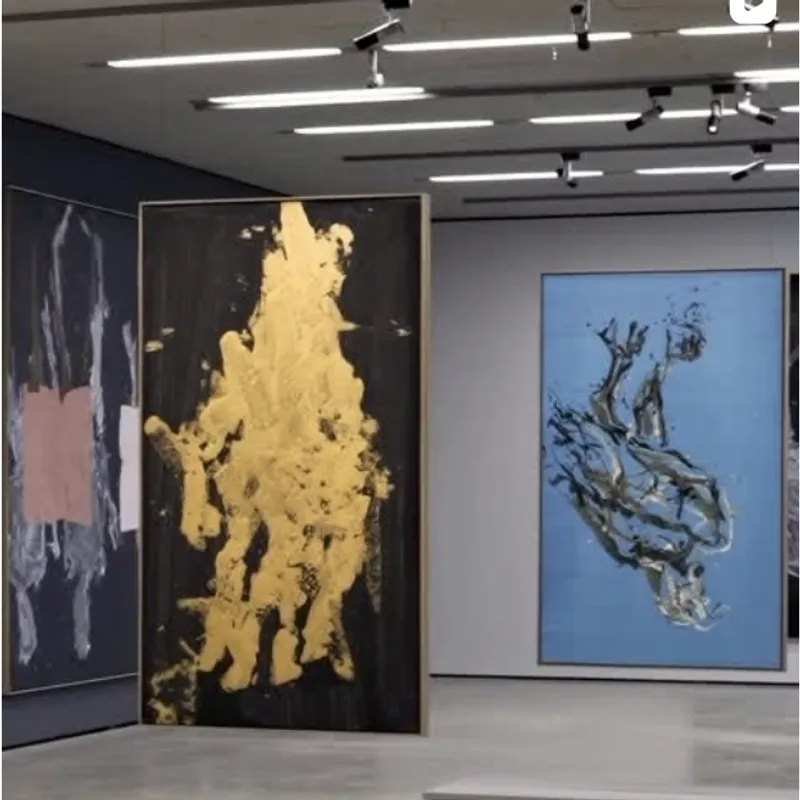
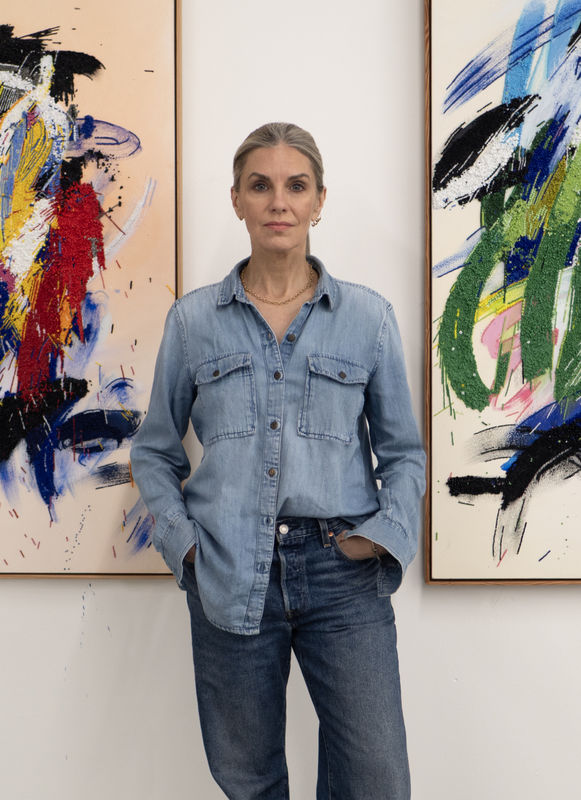
The Greek word gnosis suggests not simply knowledge, but a knowing that is embodied — felt rather than proven, intuitive rather than declarative. Ali Banisadr used the word almost casually during a conversation in his studio, yet the weight it carried echoed long after. His paintings do not proclaim. They pulse. They swirl like weather systems — turbulent, immersive, ungraspable at a glance. You sense them before you fully see them. There is a paradox at the heart of Banisadr’s practice. His canvases, such as Omen (2025), erupt with chaotic, almost apocalyptic energy, yet his process is governed by patience, deep listening, and rigorous self-discipline. The storm is what meets the eye, but beneath it lies a quiet, deliberate silence.
Born in Tehran in 1976, Banisadr came of age during the Iran-Iraq War. The memory of explosions, sirens, sudden disappearances, and unspoken fears seeps into his work like a recurring undertone. After emigrating to the United States, he encountered a different kind of language — urban tension, graffiti, and fragmented cultural signals pulsing through the streets of San Francisco and later New York. It was in San Francisco that his early influences took shape amid the immediacy of sonic and visual chaos. Yet his response has never been about replication. He does not paint trauma but rather the atmosphere left in its wake. His oeuvres teem with strange architectures, swarming figures, and fractured landscapes, yet nothing is ever quite defined. They resist clarity the way dreams resist summary.
What might first appear as visual excess reveals, upon closer attention, a practice rooted in restraint. This is not the restraint of minimalism or silence; it is one of control, resisting the seduction of legibility. Banisadr avoids offering meaning with a fixed hand. He constructs visual worlds that hover between knowing and not-knowing, between order and collapse. Figures emerge and dissolve — monsters, myths, apparitions — glimpsed like ancient allegories flickering through static. His refusal to name is not an evasion; it is a strategy. It is a quiet act against spectacle, a space where the viewer must slow down and participate, not consume.