Tom Sachs Interview On Vessels, Value, and the Expanded Field
By Mark Westall
When we spoke, Tom was in a taxi on his way to Heathrow, heading back to New York after the opening of his exhibition "A Good Shelf" at Thaddaeus Ropac, Ely House, London. Between airport traffic and talk of tea bowls, he moved easily from Donald Judd’s chairs to Rosalind Krauss’s Sculpture in the Expanded Field, from the rituals of the Japanese tea ceremony to the engineered faith of NASA.
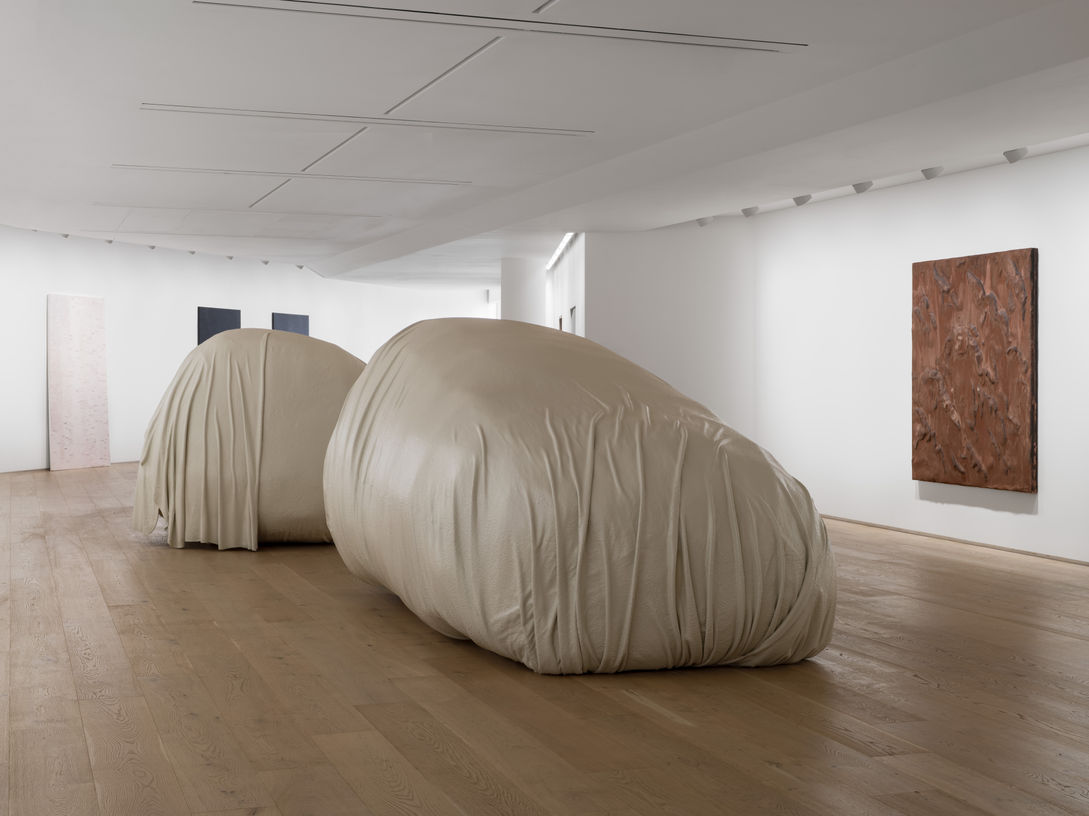
In "A Good Shelf" (14th October – 20th December 2025), Sachs reimagines the vessel as both object and idea — a structure that holds not only water or light, but meaning, memory, and belief. The exhibition brings together hand-thrown ceramic bowls, shelves cast in luminous materials, and a functioning coffee installation that quietly subverts the idea of the tea ceremony. What follows is a conversation about making, faith, and the quiet persistence of things that outlast us.
You began by mentioning Donald Judd’s chairs and Rosalind Krauss’s Sculpture in the Expanded Field. How do those ideas connect for you?
Both Judd and Krauss are trying to make sense of objects once they’ve escaped their traditional categories. Judd wrote about chairs as a way to think about what happens when art becomes furniture, or furniture becomes art. Krauss mapped out sculpture after modernism — when it no longer sits neatly on a plinth.
For me, those ideas are useful because they ask us to think about objects in the most generic sense. Whether it’s a chair, a shelf, or a sculpture that looks like a shelf, the question is: how do we understand it?
If we imagine a hierarchy of objects — just as a thought experiment — a chair sits towards the bottom. What is it? A chair. What do you do with it? You sit on it. Straightforward utility. At the other end might be a painting. What is it? A painting. What do you do with it? You contemplate it, or perhaps you use it to consecrate your wealth. Its function is less clear, more symbolic.
So both Judd and Krauss are trying to unpick those boundaries — to see where an object slips from one field into another.