
Overview
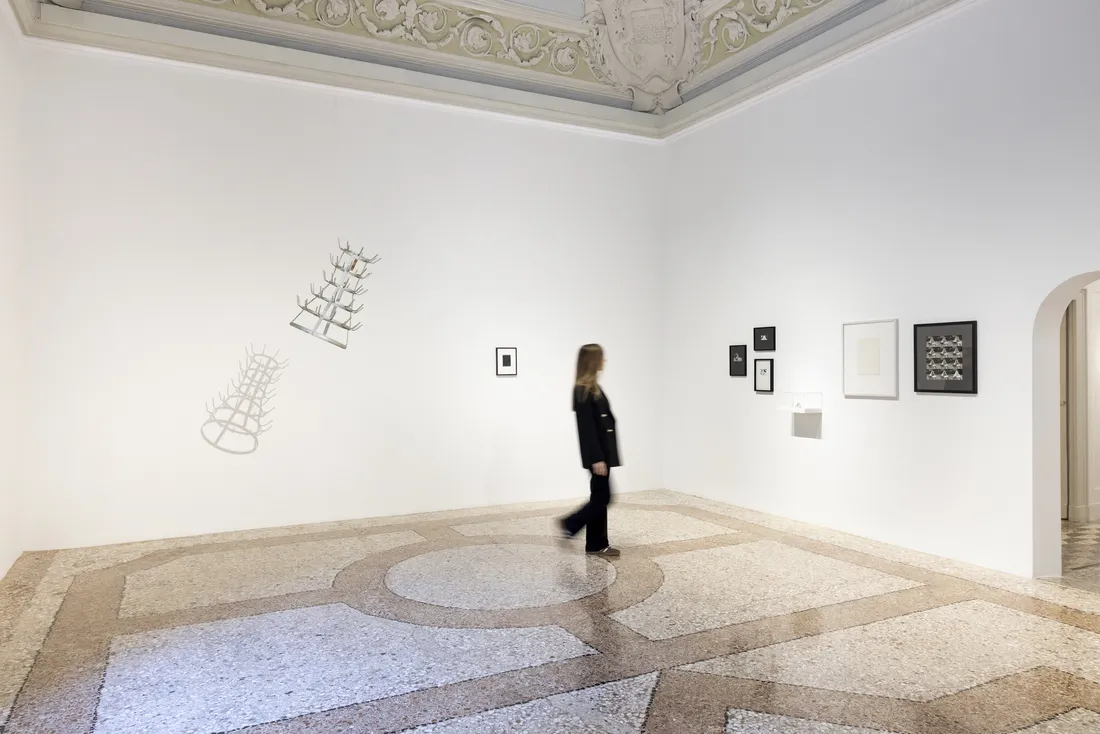
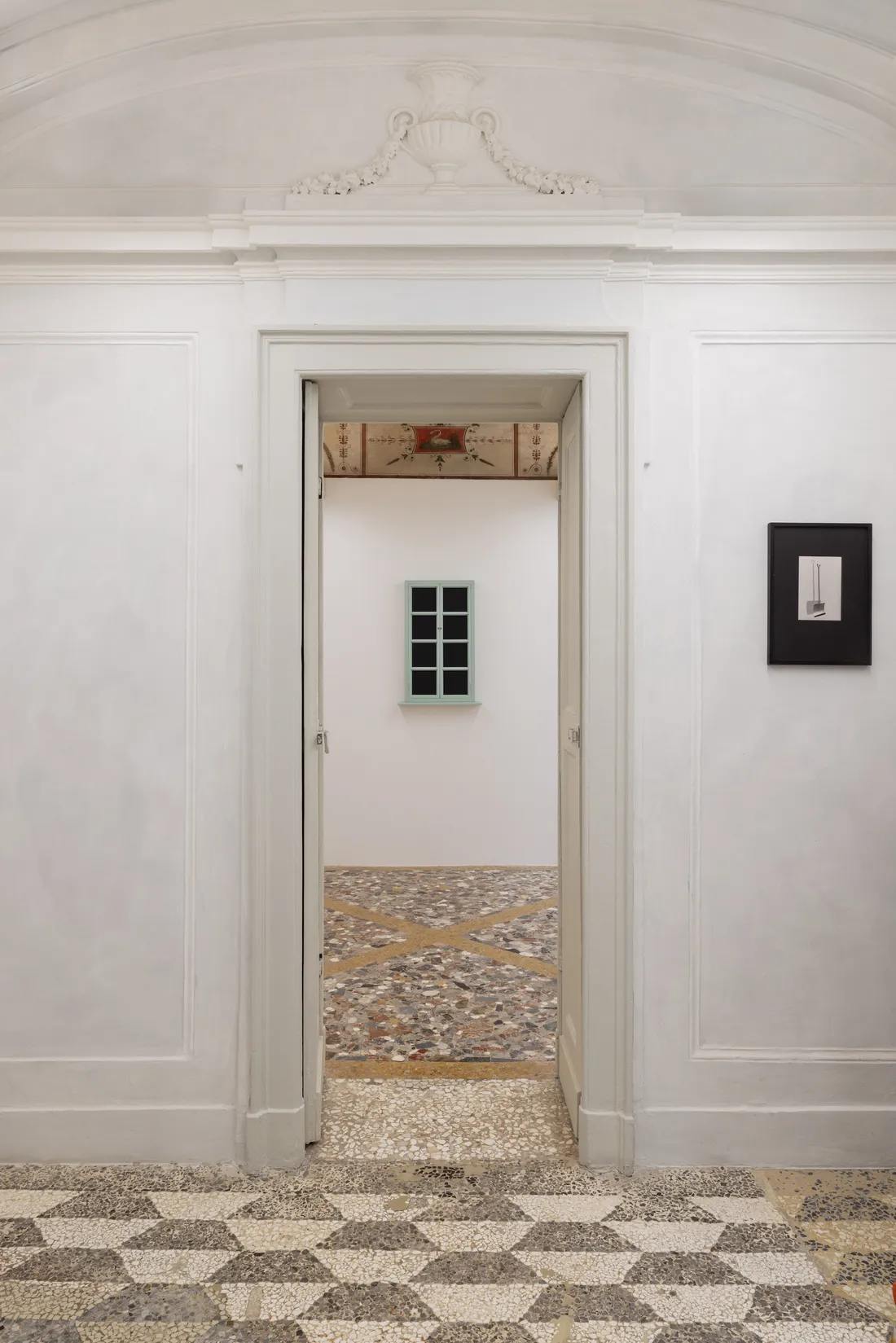
Thaddaeus Ropac Milan presents an unprecedented artistic and intellectual exchange between two pioneers: Marcel Duchamp (1887–1968), the father of Conceptual art, and Sturtevant (1924–2014), whose groundbreaking practice critically interrogated the conceptual structure of art in a post-Duchampian world. A ‘one-man movement’ as Willem de Kooning described him, Duchamp initiated an artistic revolution with his readymades: ordinary objects that he elevated to the status of masterpiece by virtue of his simple choice. Much like Duchamp repudiated ‘retinal art’, Sturtevant’s radical repetitions, from memory, of artworks by her peers sparked a further ‘leap from image to concept’. Over the course of four decades, Sturtevant repeatedly employed Duchamp’s own style as a medium in order to investigate the ‘understructure’ of his oeuvre: how it was made, consumed and, crucially, canonised. Titled after Sturtevant’s ironic remark, Dialogues are mostly fried snowballs reflects Duchamp’s penchant for witticisms. From Duchamp’s first readymade, Porte-bouteilles (Bottle Rack, 1914/64), through both artists’ erotic objects to Sturtevant’s repetitions of Duchamp’s seminal Fountain (1917), this first-ever exhibition dedicated to both inimitably provocative artists highlights the prescience of their practice in the age of digital reproduction and AI reproducibility.
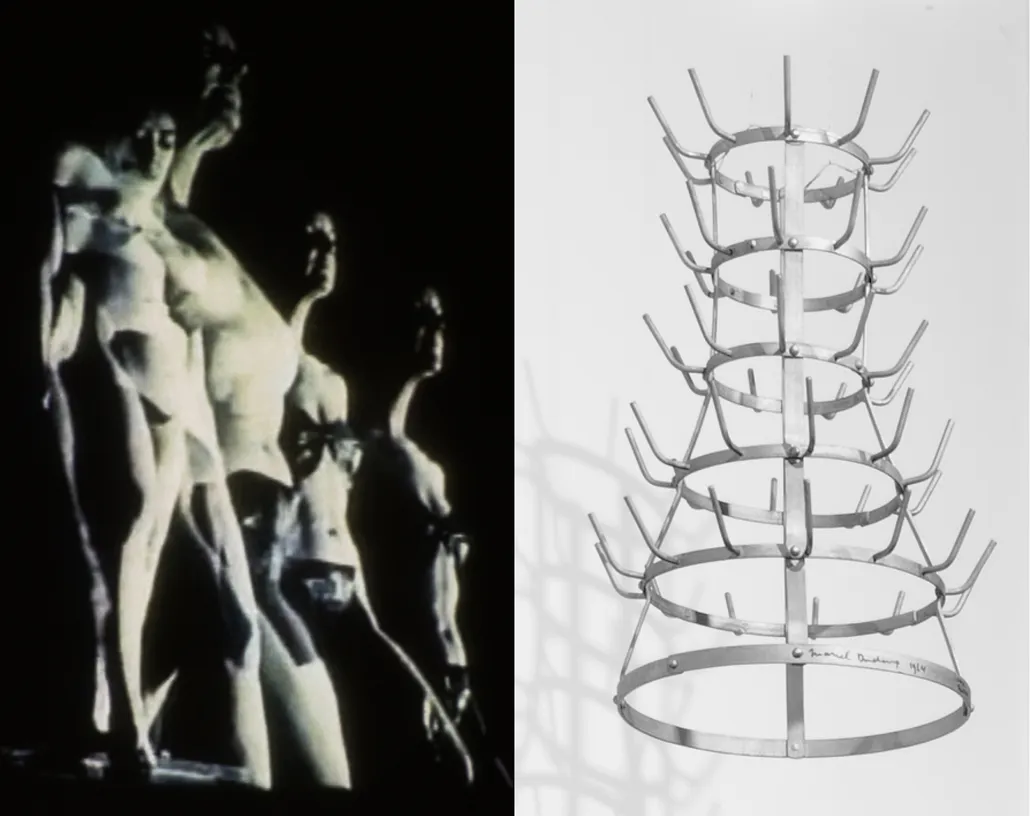
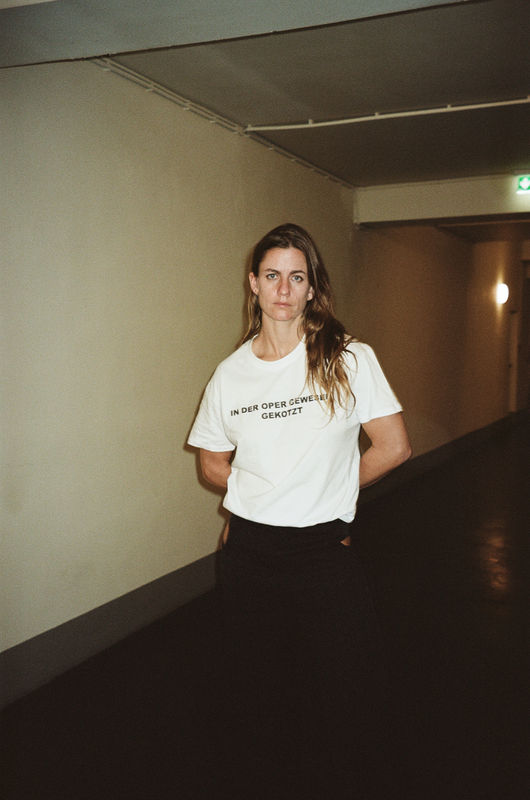
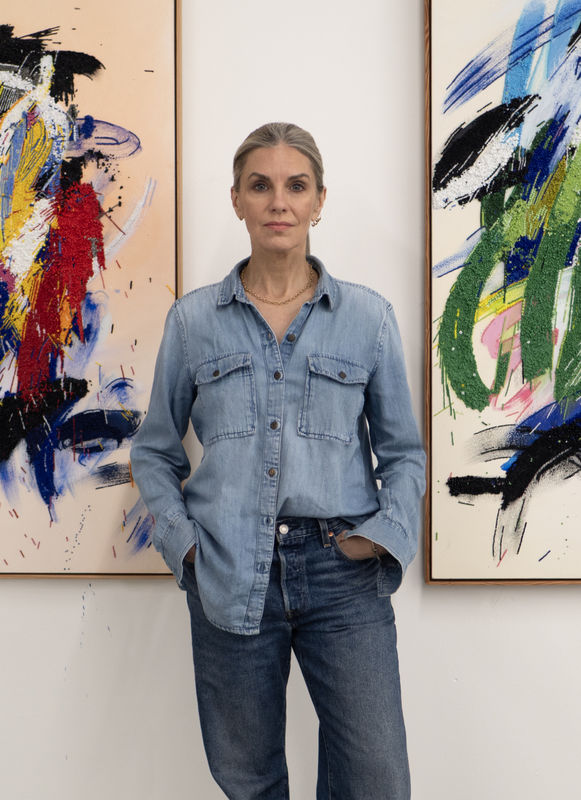
Images: (Left) Irving Penn, Marcel Duchamp (1 of 2), New York, 1948. Gelatin silver print. © The Irving Penn Foundation. (Right) Portrait of Sturtevant. © Sturtevant Estate. Published in Frog Magazine, April 2012. Photo: L. Muzzey.
Thaddaeus Ropac Milan presents an unprecedented artistic and intellectual exchange between two pioneers: Marcel Duchamp (1887–1968), the father of Conceptual art, and Sturtevant (1924–2014), whose groundbreaking practice critically interrogated the conceptual structure of art in a post-Duchampian world. A ‘one-man movement’ as Willem de Kooning described him, Duchamp initiated an artistic revolution with his readymades: ordinary objects that he elevated to the status of masterpiece by virtue of his simple choice. Much like Duchamp repudiated ‘retinal art’, Sturtevant’s radical repetitions, from memory, of artworks by her peers sparked a further ‘leap from image to concept’. Over the course of four decades, Sturtevant repeatedly employed Duchamp’s own style as a medium in order to investigate the ‘understructure’ of his oeuvre: how it was made, consumed and, crucially, canonised. Titled after Sturtevant’s ironic remark, Dialogues are mostly fried snowballs reflects Duchamp’s penchant for witticisms. From Duchamp’s first readymade, Porte-bouteilles (Bottle Rack, 1914/64), through both artists’ erotic objects to Sturtevant’s repetitions of Duchamp’s seminal Fountain (1917), this first-ever exhibition dedicated to both inimitably provocative artists highlights the prescience of their practice in the age of digital reproduction and AI reproducibility.
In 1937, Duchamp met the eminent philosopher and cultural critic Walter Benjamin, and showed him a collotype copy of his landmark painting, Nu descendant un escalier (N°2) (Nude Descending a Staircase (No. 2), 1912; Philadelphia Museum of Art). As Benjamin recorded in his diary, he was profoundly marked by the ‘breathtakingly beautiful’ nature of the print, to the extent that he made a note to ‘maybe mention’ it in his visionary essay ‘The Work of Art in the Age of Mechanical Reproduction’ (1935–39). Duchamp’s 1937 collotypes of Nu descendant un escalier – one of which is on view at Thaddaeus Ropac Milan – destabilised Benjamin’s very concept of the incontrovertible ‘aura’ of an original artwork. Decades later, Sturtevant would repeat Duchamp’s Cubist-Futurist work in Duchamp Nu descendant un escalier (1967/68), excavating its origins in early cinema and chronophotography to create her own film – which is prominently projected at the entrance of the exhibition – wherein superimposed footage decomposes the movement of the nude artist as she descends a staircase. Sturtevant does not seek to conjure the Benjaminian aura of Duchamp’s work, but precisely to dissect it. As Sturtevant stated, ‘My intentions are to extend and to develop our present notion of aesthetics, to investigate originality, and to examine the relation between original and origins; opening up space for new thinking.’ Sturtevant’s repetitions embody the quintessential art of ‘grey matter’ that Duchamp lauded.
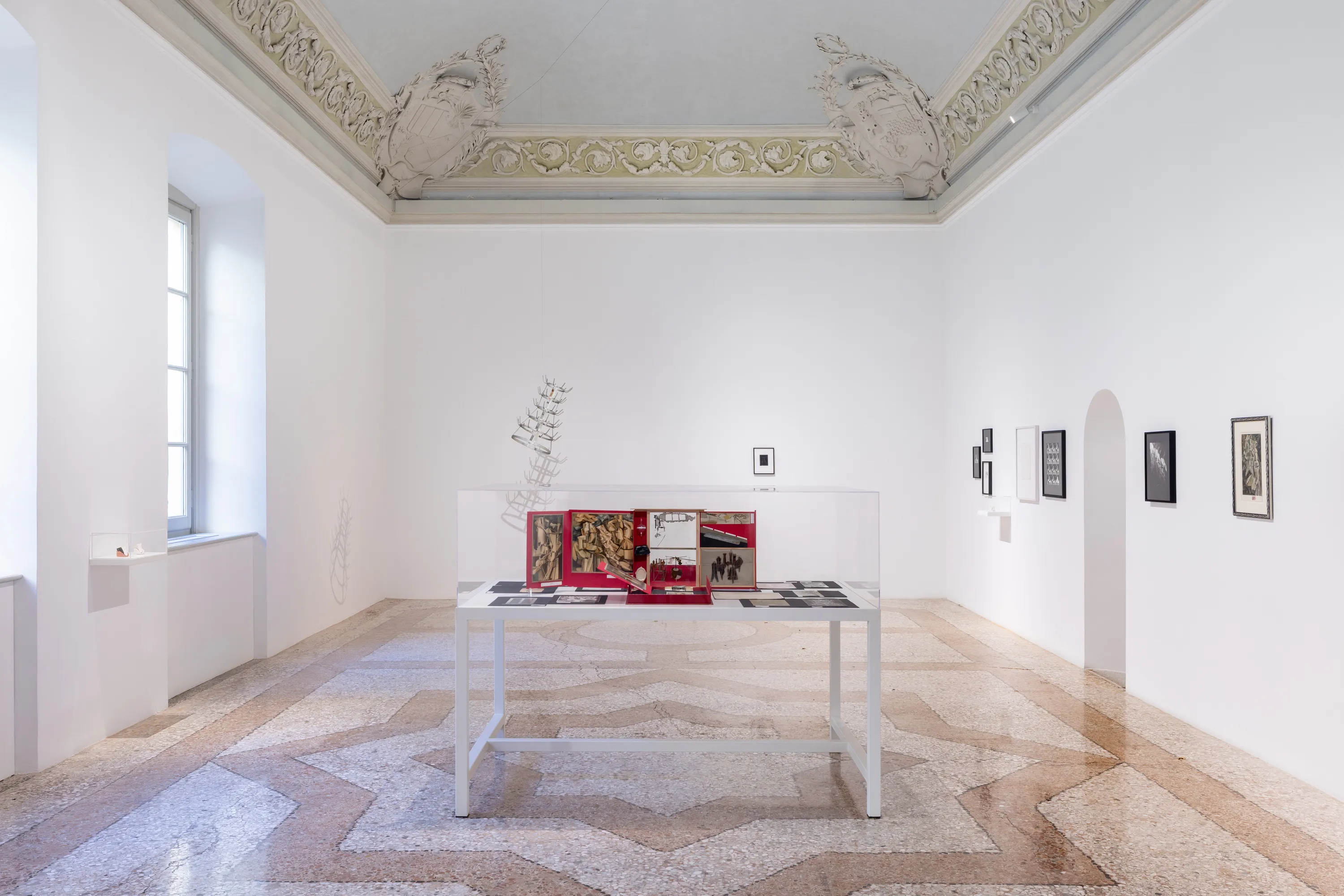
Across the exhibition, a cerebral confrontation is staged between Duchamp’s readymades and Sturtevant’s repetitions thereof. Duchamp’s Porte-bouteilles hangs above the main space, looking over its progeny, while his playfully irreverent Trébuchet (Trap, 1917/64) is displayed on the floor, threatening to trip the viewer, just as it once did the artist himself. While Duchamp strove to ‘de-deify’ the artist through the seeming non-artistry of the readymade, it ironically contributed to apotheosising him in the pantheon of art history – a process that Sturtevant scrutinises through the exhibited works. For Sturtevant, Duchamp’s readymades epitomise his ‘force of resistance’; in her own words, ‘What Duchamp did no[t] do, not what he did – which is what he did, locates the dynamics of his work. [...] Thus, the grand contradiction is that giving up creativity made him the great creator.’ As Dialogues are mostly fried snowballs elucidates, Duchamp’s radical readymades are mirrored in Sturtevant’s avant-garde gesture of repetition. Renouncing the primacy of the visual, Sturtevant manually repeated the work of her contemporaries in a paradoxical effort to dematerialise it; to access ‘the silent interior of art’. The exhibition offers a myriad of Sturtevant’s repetitions of Duchamp’s legendary Fountain, spanning photography, collage, drawing and sculpture. Under Sturtevant’s incisive gaze, Duchamp’s signed urinal becomes the site of a sustained enquiry into its cult status. The discourse surrounding Duchamp’s readymades, rather than the objects themselves, is the true subject of Sturtevant’s work.
The exhibition explores key themes that recur through Duchamp’s practice, ranging from the kinetic to the erotic, which Sturtevant sublimates in her own work. Duchamp’s Rotorelief (1965) spins on a wall-mounted turntable beside Sturtevant’s Duchamp Rotary Disc (Lanterne Chinoise) (1969), her assiduous study of the work, scribbled with annotations and diagrams that probe its creation, instigating a transition from the realm of optical illusion to that of the ideational. Duchamp’s erotic objects – from his disquieting Objet-dard (Dart-Object, 1951/62) to the subversive Feuille de vigne femelle (Female Fig Leaf, 1951/61) – are further juxtaposed with Sturtevant’s repetitions of his fetish works, such as Duchamp Coin de chasteté (1967). While Duchamp’s transgressive works crystallise his perennial interest in eroticism as a central locus of human experience, ‘exploit[ing] the slippages between the work of art and the fetish’ as art historian Paul B. Franklin writes, Sturtevant’s repetitions avowedly ‘throw out representation’ altogether to delve even further into their metaphysical power as objects of art. For writer Bruce Hainley, ‘Sturtevant repeats works for the necessity of a catalytic recognizability, sparking an investigation of what allows ‘art’ to be, so that the entirety of the structure of art is reconsidered horizontally not linearly.’
At the core of the exhibition lies Duchamp’s extraordinary De ou par Marcel Duchamp ou Rrose Sélavy, Boîte-en-valise (From or by Marcel Duchamp or Rrose Sélavy, Box in a Valise, 1966): the artist’s self-curated ‘portable museum’. The self-referential work, which belonged to Duchamp’s wife ‘Teeny’, encloses three miniature replicas as well as 77 reproductions of his work, including a plethora of those on display in Dialogues are mostly fried snowballs and a 1936 photograph of Porte-bouteilles by Man Ray also on view. Similarly entrancing, Sturtevant’s Duchamp Ciné (1992) draws the viewer towards an enigmatic coffee grinder handle beneath the projection of her film, which, when turned, activates a flow of vignettes of Sturtevant’s repetitions of Duchamp’s oeuvre glimpsed through a small aperture in the wall. Harking back to Duchamp’s own peephole tableau and final work, Étant donnés (1966; Philadelphia Museum of Art), Sturtevant’s inventive device functions like an interactive retrospective of the artists’ entwined practices. Pushing authorial ambiguities further, Sturtevant merges her artistic identity with that of Duchamp’s strategic alter ego – and potential co-author of Boîte-en-valise – Rrose Sélavy, in a mini-slide of Duchamp Wanted (1992). Fascinatingly, when Duchamp and Sturtevant first met, she showed him Duchamp Relâche (1967), a repetition she made with Robert Rauschenberg, which is exhibited at Thaddaeus Ropac Milan. As Sturtevant recalled, ‘Marcel [...] said, “Where did you get that?” So you never knew, did he realize that was not his photo or did he really think it was his photo?’
Dialogues are mostly fried snowballs sheds light on the unremitting spirit of subversion that unites Sturtevant and Duchamp, both of whom fundamentally challenged and redefined the meaning of art through their practice. The exhibition at Thaddaeus Ropac Milan will coincide with the major retrospective of Duchamp’s work opening at The Museum of Modern Art, New York, on 12 April 2026.