
Overview
Distancing brings together new works by four artists – Kei Imazu, Juree Kim, Nosik Lim and Maria Taniguchi – whose practices explore how images and matter come into focus over time. The exhibition proposes a mode of looking that privileges distance and duration. Here, observing from afar and dwelling in stillness does not obscure perception, but recalibrates focus. Rather than resisting instantaneity, the exhibition traces the point at which sensation catches up with us: when that which escapes immediate grasp begins to settle through distance and time.
Across painting and sculpture, the featured artists approach this recalibration through distinct formal and material strategies – repetition, the slow transformation of clay, layered opacity and the juxtaposition of disparate image-worlds.
Distancing brings together new works by four artists – Kei Imazu, Juree Kim, Nosik Lim and Maria Taniguchi – whose practices explore how images and matter come into focus over time. The exhibition proposes a mode of looking that privileges distance and duration. Here, observing from afar and dwelling in stillness does not obscure perception, but recalibrates focus. Rather than resisting instantaneity, the exhibition traces the point at which sensation catches up with us: when that which escapes immediate grasp begins to settle through distance and time.
Across painting and sculpture, the featured artists approach this recalibration through distinct formal and material strategies – repetition, the slow transformation of clay, layered opacity and the juxtaposition of disparate image-worlds.
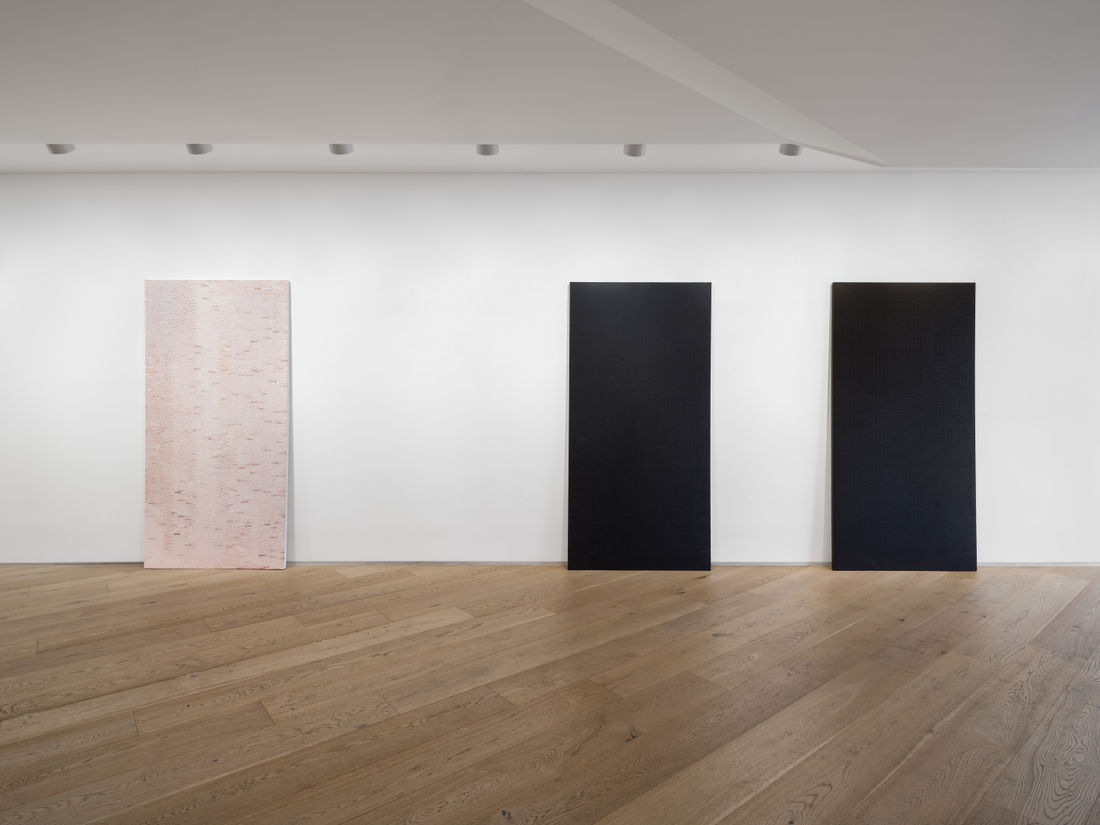
Encountered at the threshold of the exhibition, Maria Taniguchi’s paintings capture this attitude in its most distilled form. Composed of repeated brick-like units, her canvases foreground the accumulation of time and form over any specific narrative. With their consistent scale and format, and their minimally varied fields of colour, the works resist rapid reading, instead inviting a durational way of looking based on modularity and sequence.
Taniguchi has developed these brick paintings since 2008. While each canvas is unique, these works nonetheless seem to extend from one surface to the next like a body unfolding – not yet fully formed and perpetually in progress. In Untitled (2025), time reveals itself in the everyday measure of repeated action, each brick a testament to an act carried out meticulously under the same conditions. Rather than operating as a metaphor for meditation or self-reflection, the work relies on a set of rules while refusing total control over outcomes: a stable framework open to chance and minute deviation. Repetition becomes a way of suspending prediction; of keeping meaning from immediate resolution and allowing perception to form at its own pace.
For Taniguchi, painting exists as a physical state in which time, labour and bodily intervention are layered. As the work builds, its surface shifts almost imperceptibly; fine irregularities, shallow ridges and slight misalignments register traces of the body and time in equal measure. In front of these paintings, viewers often find themselves stepping forward and back, where looking becomes a form of presence. Attention tilts away from deciphering a narrative and toward the pure sensation of standing, breathing and the subtle tremor of one’s own gaze.
While Taniguchi’s work attunes the viewer’s body and gaze, Juree Kim’s practice pushes this sensibility into the realm of materiality and physicality. By directly calling forth the relationship between body, matter and space, Kim encourages the viewers to reconsider their surroundings and the manner in which they situate themselves within a given environment.
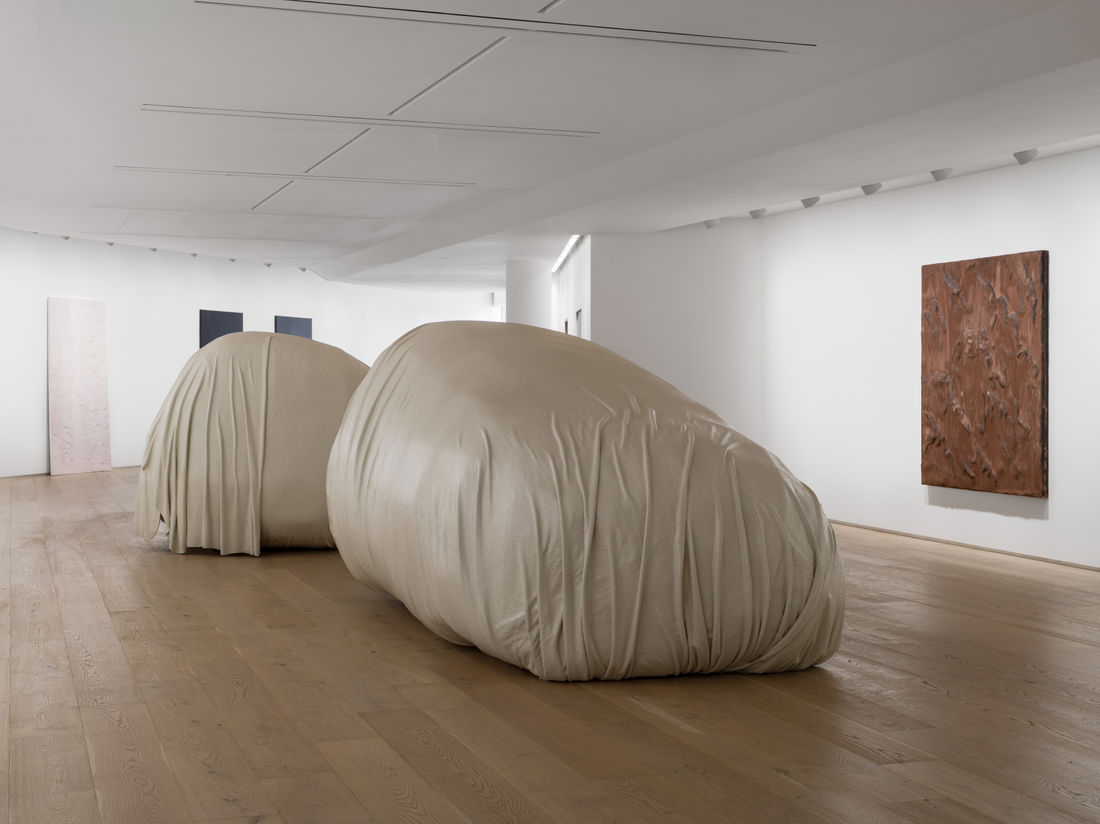
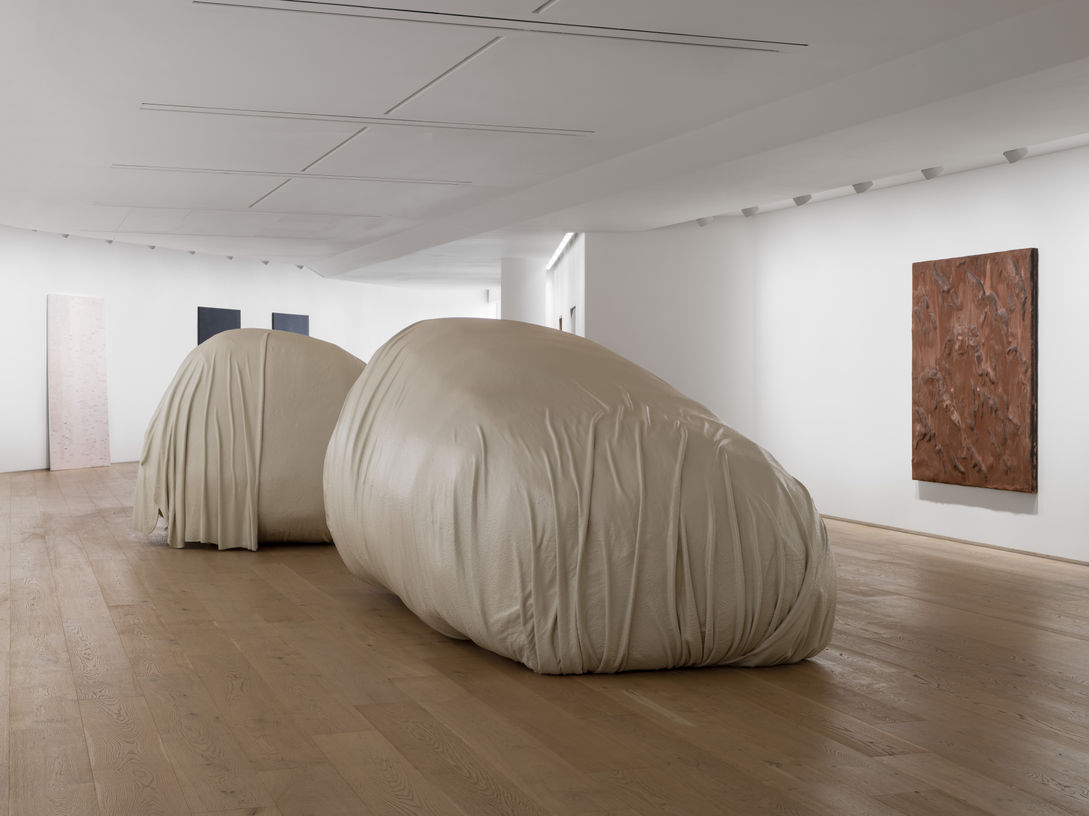
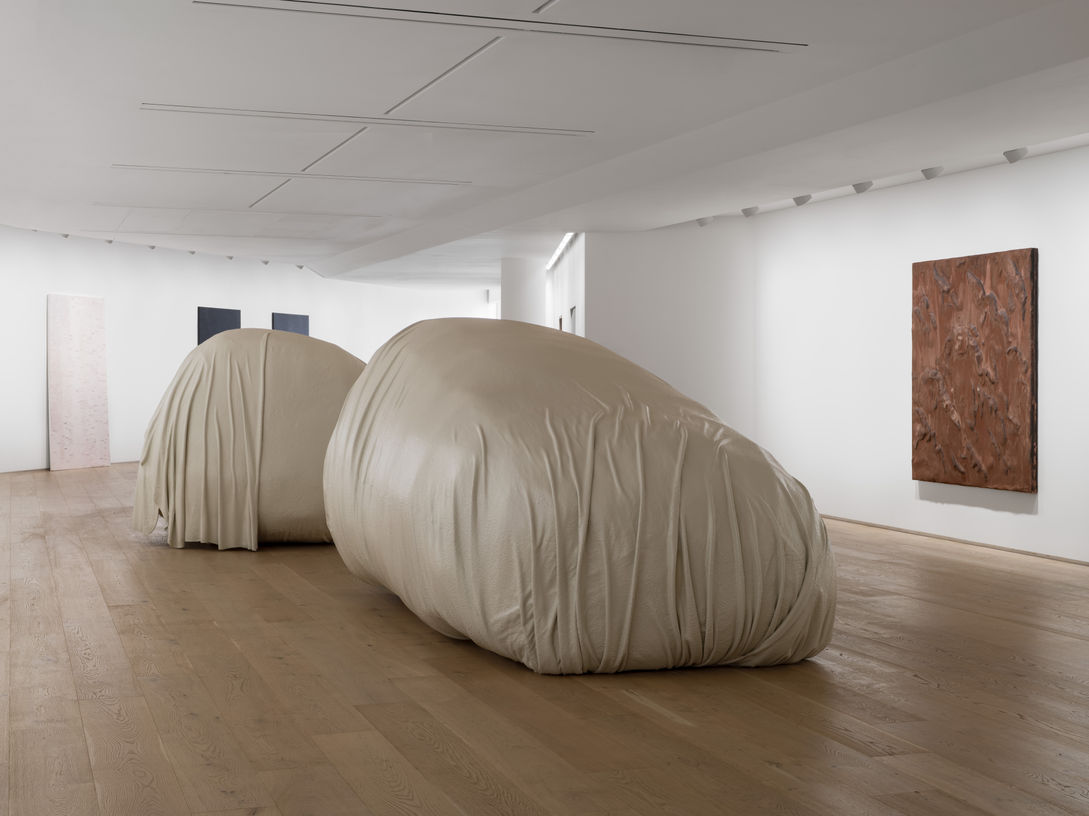
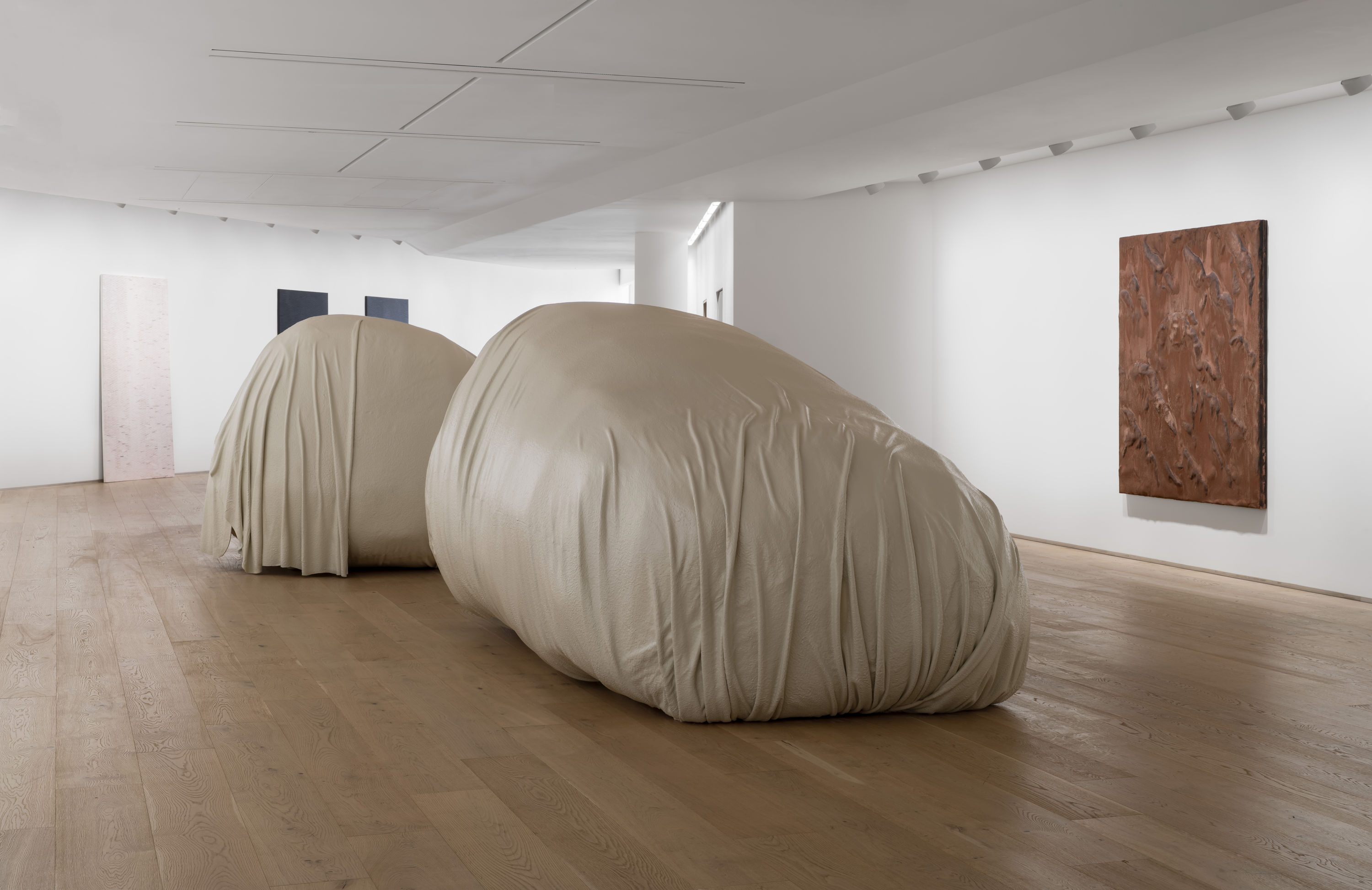
Sculpted primarily with clay, Kim’s works embody elemental cycles of creation, accumulation and disintegration. Wet Matter_202602 (2026) occupies the gallery’s central space, functioning as a core to the exhibition. The work resists fixity, instead continually responding to the shifting light, temperature and humidity of its habitat. Kim has long used earth as her primary medium, proposing that the notions of creation and disappearance, saturation and desiccation, operate within a single continuum rather than a dialectic. Fated to dissolve once the exhibition ends, the work absorbs its surroundings.
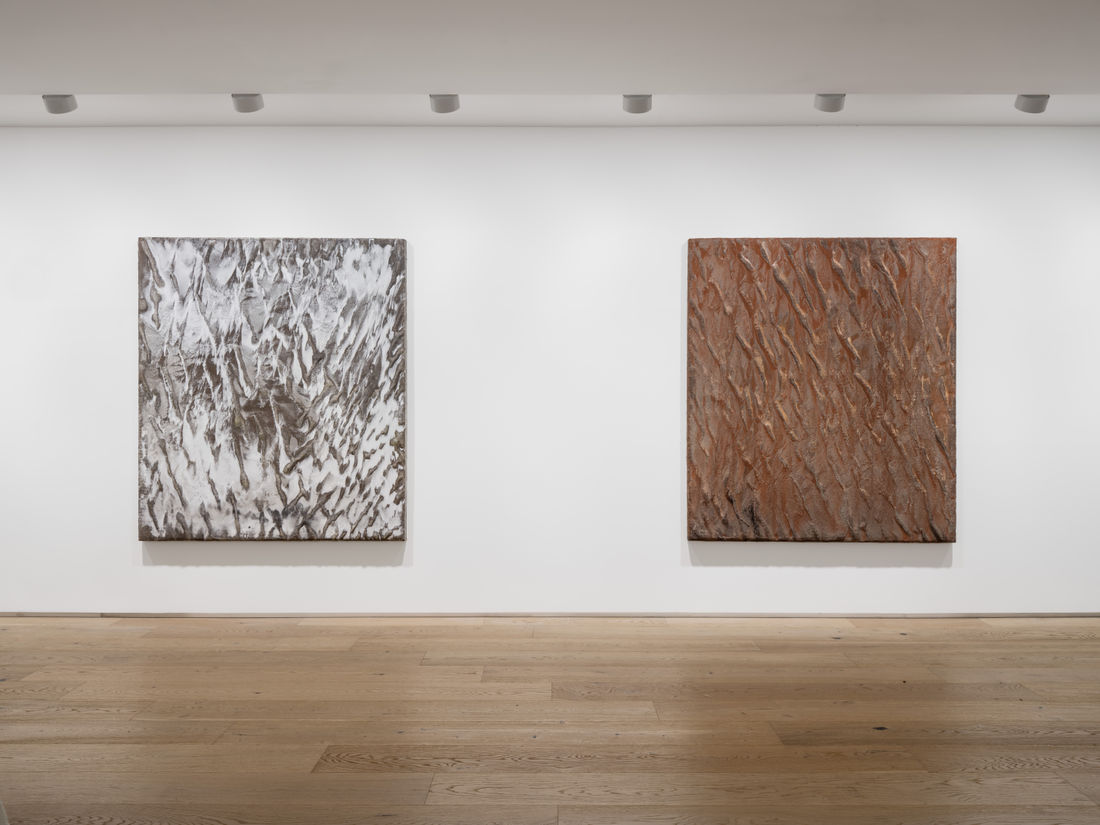
While Wet Matter_202602 momentarily suspends earth in the present, Kim’s painting series desert explores the processes that follow. As moisture drains away from the works, fissures appear; surfaces split; strata fracture and break. desert retains the inscriptions left by time, when fertile ground dries and cracks. It becomes a locus of return and transformation: how human traces fold back into the earth, changing form through cycles of use, collapse and sedimentation.
Gathering urban remnants — discarded bricks and broken fragments of earth — Kim crushes, grinds and layers them anew, feeling along the edges of what remains. This is not a grand gesture of resurrection, but rather an acceptance of debris and sediment as the next stage of formation. The stratified surface stands both as a record of time passed through the material and as a site for looking back: for attending to what has collapsed, what has accumulated and what has hardened into trace.
If Wet Matter_202602 (2026) exists as an echo of the intimate passage of breath, desert arrests this moment in suspension. Gripping onto the earth, water and air, this work draws the viewers towards its body and asks them to steady their breath. Thus, rather than stimulating acute sensations, Kim’s work provides the viewers with the time and proximity to uncover and respond to a moment of stillness.
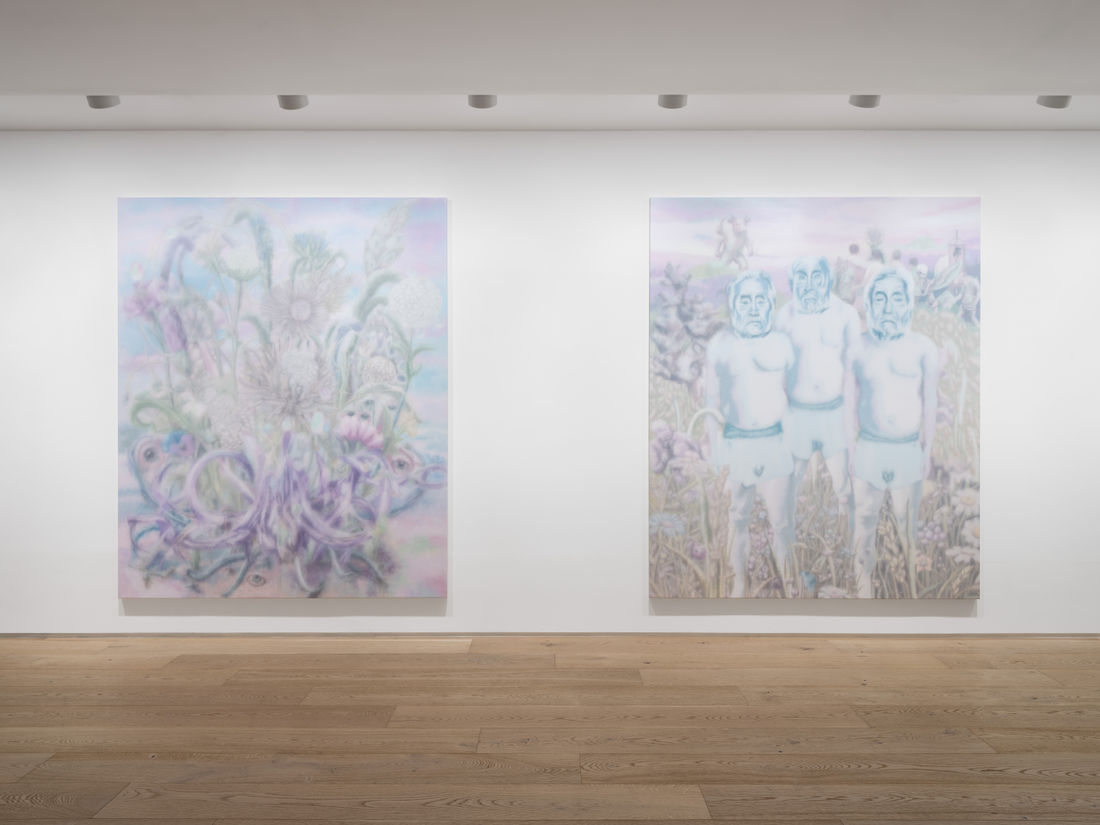
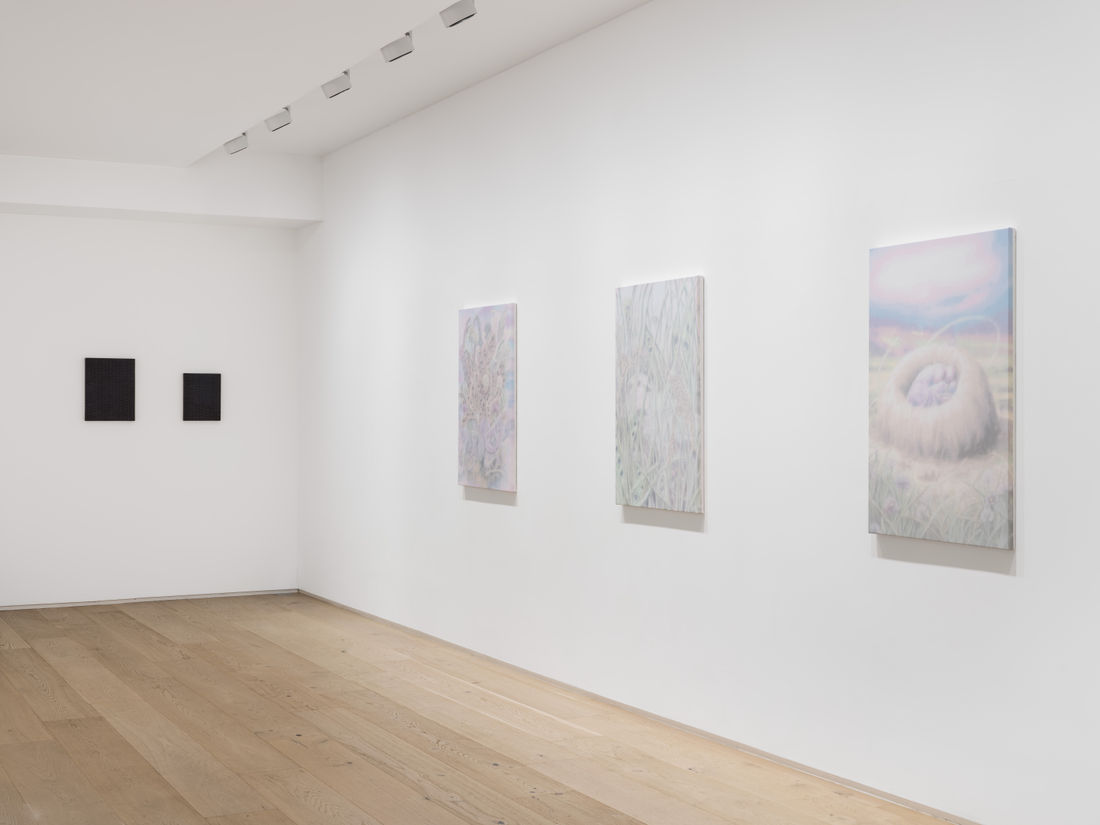
Nosik Lim’s paintings conjure the elusive sensations encountered at the start of the exhibition. Corporeal and botanical forms do not appear in sharp relief; rather, they diffuse through the faint pink and blue pastel-hued canvas, lingering like afterimages of memory. Lim’s principal focus is the depiction of coexistence. Drawn from his surroundings and personal experiences, these images crystallise what remains beyond visible events—like the erosion of mountains or villages falling into oblivion. Through painting, Lim reimagines the intangible sensations as profound layers of relations.
After delineating his subjects, Lim builds a translucent layer of oil pastel onto the surface of the canvas. In this process, forms overlap and permeate one another, creating intimate juxtapositions. This allows the narratives to escape the contained perimeter of the canvas and continuously rearrange themselves.
While Lim’s earlier paintings remained softly blurred, these new works suggest a step closer to a sense of narrative, as forms begin to materialise with a stronger sense of presence, allowing new stories to emerge. Various elements press against and seep into one another on the canvas, maintaining a precarious balance between legibility and illegibility. Here, the boundaries between human and non-human, natural and artificial, organic and inorganic, life and death are not separated but placed in states of contact and entanglement. By allowing elements to encroach upon one another rather than erasing them, Lim’s paintings simultaneously blur and activate boundaries.
Confronted with the work, the viewer no longer remains in the position of a one-sided observer. Instead, the gaze constantly moves across the borders of the canvas, as the viewer searches for direction through the hazy terrain. This shift takes distancing beyond the idea of repositioning the body, proposing an attempt to confront a state where boundaries collide and blur. Here, ‘distance’ becomes not a mode of avoidance or contemplation, but a way of reconnecting with the world.
At the final turn of the exhibition, Kei Imazu’s paintings carry the carefully calibrated distance of the preceding works into a different register – one that is shaped by time, history and the body. Imazu’s images do not cohere into a single moment. They arrive as uncanny, superimposed fragments extracted from disparate conditions and narratives. Painting, here, is not a vehicle to retrieve the past, but a means to register how what has already passed continues to seep forward, rearranging itself in the present.
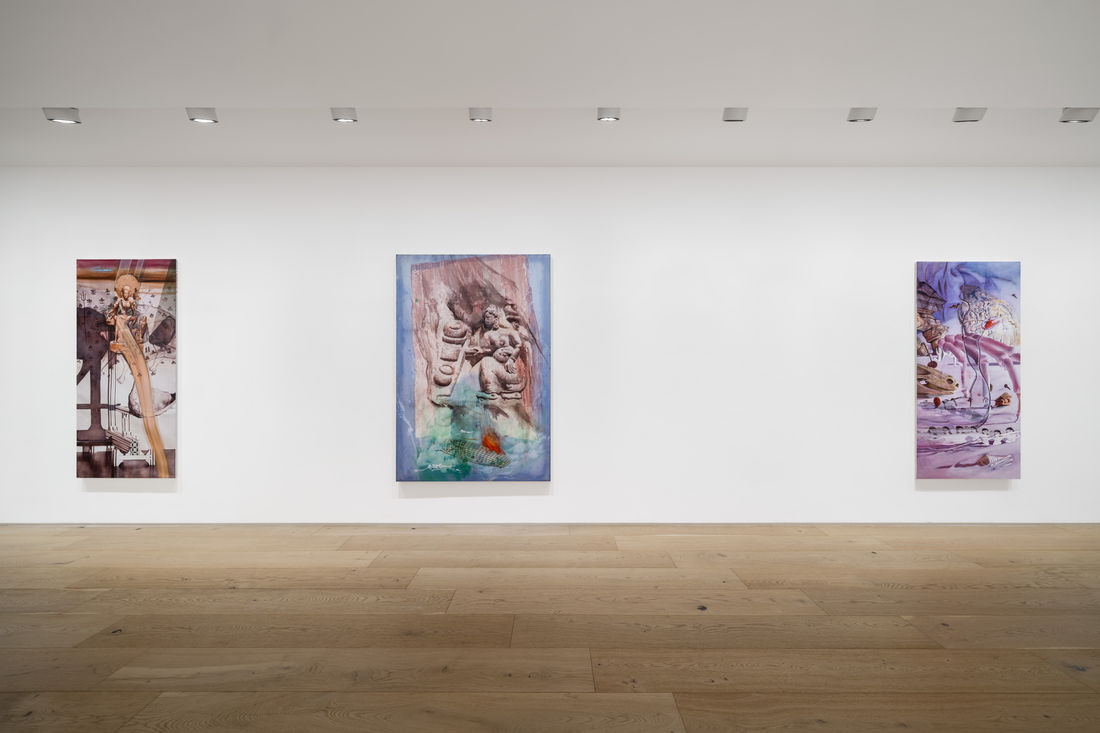
The works in this exhibition unfold time in contrasting modes. In Hearth and Wreck (2026), the image does not assert itself as a stable element. It drifts, overlaps and collects beneath the surface. Painting on a semi-translucent cotton support, Imazu leaves the canvas stretcher faintly visible as though to expose the work’s internal scaffolding. Within this permeable plane, a wartime shipwreck and a stone relief of an everyday gesture share the same pictorial ground. Their coexistence softens hierarchies and reorients history away from a linear sequence toward something slowly accumulated. In She Who Treads (2026), by contrast, the surface is fully opaque. A mythic body meets industrial structure; iron scrollwork drawn from colonial gates leans into anatomical form. As these motifs collide, tensions among belief, the body and systems of power come into view: how bodies are protected and disciplined, how passage is marked and regulated, and how images endure by being repeatedly invoked, revised and re-situated within historical reality.
Moving between these modalities, denoting erosion, dissolution and abrasion, Imazu’s paintings ask how memory persists materially in the present. Her work keeps multiple temporalities active on a single surface, held in a measured distance that allows them to coexist in tension. In this way, her paintings extend the exhibition’s proposition of ‘distancing’: not as detachment, but as a condition for re-encounter.
Themes emerge, overlap and commingle through the exhibition, as viewers are invited not simply to encounter the works, but to consider the conditions under which the act of seeing takes place. Distancing considers the possibilities of a slowed state of perception, the residual sensations that remain long after an image has been ‘understood’, or indeed long before it coheres in the mind’s eye. Maurice Merleau-Ponty observed that ‘the world is not what [we] think, but what [we] live through.’ In other words, we are not beings who observe the world from the outside, but ones who experience it from within. Distancing, thus seeks to momentarily step back from the world. Together, the works on view propose a shift in the very experience of art, countering the contemporary desire for speed and instantaneity with perceptual encounters that require gradual processes of attunement, recalibration and recurrence.