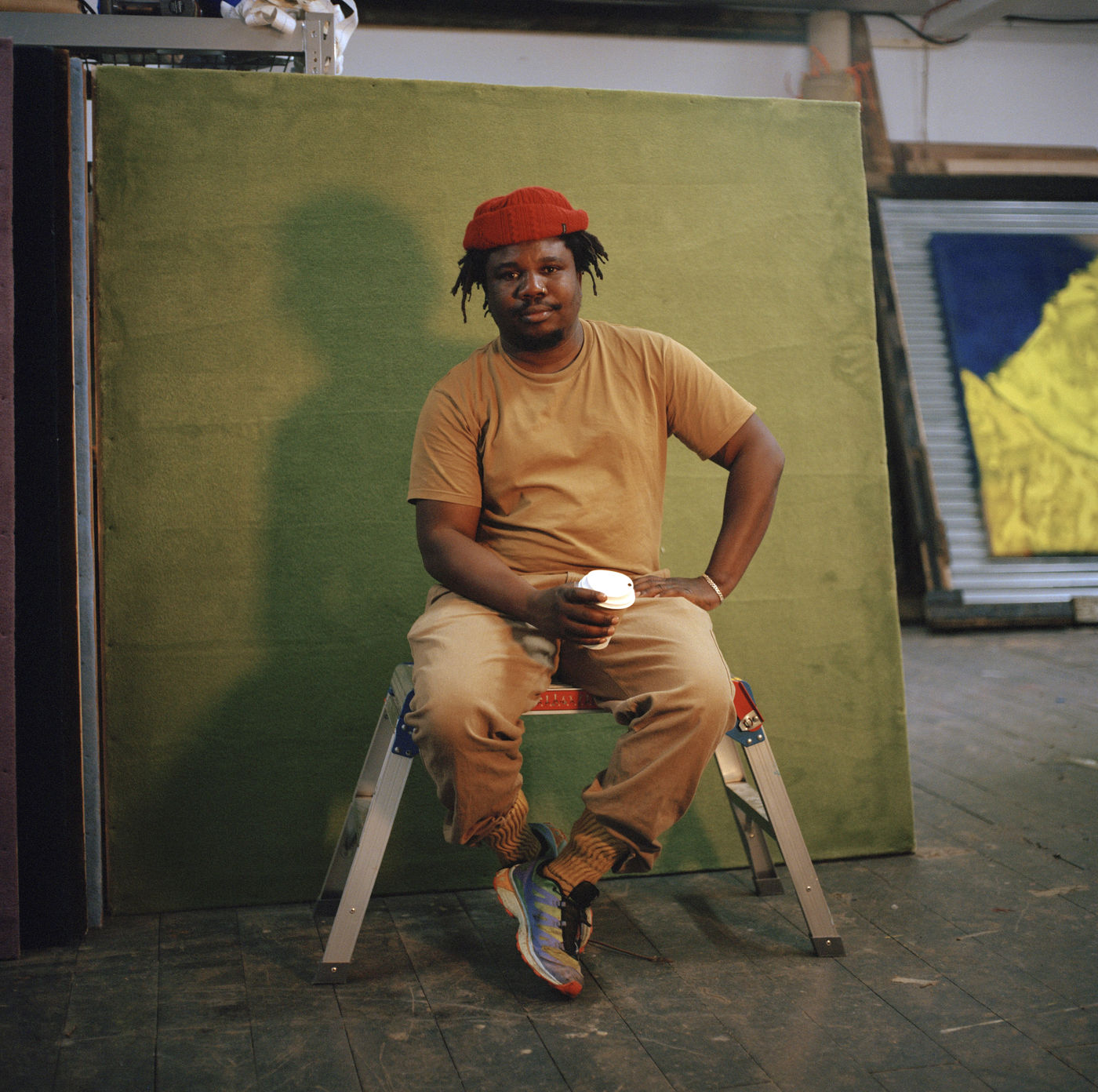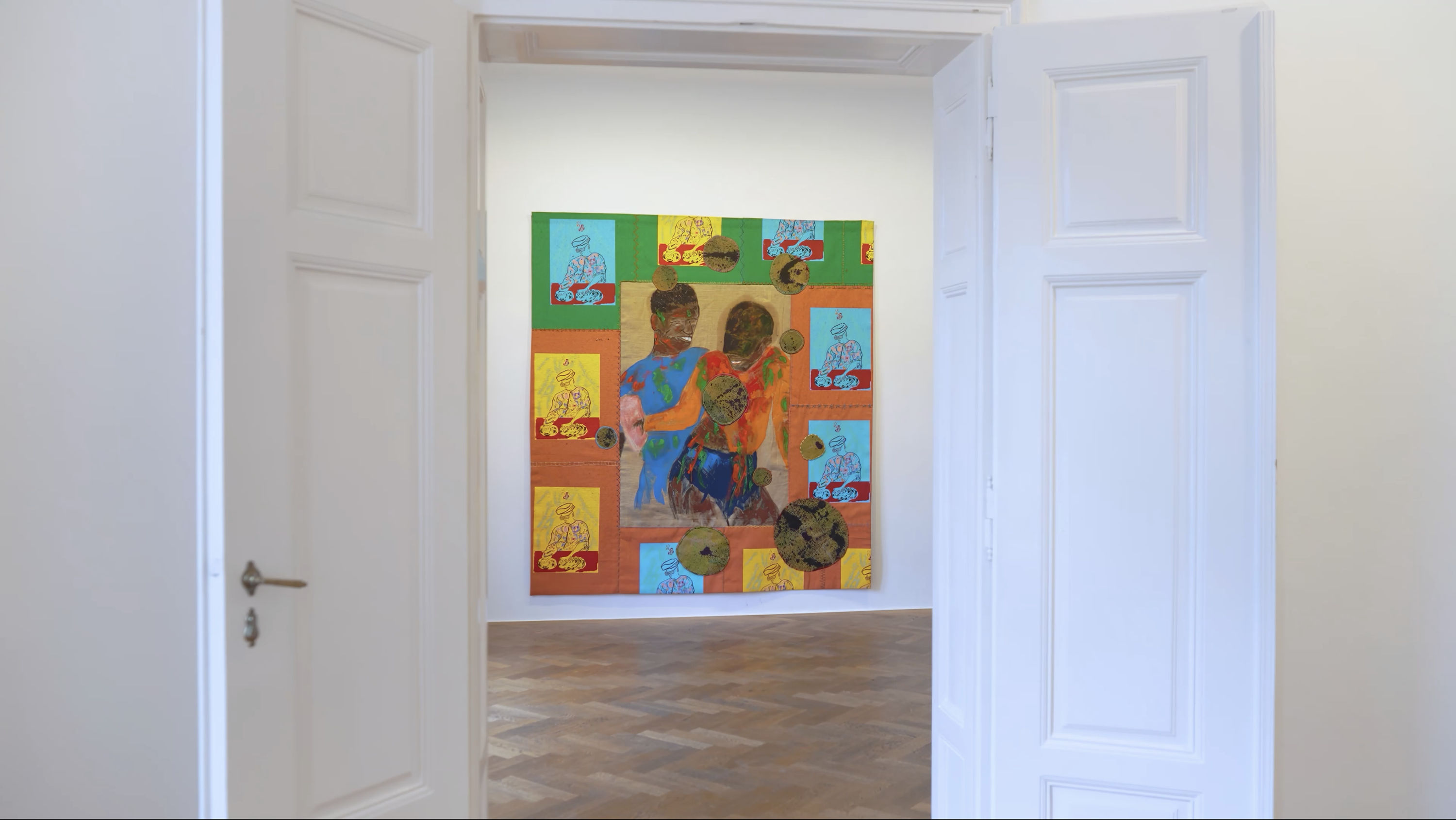
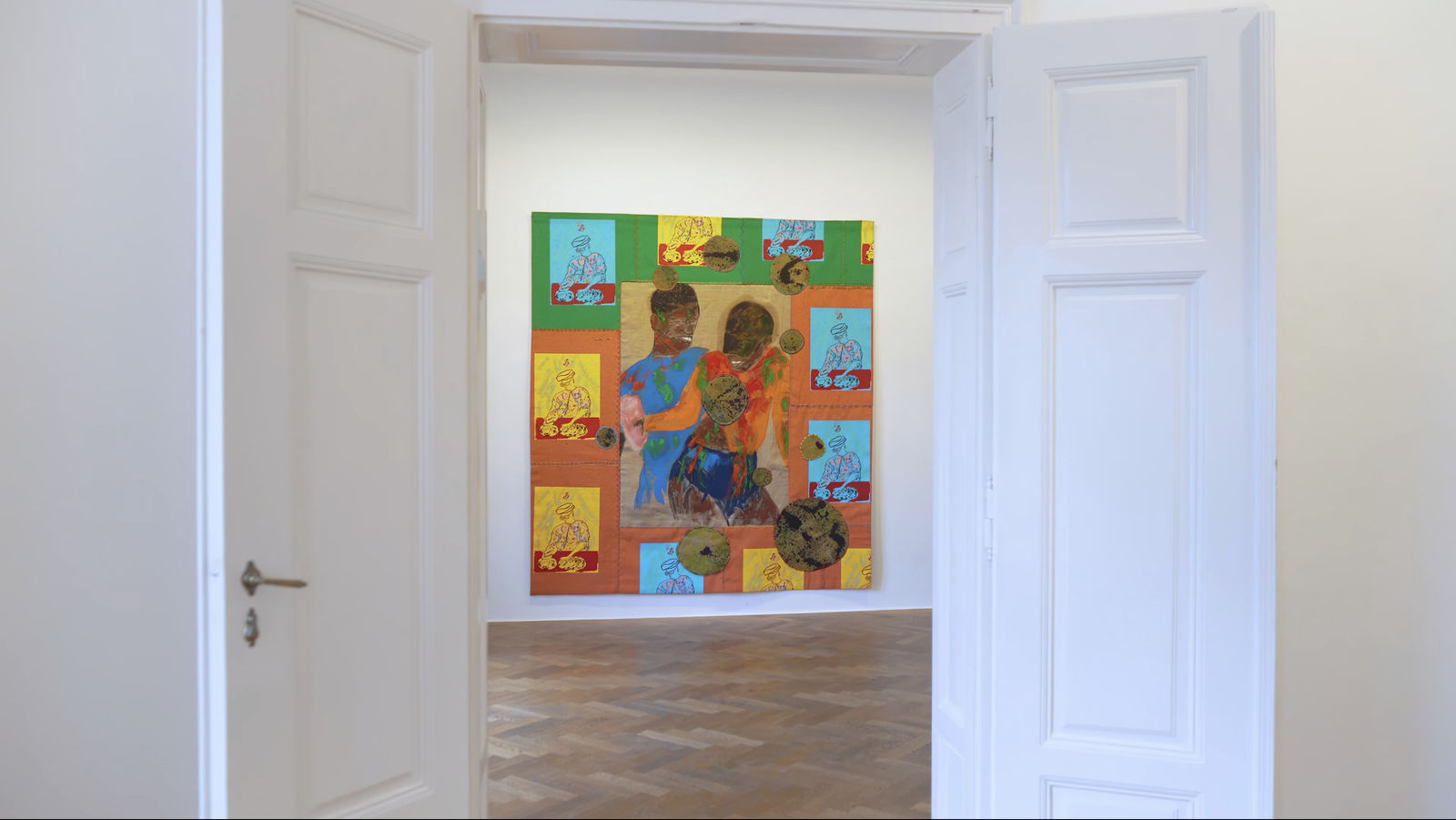
There's an inherent optimism in these works. In these uncertain times, I wanted to create paintings that were joyful, playful and about coming together.
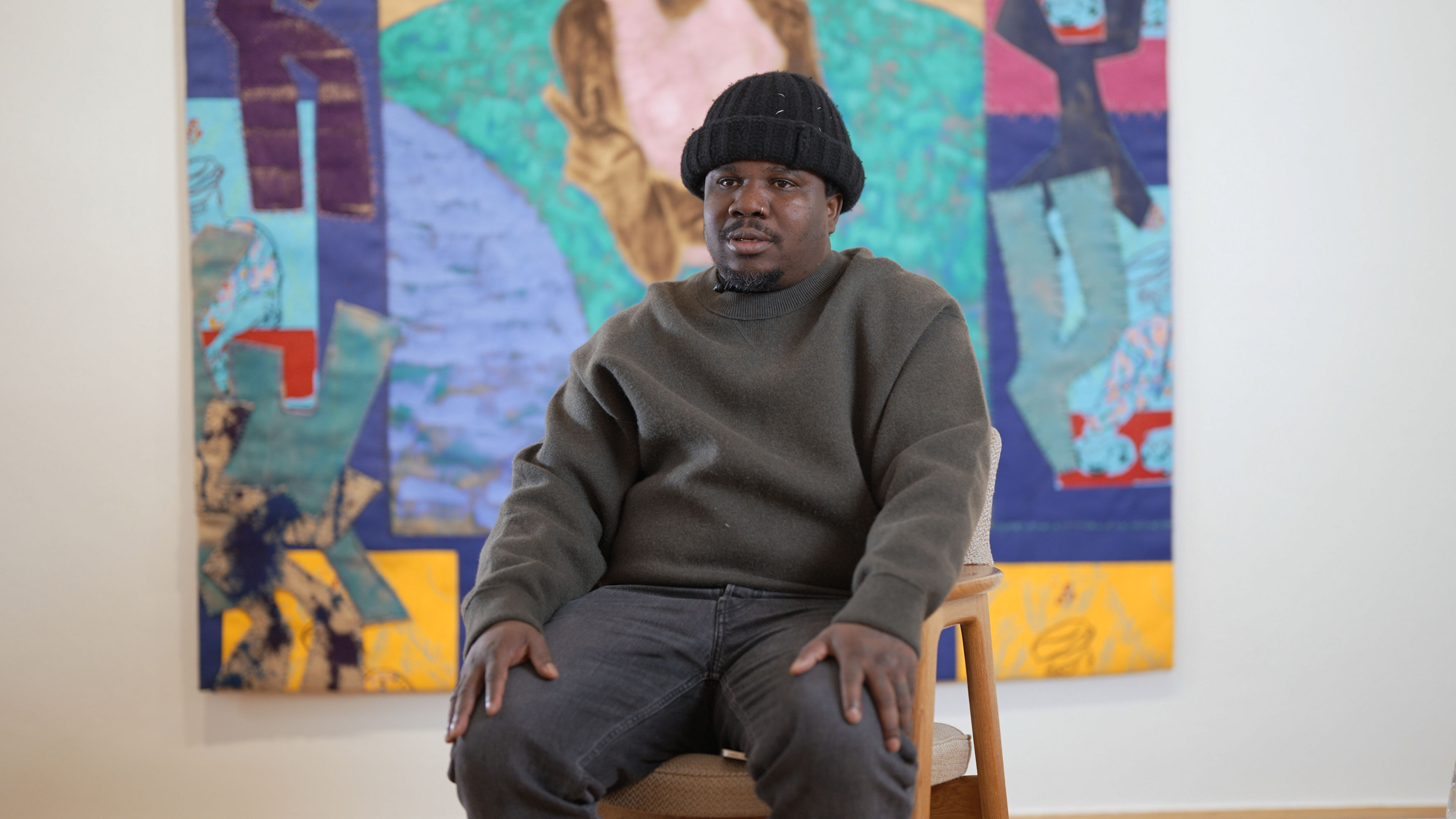
Watch a video of the artist discussing the exhibition
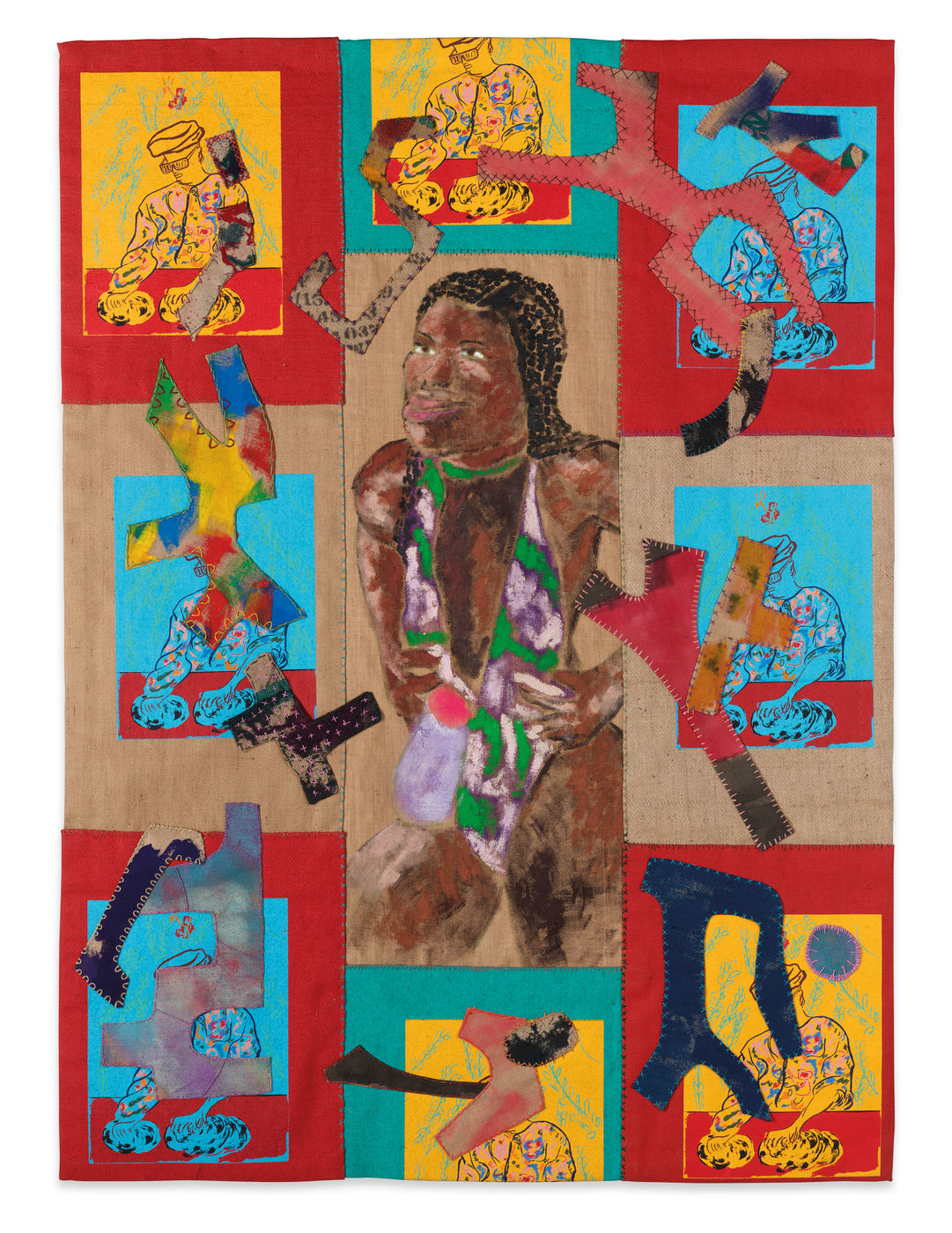
Alvaro Barrington
On the Road (TMS) A9, 2024-26
Oil, acrylic, flash, enamel on burlap / silk screen printed burlap, cotton linen, waxed cotton thread
259 × 190 cm (101.97 × 74.8 in)
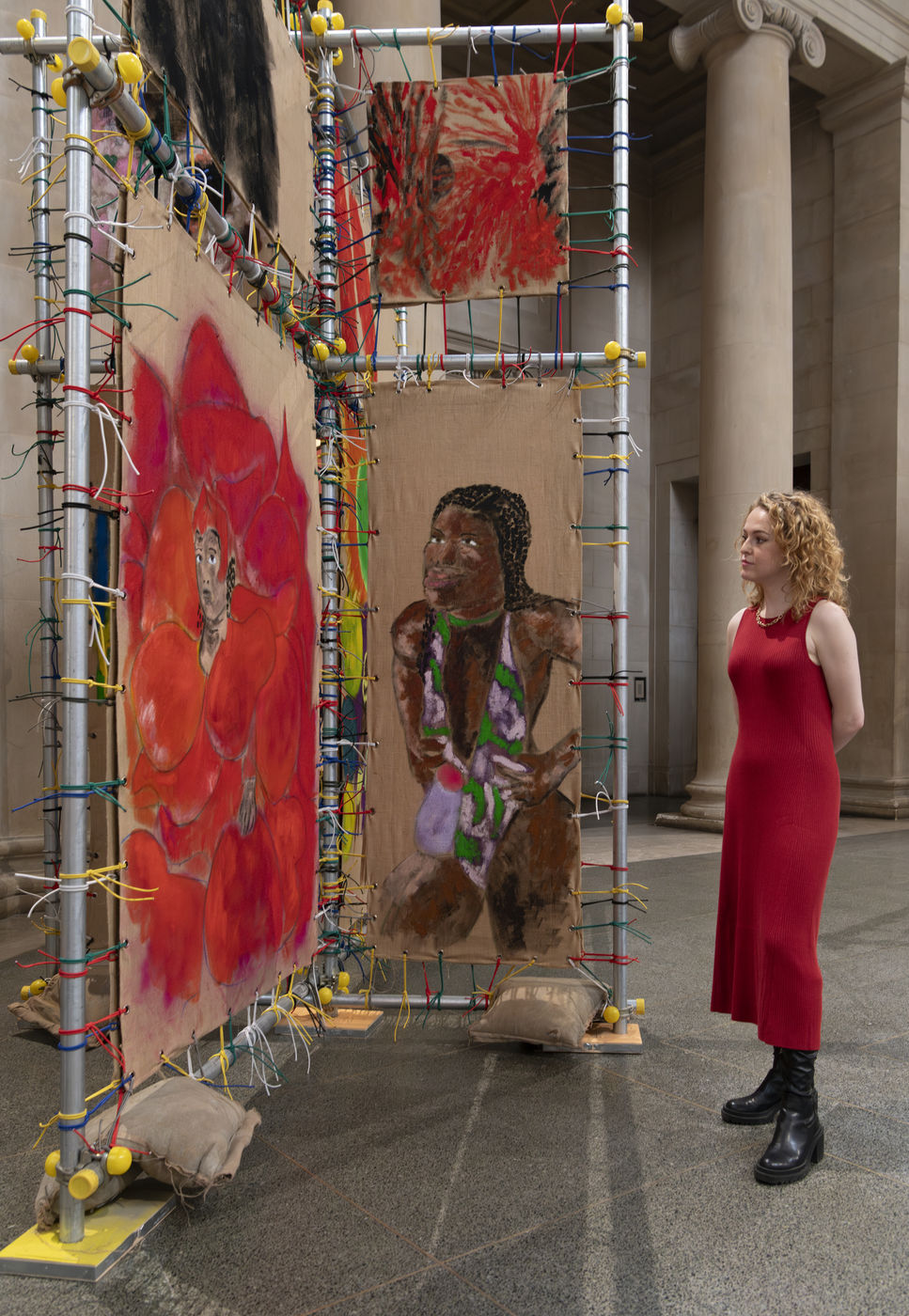
Alvaro Barrington
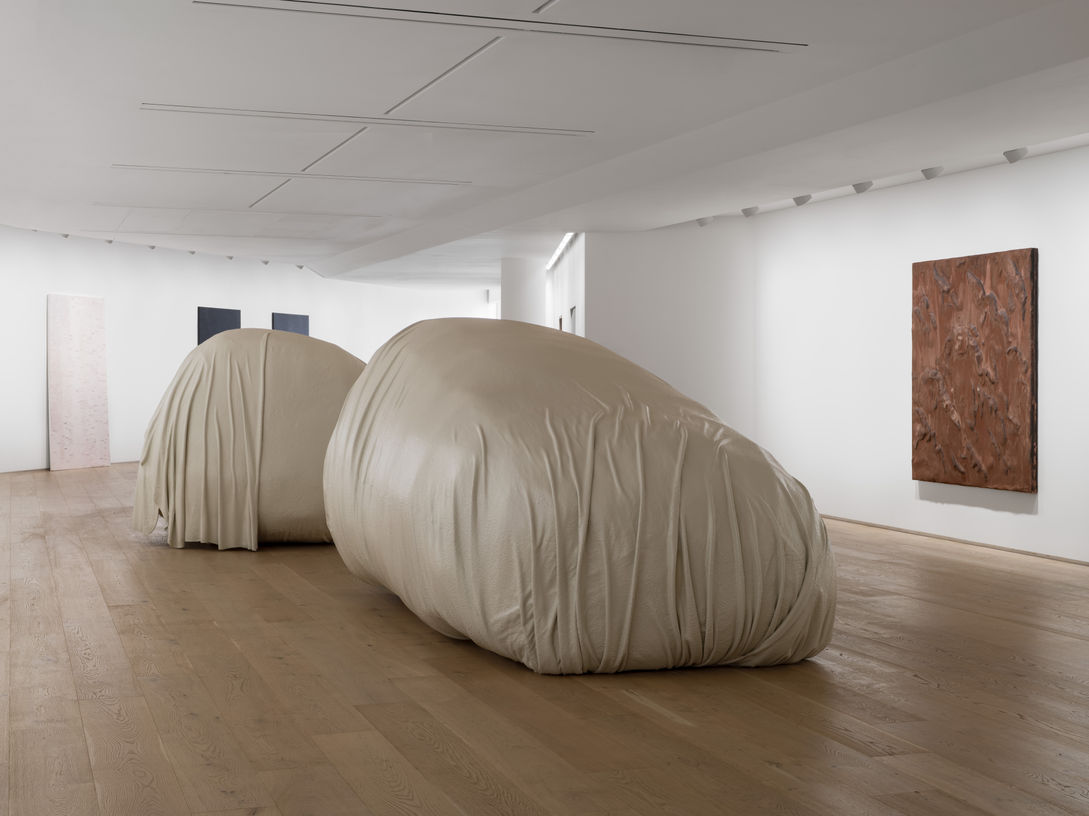
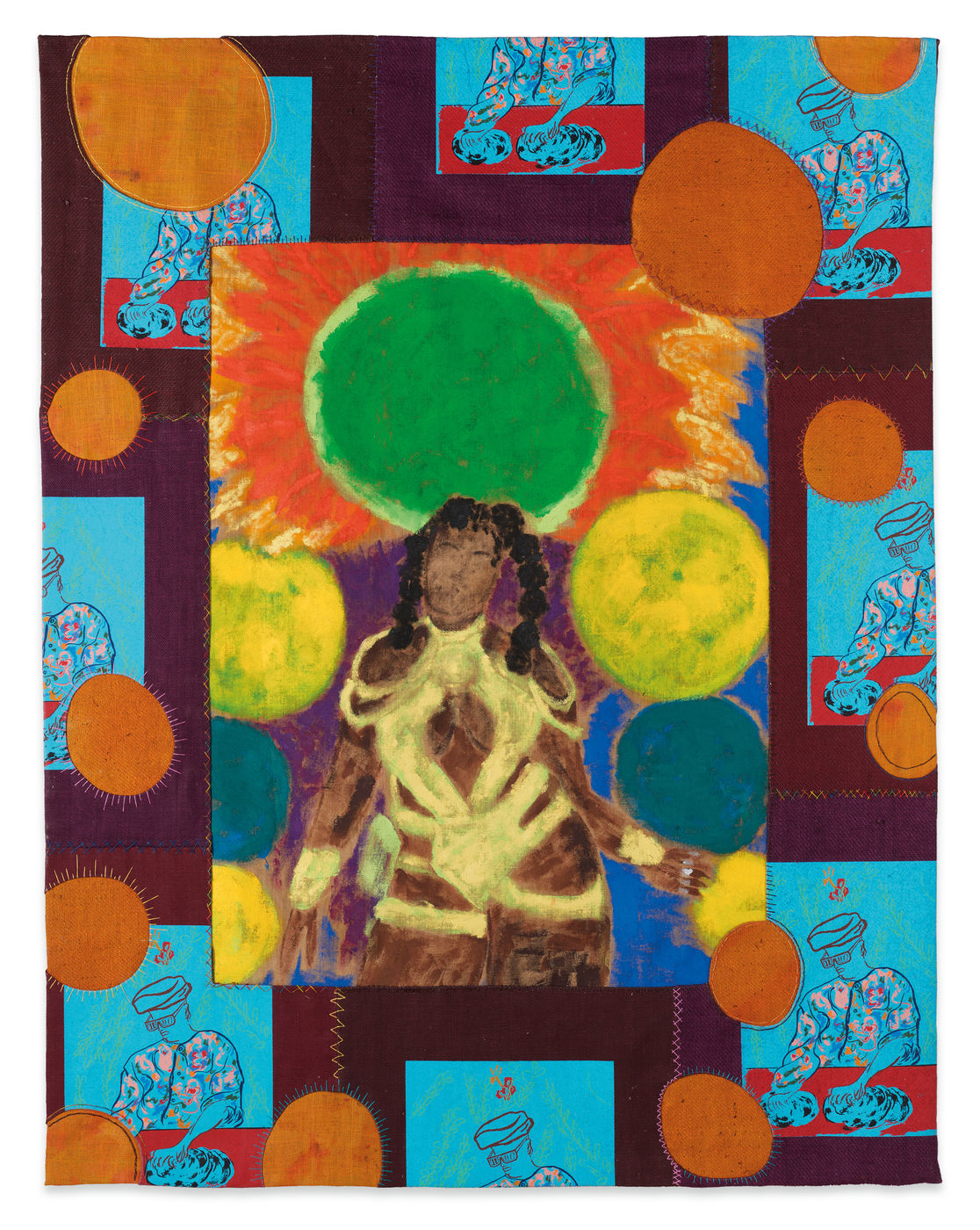
Grace, 2024
Exhibition View
Tate Britain, London
Alvaro Barrington
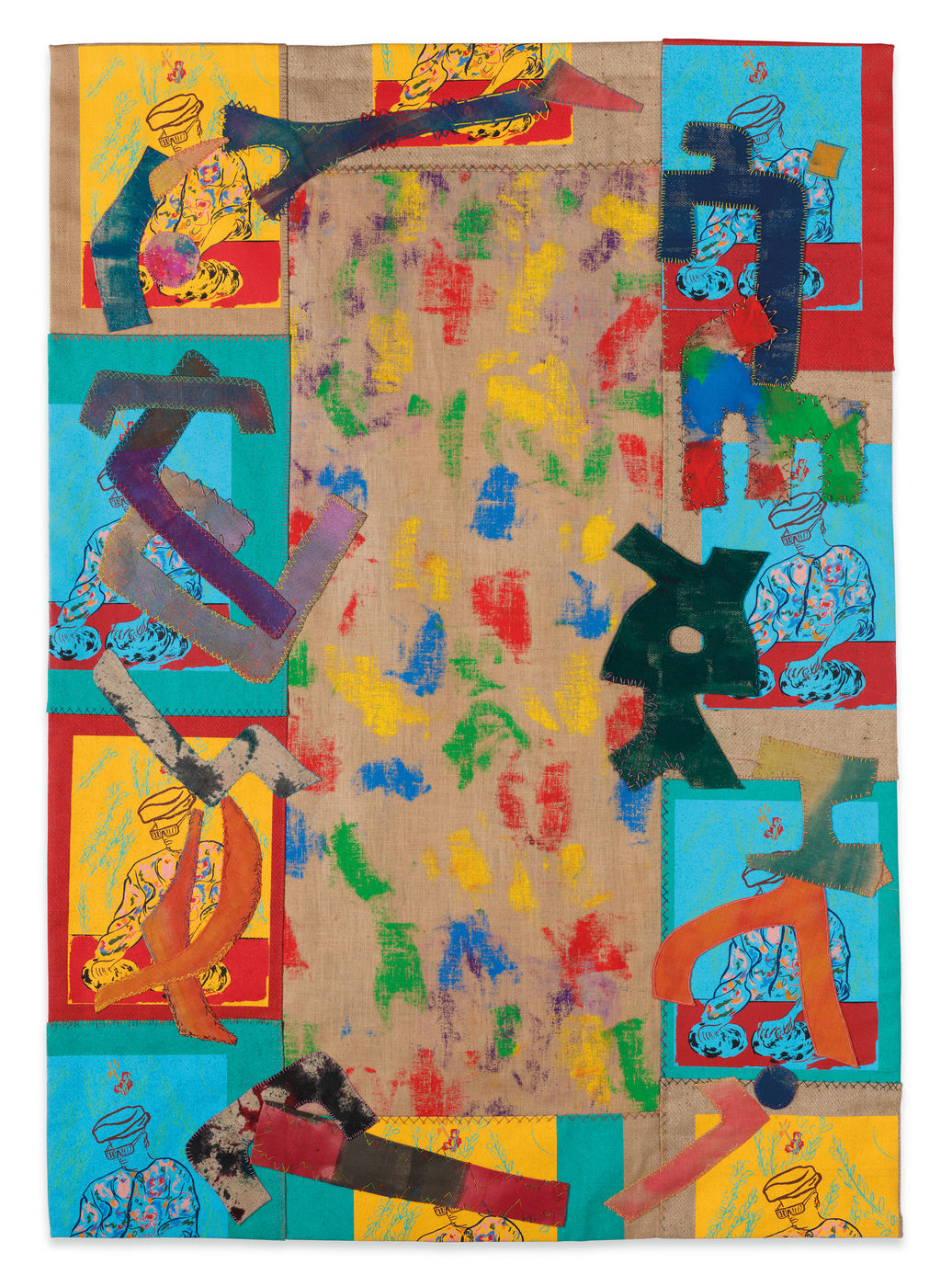
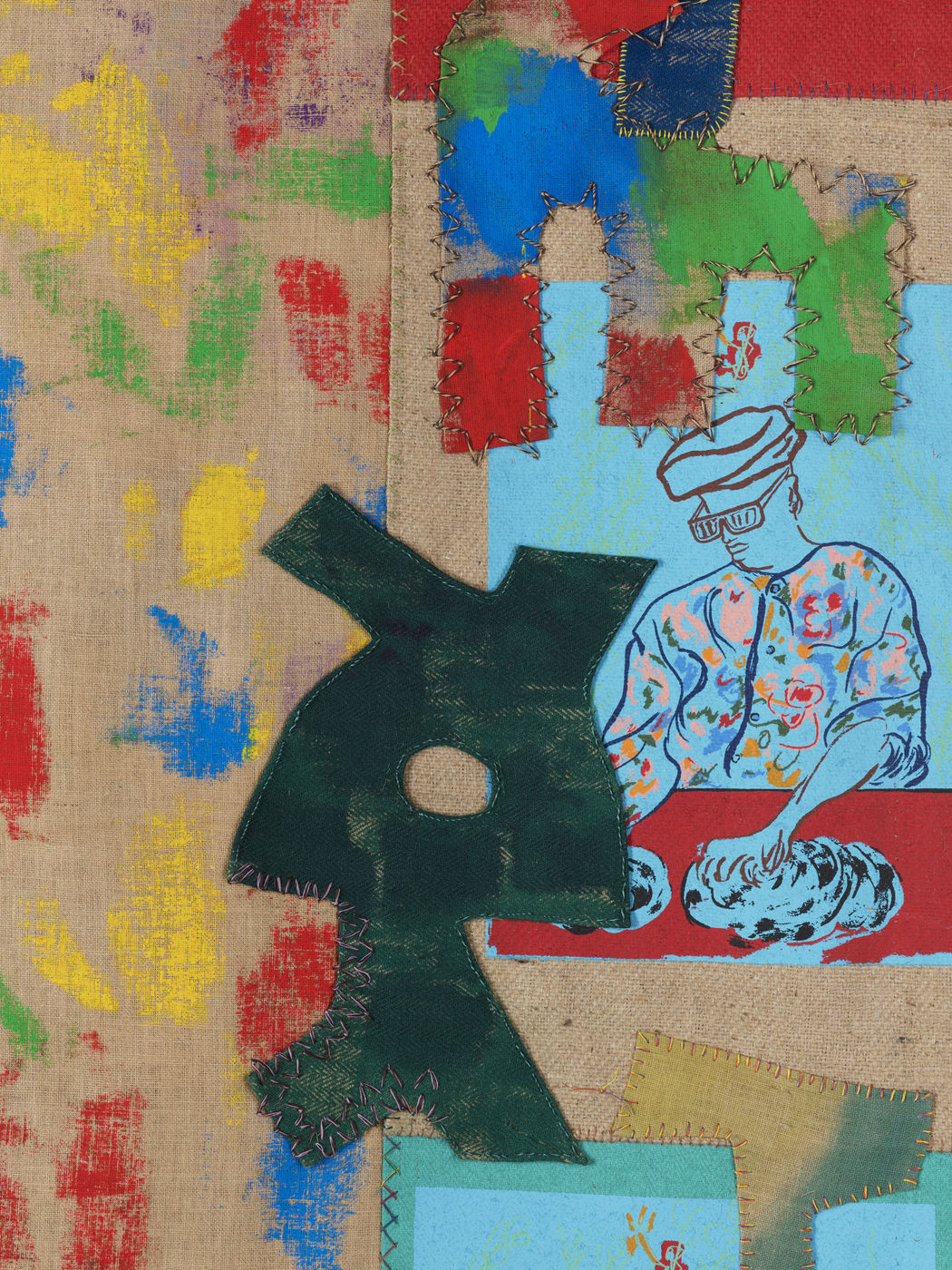
On the Road (TMS) A12, 2024-26
Oil, acrylic, flash, enamel on burlap / silk screen printed burlap, cotton linen, waxed cotton thread
250 × 194 cm (98.43 × 76.38 in)
Alvaro Barrington
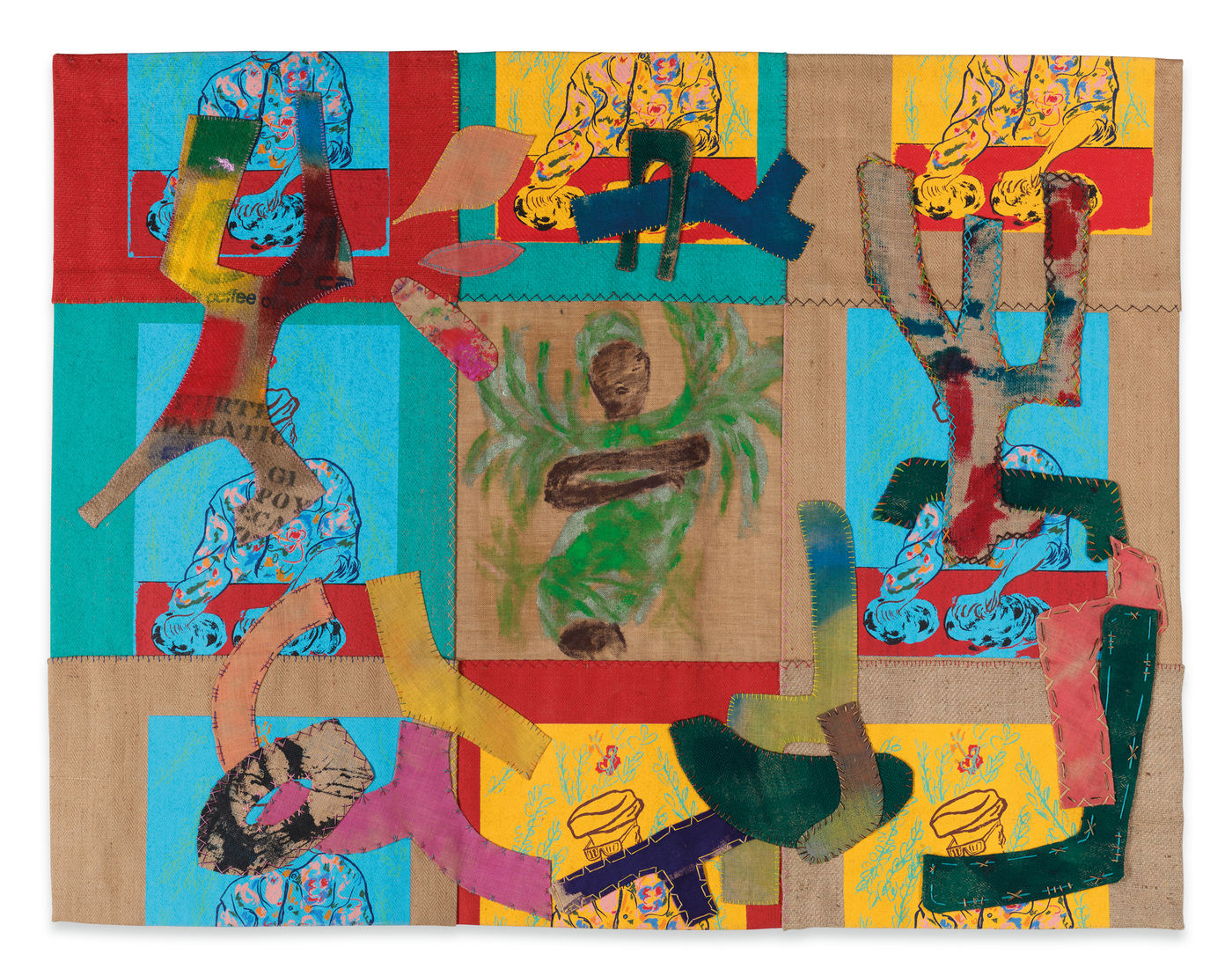
Oil, acrylic, flash, enamel on burlap / silk screen printed burlap, cotton linen, waxed cotton thread
269 × 191 cm (105.91 × 75.2 in)
Alvaro Barrington
On the Road (TMS) A3, 2024-26
Oil, acrylic, flash, enamel on burlap / silk screen printed burlap, cotton linen, waxed cotton thread
150 × 194.5 cm (59.06 × 76.57 in)
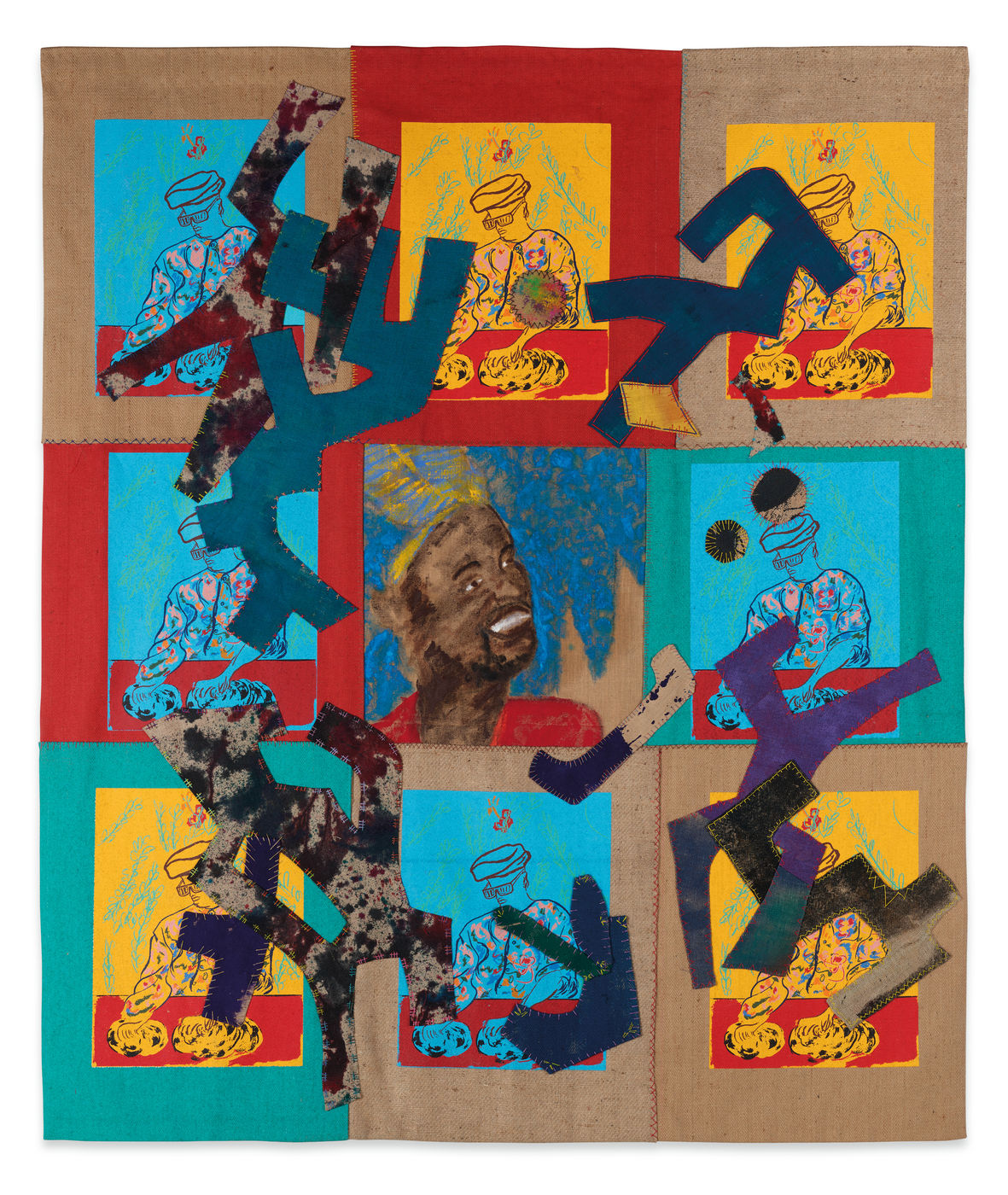
Alvaro Barrington
On the Road (TMS) A2, 2024-26
Oil, acrylic, flash, enamel on burlap / silk screen printed burlap, cotton linen, waxed cotton thread
235.5 × 200.5 cm (92.72 × 78.94 in)
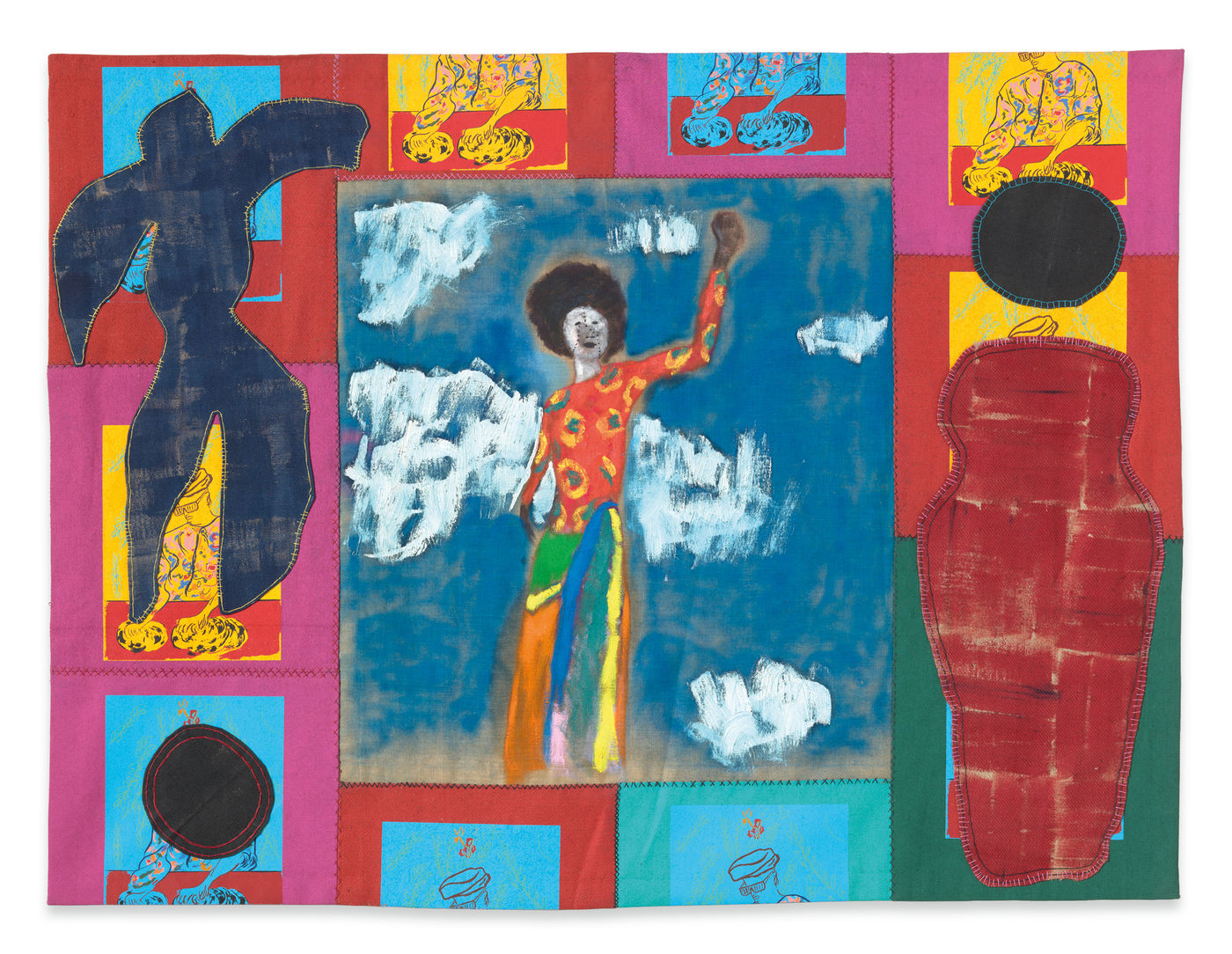
Alvaro Barrington
On the Road (TMS) A11, 2024-26
Oil, acrylic, flash, enamel on burlap / silk screen printed burlap, cotton linen, waxed cotton thread
215 × 288 cm (84.65 × 113.39 in)
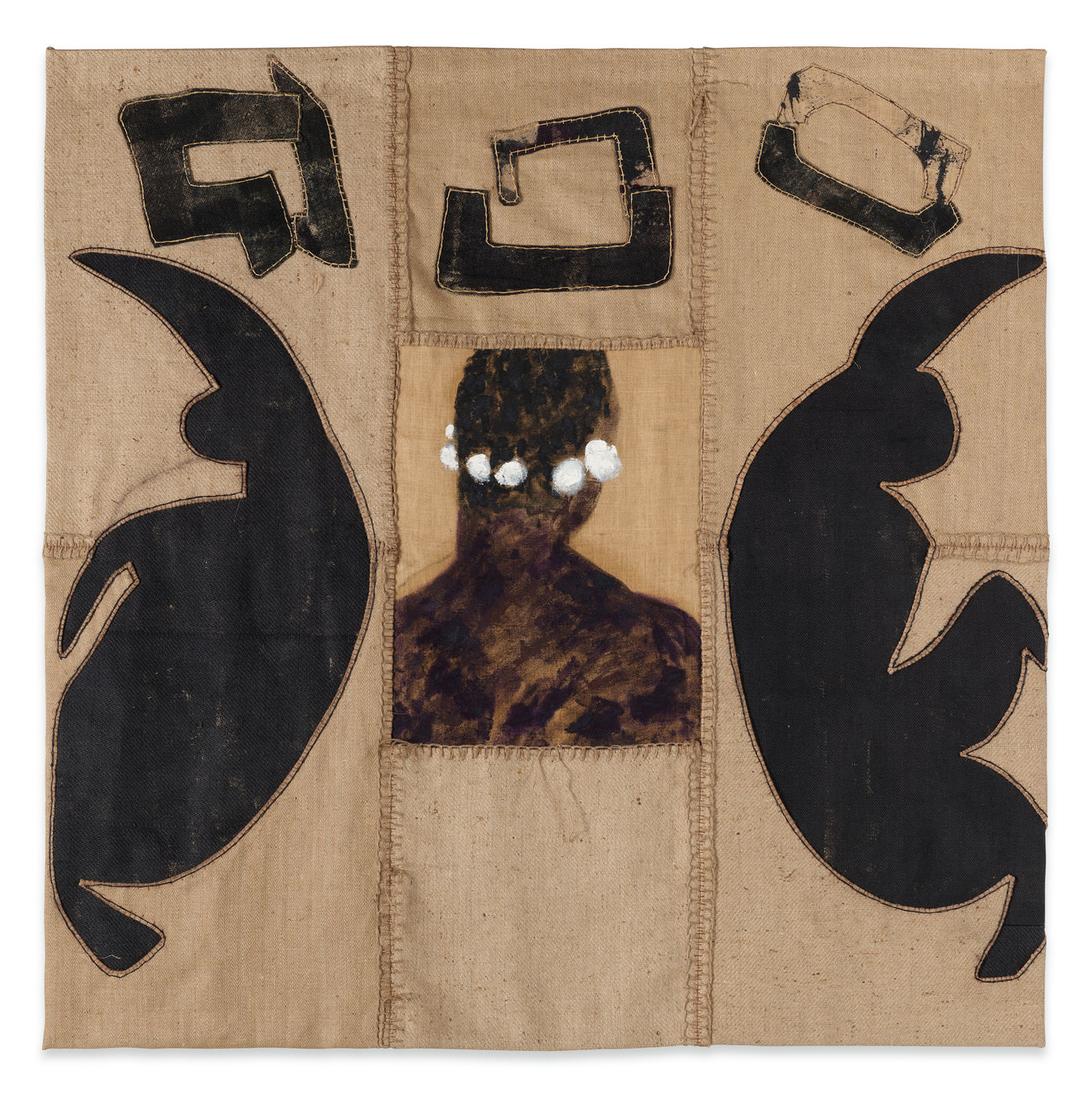
Alvaro Barrington
On the Road (TMS) A7, 2024–26
Oil, acrylic, flash, enamel on burlap / silk screen printed burlap, cotton linen, waxed cotton thread
198 × 199.5 cm (77.95 × 78.54 in)
I have this belief that we live fuller lives as human beings through trade, through the ability of trading stories, trading gifts, trading ideas. That was the overall vision. This show is a celebration of the people and places that make us feel like we belong.
by Koyo Kouoh
9 May—22 November 2026
Arsenale and Giardini, Venice
Congratulations to Alvaro Barrington on his invitation to the 61st International Art Exhibition of La Biennale di Venezia – In Minor Keys by Koyo Kouoh.