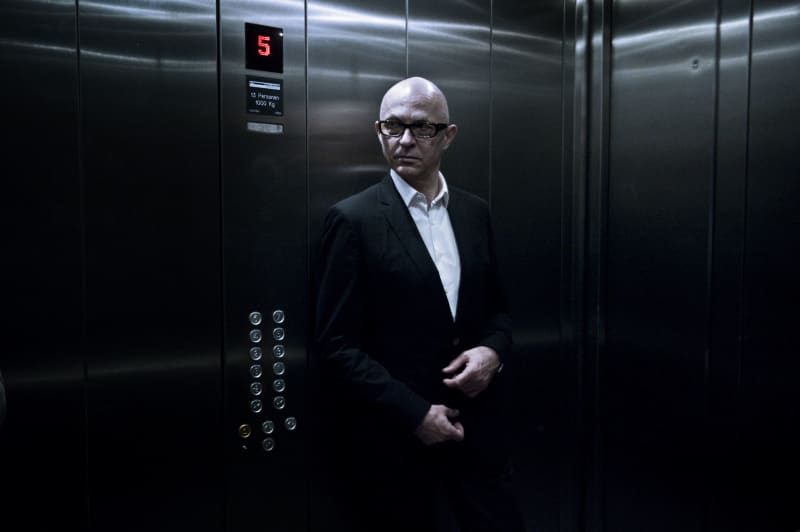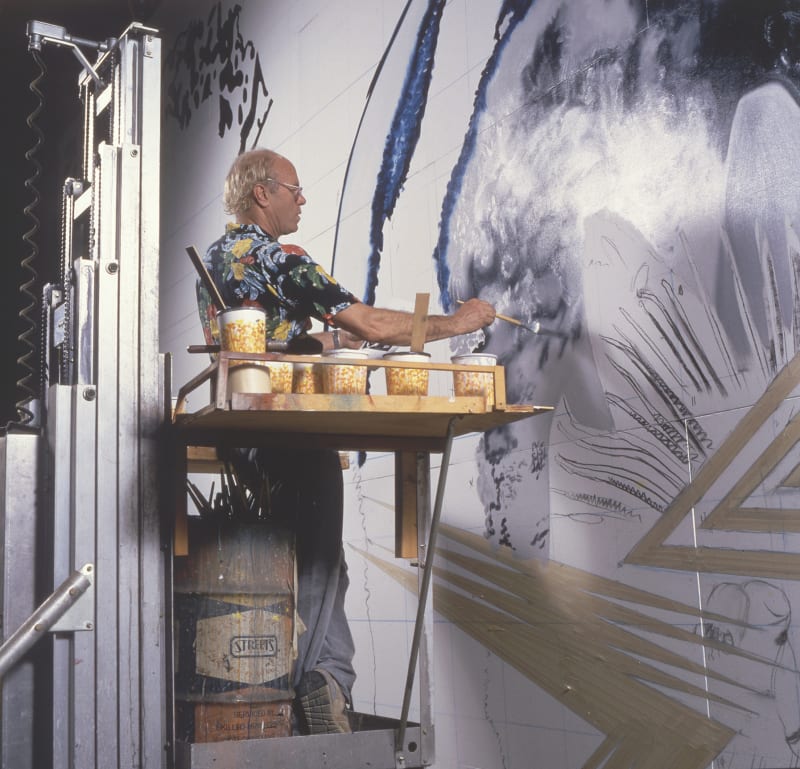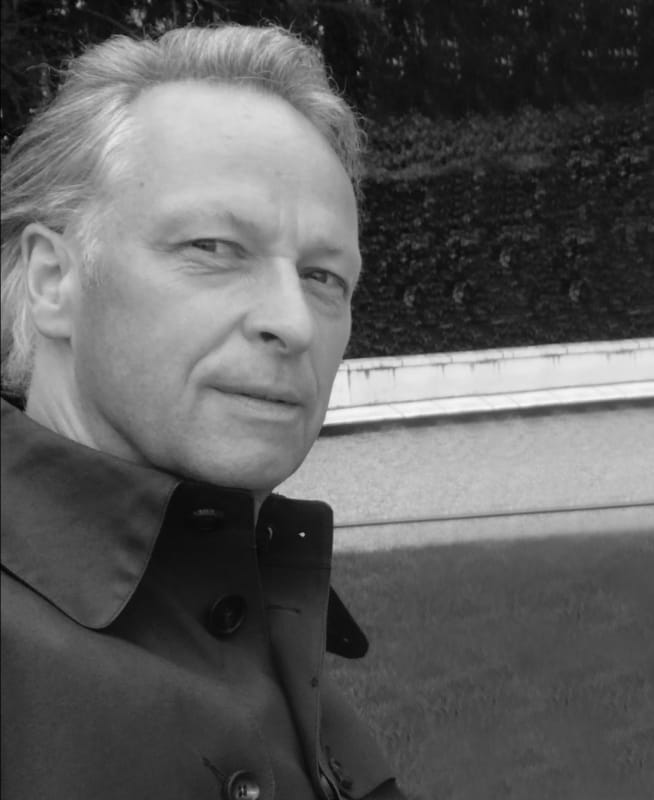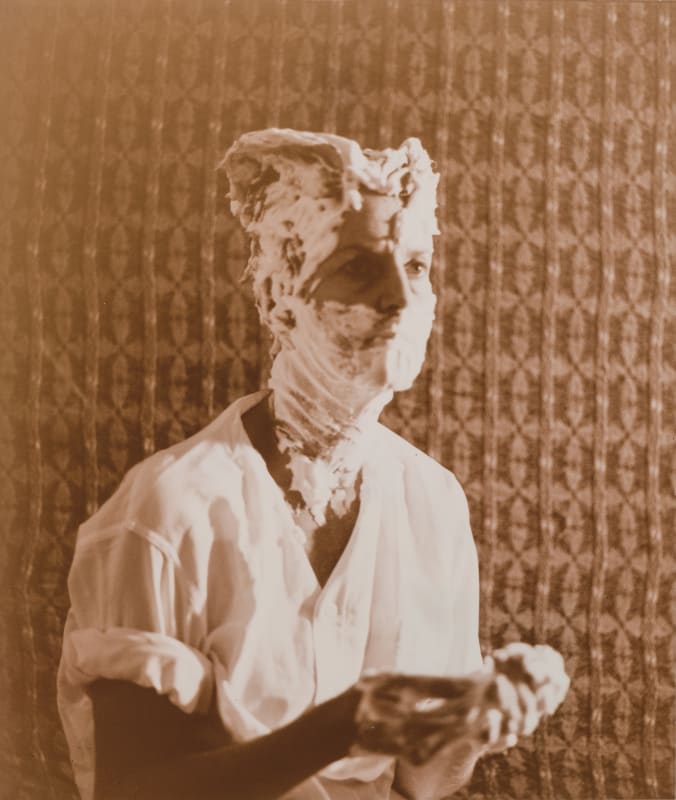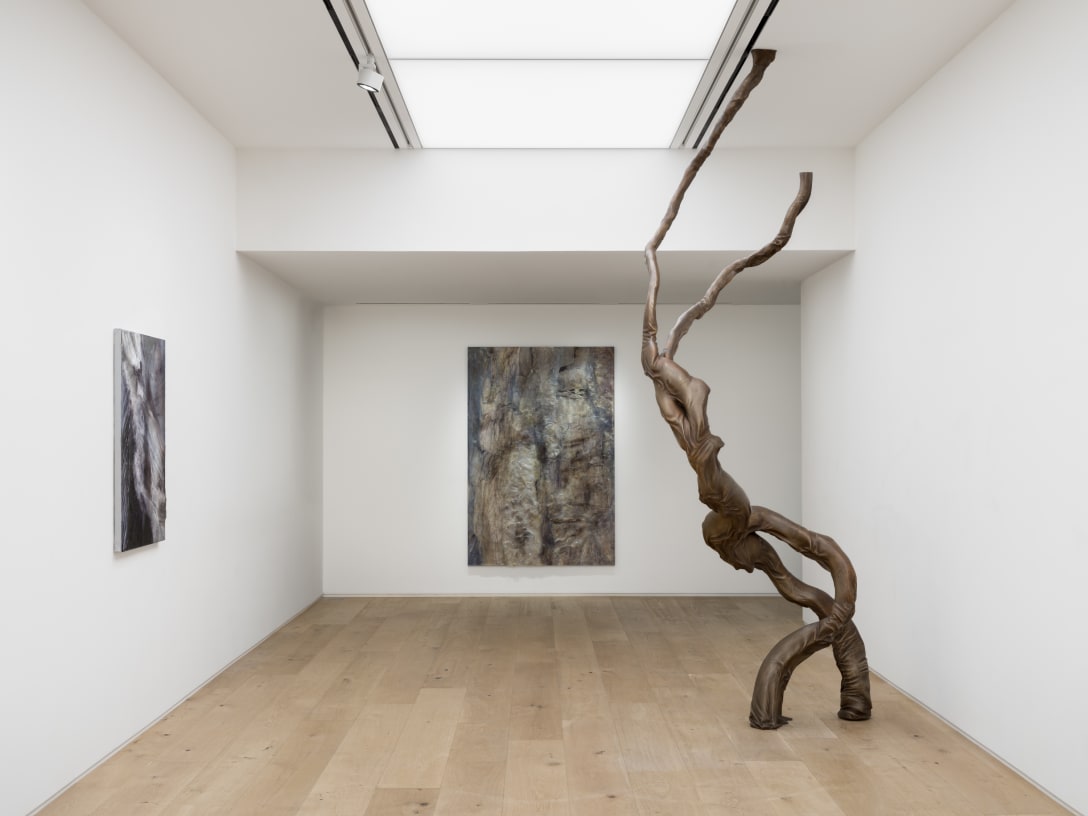




VALIE EXPORT & KETTY LA ROCCA
BODY SIGN
16 December 2025—28 February 2026
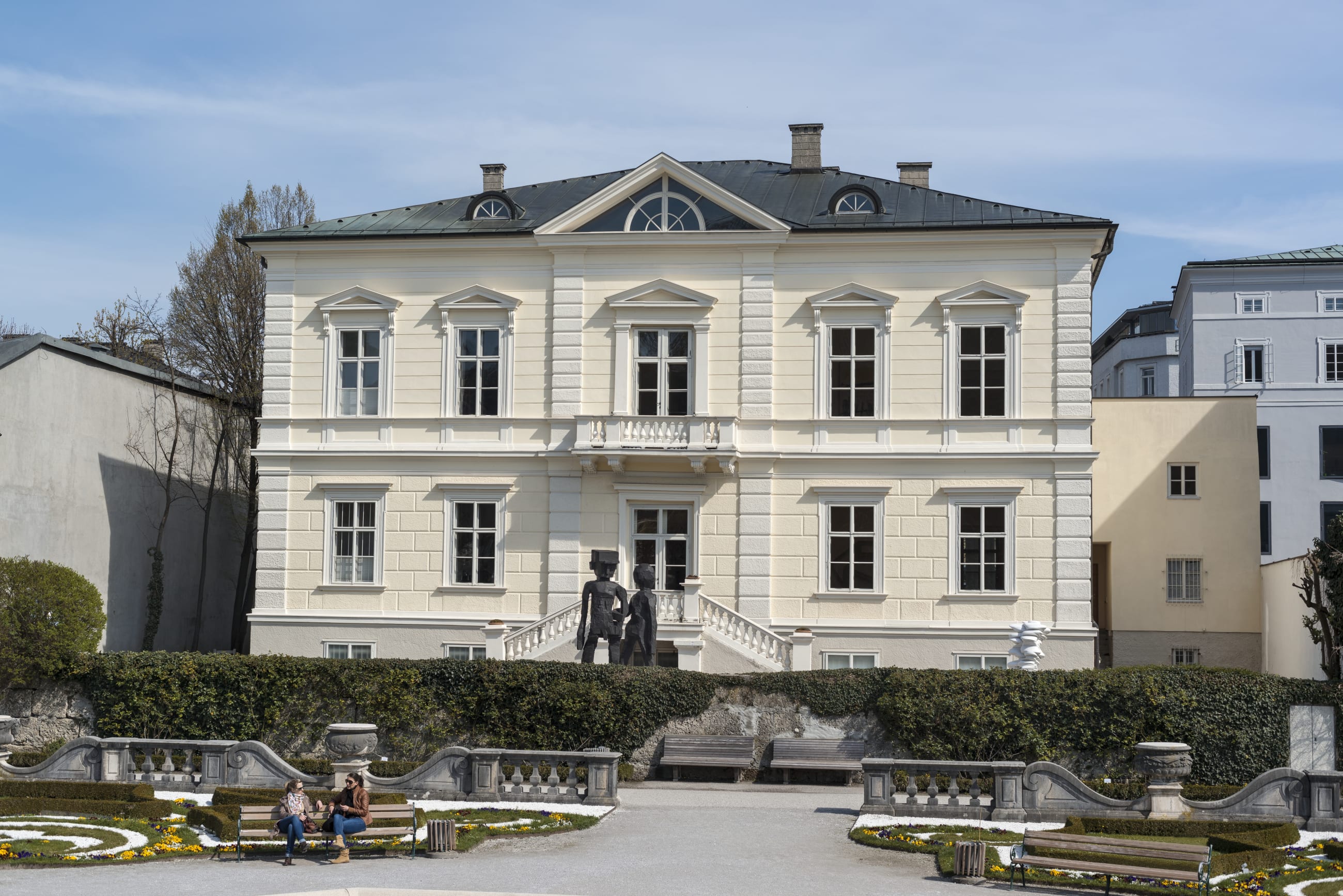
Milan Palazzo Belgioioso

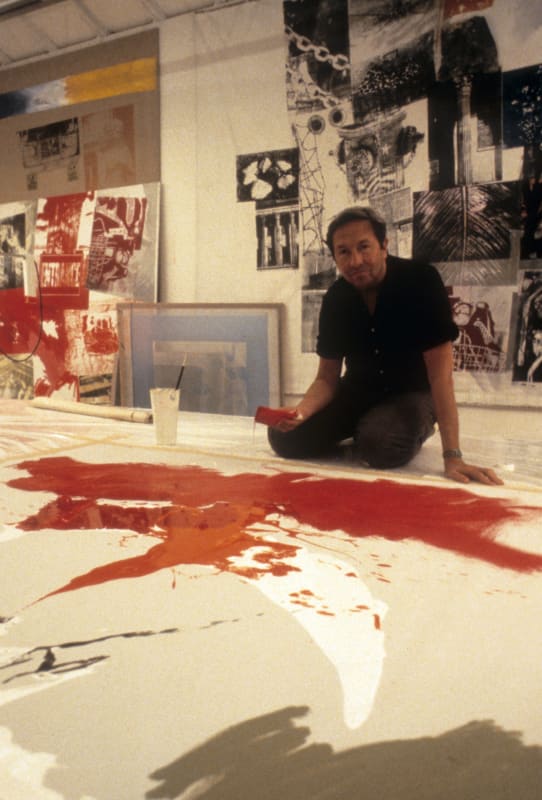
Robert Rauschenberg’s Star Grass (1963) is a prime example of an early silkscreen painting. It was acquired in 1964 by Washington-based collectors Margot and Gilbert Hahn from Leo Castelli Gallery in New York and remained in their collection for over fifty years.
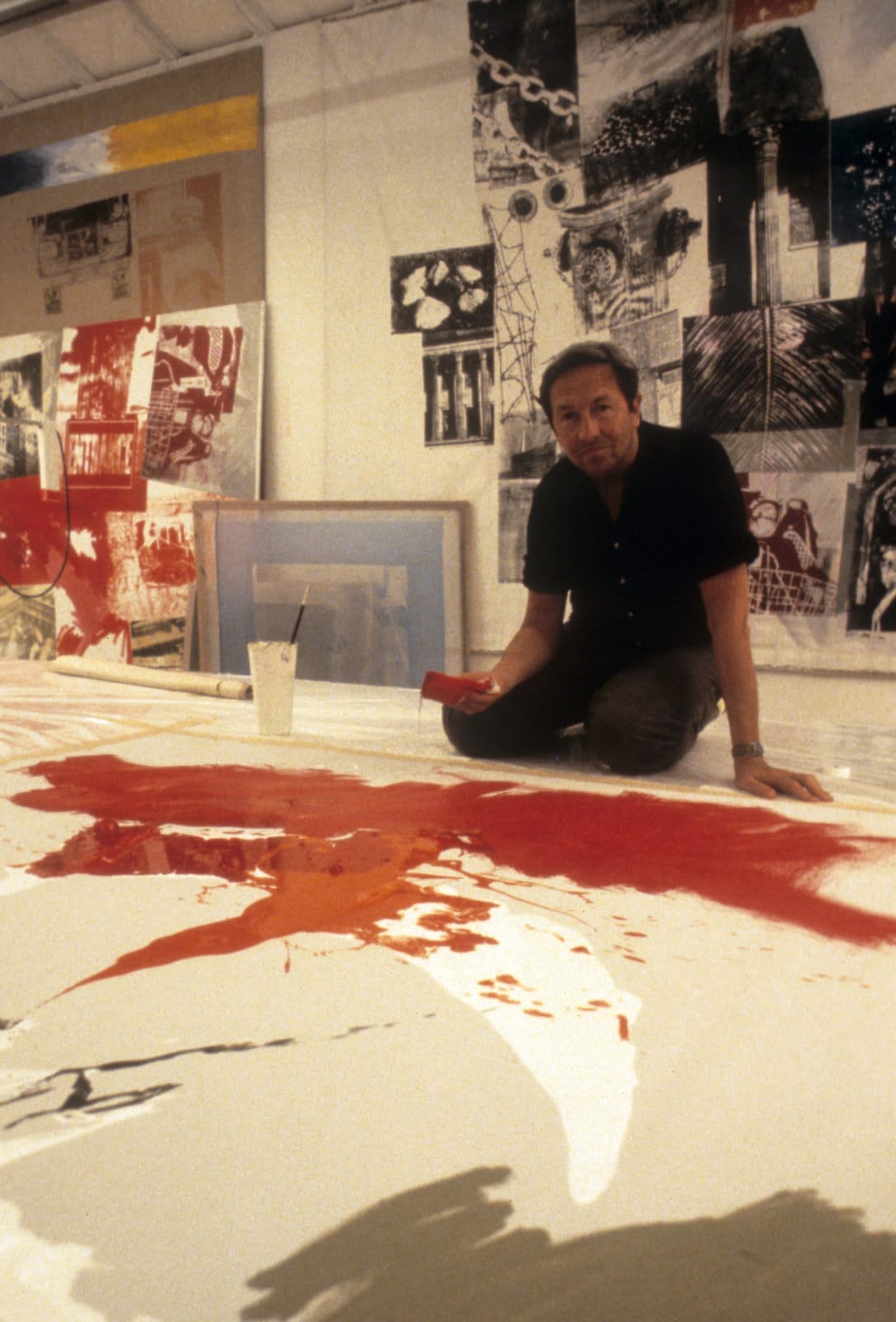
Star Grass sets the bright lights of the New York skyline against an image of the Ring Nebula in the northern constellation of Lyra, superimposed on a striped fabric, whose lines add dynamism to the composition. The title and combination of images references Vincent van Gogh’s Starry Night (1889; pictured), with the French village replaced by the lights and bustle of New York City and the nebula standing in for the night sky. These cityscape and nebula images were also paired in other Rauschenberg paintings from the same year: Die Hard (1963) and Stop Gap (1963; pictured). However, Star Grass is unique among the artist’s silkscreen paintings in that it is far from crowded, creating an interplay between the images and negative space. Rather than silkscreening the image uniformly, Rauschenberg revealed his process by displacing the edges of the overlapping imprints, so that the orb of the moon appears in triplicate. His addition of a contrasting red square at the bottom of the work is a particularly poetic inflection, which recalls his red brushwork in Stop Gap.
The painting was shown in the 28th Biennial Exhibition of Contemporary American Painting at the Corcoran Gallery, Washington, D.C. in 1963, and it features in the catalogue for an important survey of Rauschenberg’s silkscreen paintings at the Whitney Museum, New York in 1990.