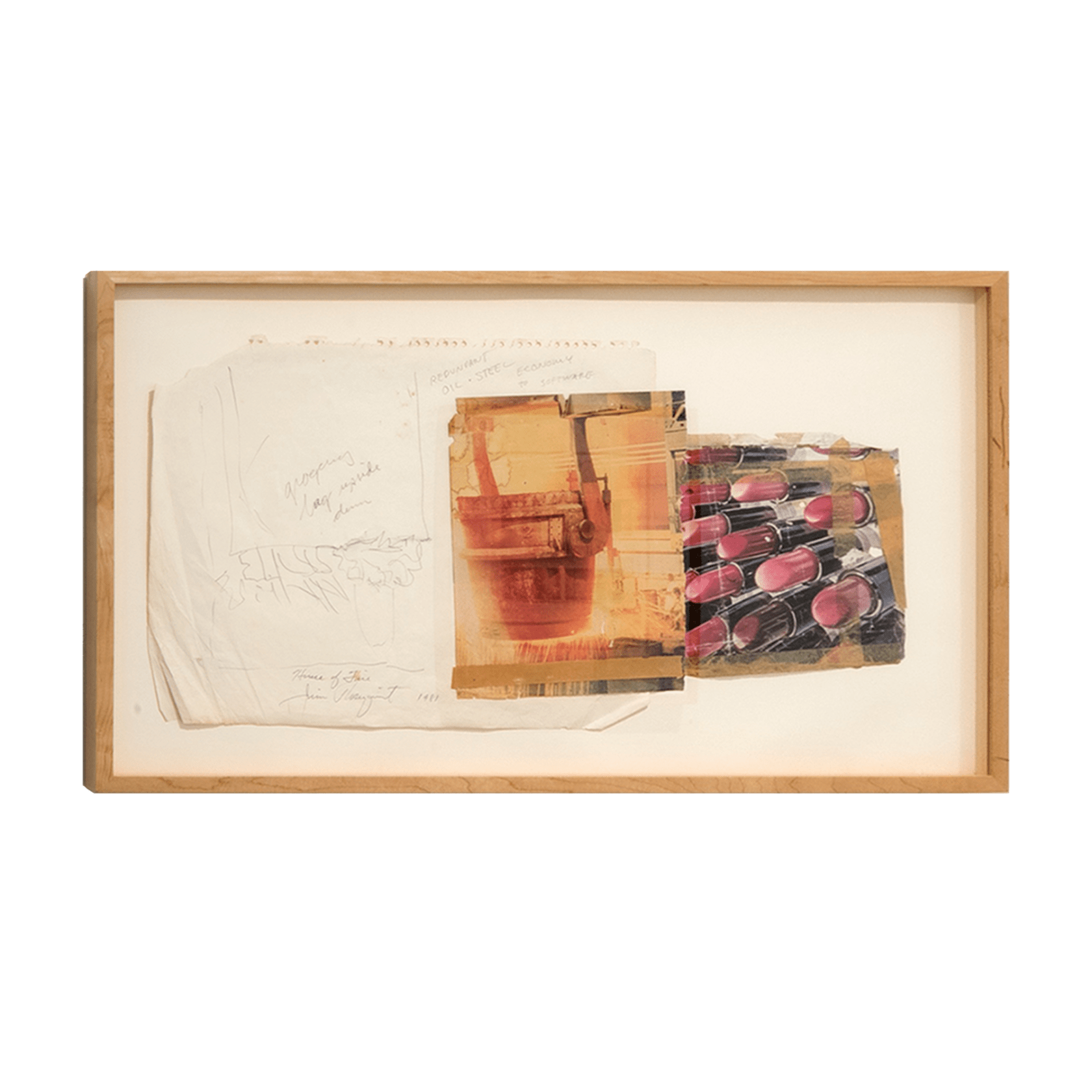
James Rosenquist Source and preparatory sketch for House of Fire, 1981
I’m interested in contemporary vision – the flicker of chrome, reflections, rapid associations, quick flashes of light. Bing–bang! I don’t do anecdotes.
I accumulate experiences. — James Rosenquist
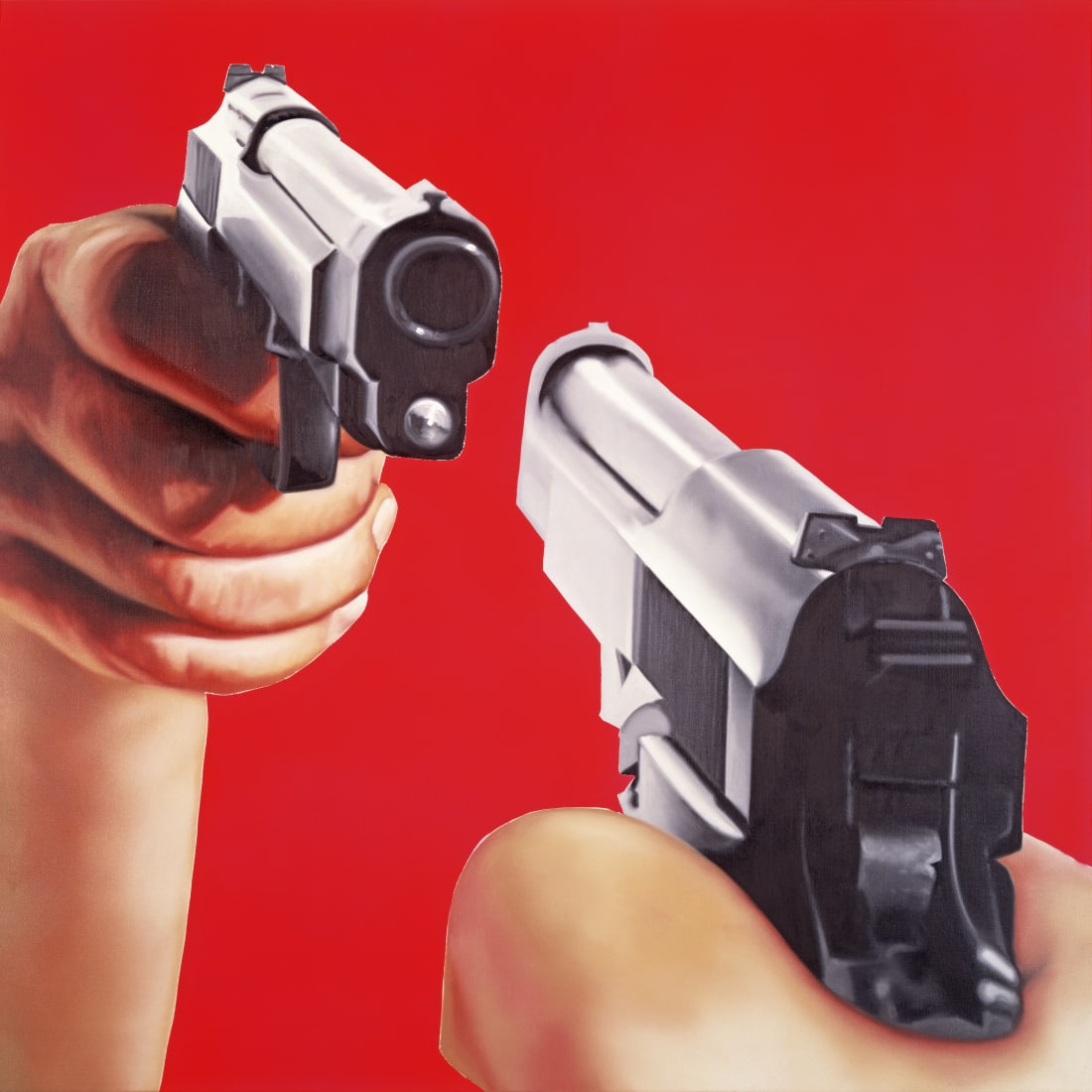
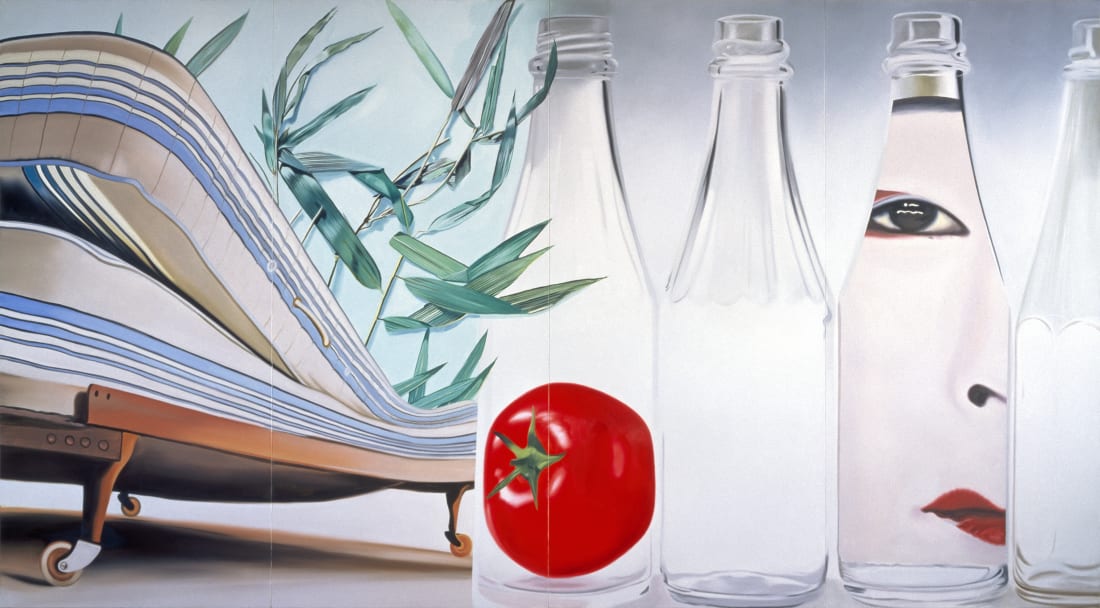
Holding an important place in art history, this preparatory sketch offers invaluable insight into the development of James Rosenquist’s major painting, House of Fire (1981; The Metropolitan Museum of Art, New York), while simultaneously illuminating the working process of this giant of post-war American art.
Rosenquist typically created preparatory source collages for his paintings, carefully arranging his own sketches alongside magazine clippings to experiment with compositional structure. Created in 1981, the ‘sketch’ for House of Fire maps out the three components of the final painting. He assembled banal, everyday images to comment on the pressing political issues faced by post-war American society: items precariously held in an upturned grocery bag evoke falling bombs, while rows of stacked lipsticks resemble the muzzles of guns, offering a critique of the glamorisation of war. In turn, Rosenquist’s pencil notations above the image of a bucket, glowing with molten steel, might be read as a commentary on the decline of manufacturing in American industry during this period. The artist’s particular interest in appropriating images from advertising – rendered strange through processes of cropping, enlargement and collaging – asserts his position at the forefront of the Pop Art movement.