Alex Katz
Black Roses
28 Mars—16 Mai 2026
Salzburg Villa Kast
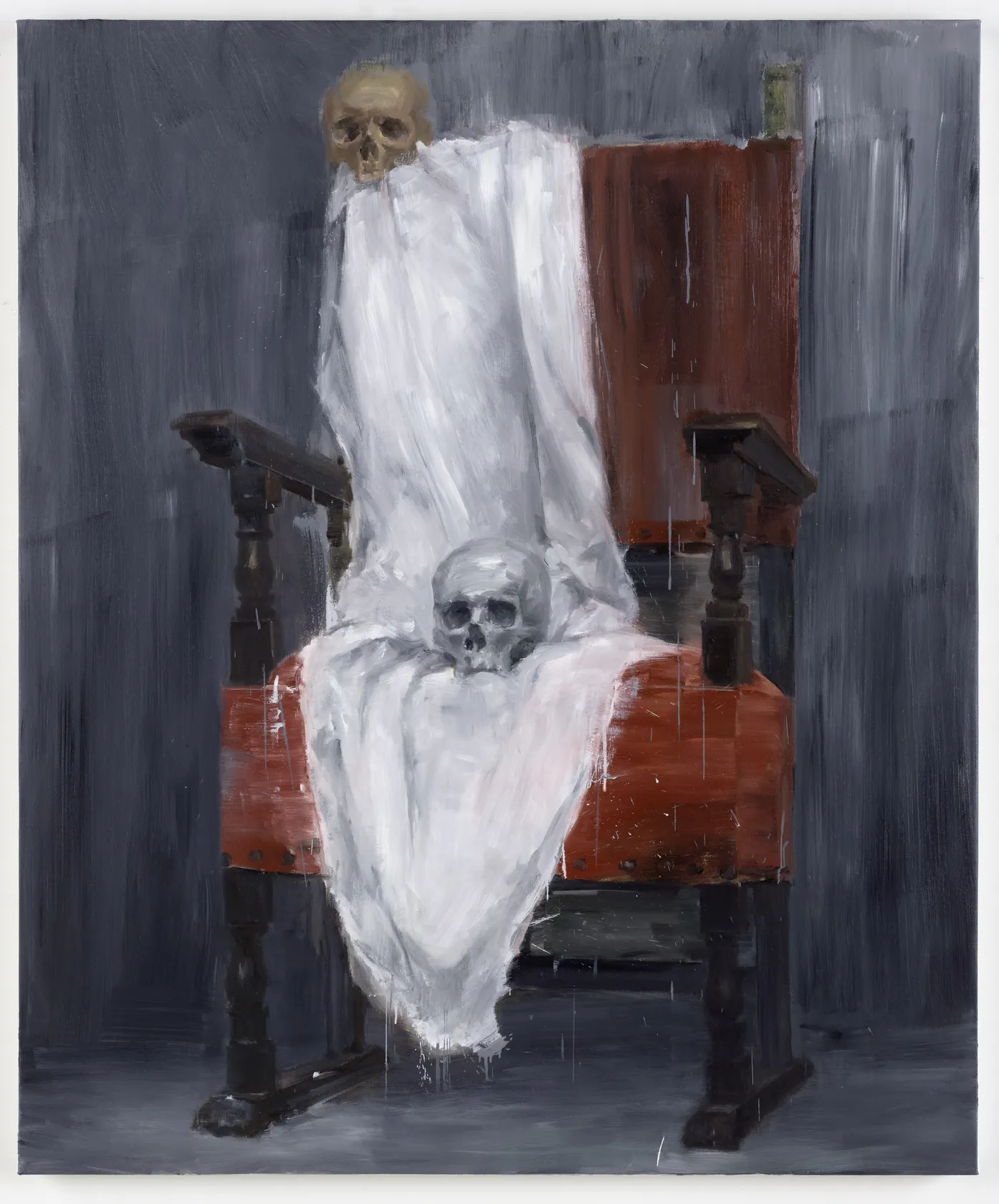
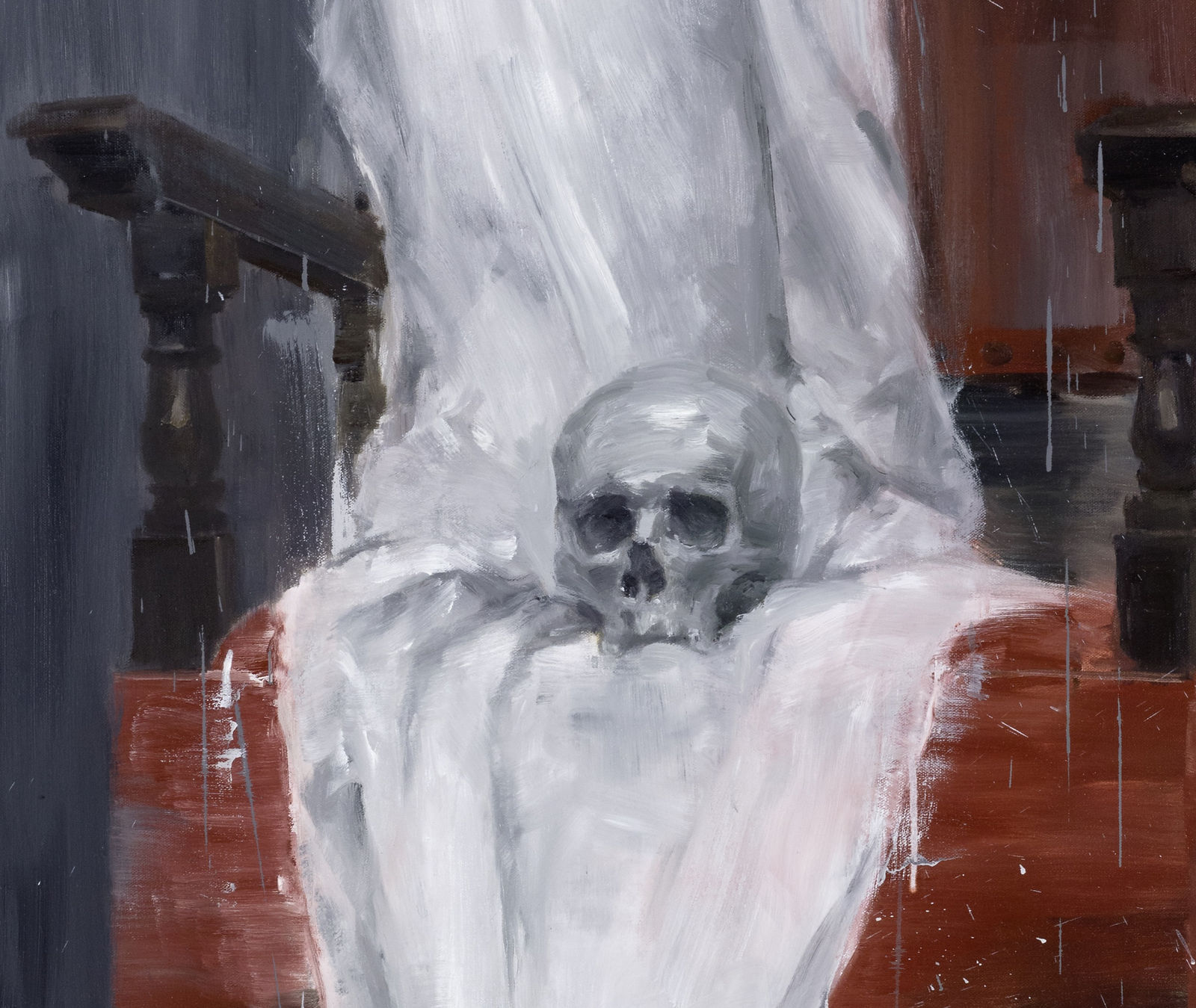
Installation, Chaise de pape et crânes (2020) references Yan Pei-Ming’s earlier series of papal portraits, in which he revisited the centuries-old genre that can be traced back to Renaissance paintings by Titian, Giorgione and Velázquez. In the place where the height of religious power once sat enthroned, there now remains only the empty chair and two skulls. Drawing upon the symbolism of the vanitas tradition, these skulls are a reminder of human mortality, which affects the powerful and the powerless alike. However, the low angle of the vantage-point places the viewer in a position of humility before the throne, suggesting a residual power in these artefacts that remains eternal.
《装置作品,教皇的椅子和头骨》(Installation, Chaise de pape et crânes)(2020 年)参考了严培明早期的教皇肖像系列,他在其中重新审视了这个可以追溯至文艺复 兴时期,涵括提香(Titian)、乔久内(Giorgione)和维拉斯奎兹(Velázquez)等绘画 大师的百年流派。这个位置昔日由宗教的掌权者安坐,现今只剩下空椅子和两个头 骨。这些头骨借鉴了虚空派(vanitas)传统的象征意义,提示万物皆有尽头,掌权者和 无权者均殊途同归。然而,低角度的俯视点令观众在王座前处于谦恭的位置,暗示残 留在这些工艺品中的力量是不朽的。